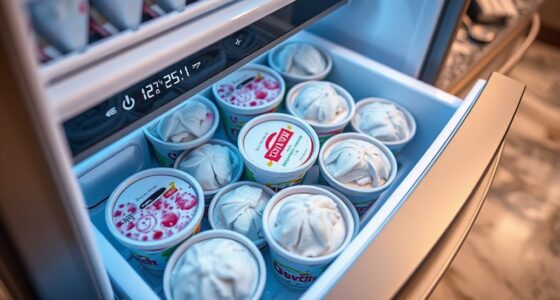
To avoid a door-ajar disaster, guarantee your freezer door seals tightly and remains closed as much as possible. Damaged or loose seals allow warm air to enter, causing frost buildup and temperature fluctuations. Check the door regularly for proper closure and clean the seals to keep them effective. Maintaining a consistent temperature around 0°F (-18°C) and monitoring frost levels helps prevent costly issues. Keep exploring for more tips to keep your freezer running smoothly.
Key Takeaways
- Regularly check and ensure the freezer door seals tightly to prevent warm air entry.
- Avoid leaving the door open for extended periods to minimize condensation and ice buildup.
- Use a thermometer to monitor and maintain the freezer temperature around 0°F (-18°C).
- Inspect door seals for damage or gaps and replace them if necessary for proper sealing.
- Keep the freezer door closed as much as possible to prevent frost accumulation and energy loss.

Have you ever wondered if your freezer is organized efficiently? If you’re not paying attention, ice buildup can sneak in, turning a well-functioning appliance into a frustrating mess. Ice buildup isn’t just an inconvenience; it can interfere with your freezer’s ability to regulate temperature properly. When frost accumulates, it acts as an insulator, preventing cold air from circulating evenly. This leads to inconsistent temperatures inside the freezer, which can compromise the quality of your frozen foods and increase energy consumption. To avoid this, it’s vital to keep an eye on ice buildup and take steps to prevent it from becoming overwhelming. Regularly defrost your freezer if it’s not frost-free, and consider checking for excess frost every few months. Maintaining a clean, ice-free interior helps guarantee that your appliance can do its job effectively, keeping your food safe and fresh.
Proper temperature regulation is key to effective freezer management. When your freezer is too cold, it can cause ice to form more quickly, which in turn amplifies ice buildup issues. Conversely, if it’s not cold enough, your frozen foods could spoil or develop freezer burn. Most freezers operate best around 0°F (-18°C), so use a reliable thermometer to monitor the temperature regularly. If you notice fluctuations, it might indicate a problem with the thermostat or door seal. A loose or damaged door seal allows warm air to enter, disrupting temperature regulation and encouraging frost formation. Making sure the door closes tightly every time you access the freezer is essential. Avoid leaving the door open for extended periods, as this lets warm, moist air in, which then condenses and freezes, creating unwanted ice buildup. When you keep the temperature steady and the door sealed properly, your freezer maintains a consistent environment, which reduces frost formation and conserves energy. Additionally, choosing a freezer with advanced defrost technology can help maintain efficiency and prevent excessive ice buildup.
Frequently Asked Questions
How Often Should I Defrost My Freezer?
You should defrost your freezer every 6 to 12 months, or when ice buildup reaches about a quarter-inch thick. Regular defrosting is essential for proper storage tips, preventing door-ajar issues, and maintaining efficiency. Keep an eye on the ice accumulation, and plan to unplug and defrost it when needed. This routine helps avoid energy waste, guarantees ideal storage, and keeps your freezer running smoothly.
What’s the Best Way to Organize Frozen Items?
To organize your frozen items effectively, start with clear inventory organization by grouping similar foods together. Use storage container tips like labeling and stacking containers to maximize space. Place frequently used items at the front for easy access, and keep less-used items at the back. Regularly check and rotate your stock to prevent freezer burn, making sure everything stays fresh and accessible when you need it.
How Do I Troubleshoot Unusual Freezer Noises?
Did you know that noisy freezers can waste up to 10% more energy? To troubleshoot unusual noises, first check for ice maker issues, like ice build-up or jams, and listen for rattling or buzzing sounds. Also, try freezer light troubleshooting—sometimes faulty bulbs cause vibrations. Make certain vents are clear and the compressor isn’t obstructed. Regular maintenance can prevent strange noises and keep your freezer running smoothly.
Can Improper Door Sealing Cause Energy Waste?
Yes, improper door sealing can cause energy waste. When the door seal integrity is compromised, warm air enters the freezer, forcing it to work harder to maintain the proper temperature. This increased effort reduces energy efficiency and raises your utility bills. Regularly check and replace worn or damaged seals to guarantee a tight fit, helping your freezer operate efficiently and saving you money on energy costs.
What Are Signs of Freezer Compressor Failure?
When your freezer’s compressor starts to fail, it’s like a car struggling to start. You’ll notice signs like the compressor overheating, which causes it to work harder and burn out faster. Capacitor failure can make it impossible for the compressor to kick on. Other clues include strange noises, warm temperatures, or frequent cycling. Keep an eye out for these signs to prevent a complete breakdown and costly repairs.
Conclusion
If you ignore your freezer door, you risk releasing chaos that could turn your kitchen into a frozen wasteland! Imagine frosty monsters creeping out, your food turning into icy rubble, and your energy bills skyrocketing like a rocket to the moon. Don’t let a simple door-ajar turn your home into an Arctic disaster. Check that door regularly, and keep your frozen fortress secure—because one tiny misstep could freeze your world in an eternal winter!