
TL;DR

Get baking supplies delivered free with Prime
- Fast, free delivery on millions of items
- Prime Video, Amazon Music and more included
- Member-only deals all year
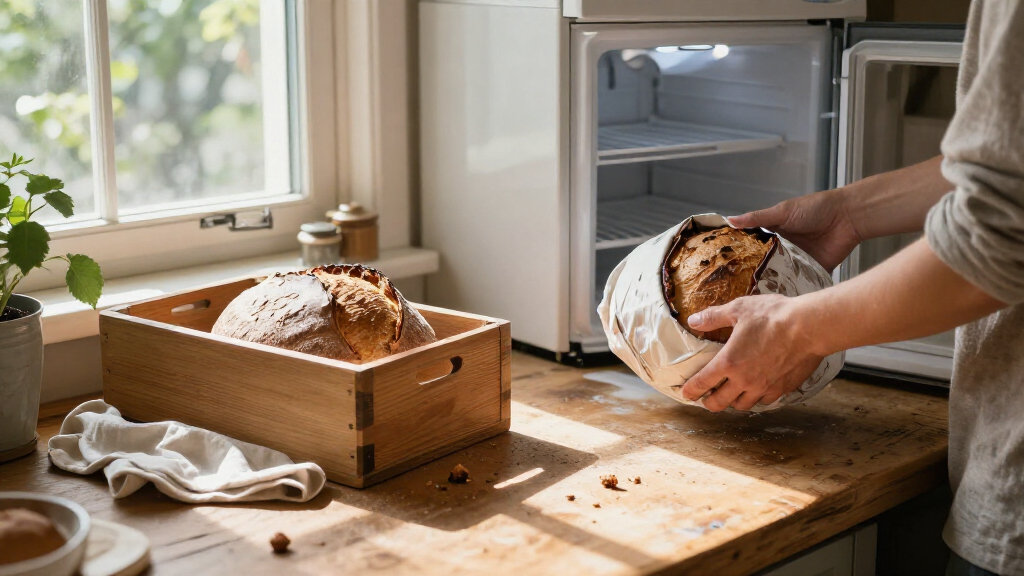
Two baking experts cited by The Kitchn recommend keeping bread in a bread box on the counter for short-term use and freezing it when it will not be eaten soon. They advise against refrigeration in most cases because it can dry bread and speed staling, with hot or humid climates as a possible exception.
A recent The Kitchn report found that two baking experts recommend storing bread in a bread box on the counter for short-term use and in the freezer when it needs to last longer. They advise against the refrigerator in most circumstances, saying it can dry bread and speed staling, though one expert cited very hot or humid conditions as a possible exception.
The Kitchn spoke with Ricky Webster, a professional baker, pastry instructor and former bakery owner, and Stephanie Powell, a recipe developer for Alpha Baking Co. and S.Rosen’s. Both preferred a bread box on the counter for bread that will be eaten soon. Powell said a bread box keeps loaves away from direct light and heat and can help them stay moist. She said commercial bread can last until its best-by date this way, while bakery bread may keep for about two to three days.
For longer storage, Webster recommended freezing bread promptly in a tightly sealed freezer-safe bag, with as much air removed as possible. He said frozen bread can be stored for two to three months. Freezing, he explained, helps retain moisture in the bread’s crumb, while refrigeration draws moisture out. Bread also stales faster after slicing, so Webster recommends keeping a loaf whole and slicing it as needed.
To revive a frozen loaf or portion, Webster’s method is to bake it cut-side down, if applicable, on a sheet pan at 400°F for 12 to 15 minutes, until the crust is crisp and lightly browned. The report advises letting the bread cool before slicing. For very crusty bread or sourdough, Webster suggested a breathable linen bread bag; he said it can help preserve the crust, but gave about three days as the maximum before staling begins.
Choosing Storage That Slows Staling
The advice offers a practical way to reduce food waste without treating every loaf the same. Bread planned for the next day or two can stay on the counter in a bread box, while an extra loaf can go into the freezer before it has time to stale. The distinction matters because, according to the experts quoted in the report, refrigeration is not a reliable middle ground for preserving bread’s texture.
Storage also affects how bread can be used later. Freezing portions can leave bread available for toast, grilled cheese, croutons or bread pudding without requiring the whole loaf to be eaten quickly. Webster’s suggestion to freeze soon after purchase reflects a straightforward trade-off: the fresher the bread is when frozen, the more moisture it can retain, though the report does not present a controlled comparison of storage methods.
As an affiliate, we earn on qualifying purchases.
What the Experts Recommend
The Kitchn report is a consumer food-storage guide, not a formal scientific study. Its recommendations come from interviews with two baking professionals. Both favored a counter-based bread box for bread intended for near-term use; their advice on freezing and refrigeration was presented as practical guidance rather than as results from a test with measured conditions.
The report also recognizes that bread types and homes differ. Powell’s estimate for commercial bread was tied to its packaging best-by date, while her estimate for bakery bread was about two to three days. Webster separately recommended breathable storage for crusty loaves and sourdough. Those timeframes are not guarantees: the article does not specify a single temperature, recipe, packaging type or humidity level for every loaf.
“The refrigerator draws out moisture, especially from breads and baked goods, and can make your loaf stale up to three times faster than leaving it on the counter.”
— Stephanie Powell, recipe developer for Alpha Baking Co. and S.Rosen’s, as quoted by The Kitchn
Where Conditions May Change the Advice
The report does not give a controlled test comparing bread-box, refrigerator and freezer storage, nor does it define the temperature or humidity at which refrigeration might become preferable. The claim that a refrigerator can make bread stale up to three times faster is attributed to Webster, but the report does not provide a test method or specify bread type and storage conditions behind that figure.
It is also unclear how long each recommendation applies to particular recipes, homemade loaves, enriched breads or different packaging. The reported timelines are expert guidance, not a guarantee; readers should follow package directions where available and discard bread that shows signs of spoilage. The article focuses on staling and mold risk but does not set out a separate food-safety timetable.
How to Apply the Storage Guidance
The report describes no scheduled follow-up study or further announcement. For now, its practical recommendation is to keep the amount of bread likely to be eaten soon in a bread box on the counter and freeze the rest promptly in sealed portions. In a very hot or humid home, Webster suggested leaving out only what will be used in a day or two and freezing the remainder; he also described dividing a loaf into small serving bags before freezing.
Readers choosing to freeze bread can use Webster’s reheating approach—400°F for 12 to 15 minutes—then let it cool before slicing. The best choice will depend on the loaf, the home environment and how quickly it will be eaten; the source does not establish one storage method or timeline for every bread.
Key Questions
Should bread go in the refrigerator?
Usually not, according to the two experts quoted by The Kitchn. They said refrigeration can draw moisture from bread and speed staling. Webster identified very hot or humid conditions as a possible exception.
How long can bread stay in the freezer?
Webster said bread can be frozen for about two to three months. He recommended freezing it as soon as possible in a tightly sealed freezer-safe bag with excess air removed.
How should frozen bread be reheated?
Webster recommended baking a frozen whole or partial loaf cut-side down, if applicable, at 400°F for 12 to 15 minutes, until the crust is crisp and lightly browned. Let it cool before slicing.
Does sliced bread stale faster?
Webster said sliced bread stales more quickly and recommended keeping the loaf whole and slicing as needed. For portions that will not be used soon, the report recommends freezing.
Source: rss
Fall Picks
fall essentials
As an affiliate, we earn on qualifying purchases.