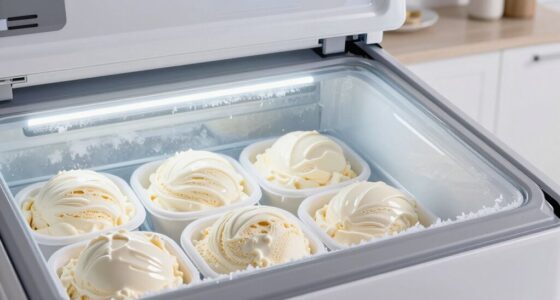

After a power outage, check if your ice cream still feels firm or has become soft and melted. Examine its appearance for any discoloration or large ice crystals, and smell it for any off odors. Use a thermometer if possible to see if it stayed below 40°F. Avoid eating if it’s been above that temperature for over two hours or shows signs of spoilage. If you want to guarantee safety, here’s what to look for and when to discard.
Key Takeaways
- Check if the ice cream remains below 40°F during the outage; avoid eating if it has warmed above this temperature.
- Inspect the texture: if still solid or slightly softened, it’s likely safe; if melted and refrozen, discard.
- Look for unusual odors, discoloration, or large ice crystals, which indicate spoilage or compromised safety.
- Minimize opening the container during the outage to prevent warming; serve quickly once deemed safe.
- When in doubt, discard the ice cream to prevent potential foodborne illness.

When a power outage hits during a hot summer day, your first concern might be spoiling perishable foods, but it also presents a unique opportunity to test your ice cream’s resilience. Before diving in, it’s essential to consider safety precautions and storage guidelines to ensure you enjoy your treat without risking health issues. First, assess how long the power has been out. If it’s less than two hours and the ice cream has stayed cold or frozen, chances are it’s still safe to eat. However, if the outage lasted longer, you need to be more cautious.
Check the temperature of the ice cream by feeling the container. If it’s still solid or only slightly softened with a temperature below 40°F, it’s generally safe to consume. But if it has completely melted and refrozen, or if it’s been above 40°F for more than two hours, bacteria could have grown, making it unsafe. It’s important to follow storage guidelines, which recommend keeping ice cream at or below 0°F for ideal safety and quality. During power outages, avoid opening the container frequently, as this allows warm air in and accelerates spoilage. If the ice cream has been exposed to warm temperatures for a prolonged period, it’s best to discard it rather than risk eating spoiled food.
If ice cream has melted and refrozen or been above 40°F for over two hours, it’s unsafe to eat.
You should also inspect the ice cream visually and smell it. Any unusual odor, discoloration, or ice crystals that are larger than usual are signs that the texture and safety may have been compromised. In such cases, it’s best to err on the side of caution and dispose of the product. If you decide the ice cream is still safe, serve it quickly to minimize further warming. Keep in mind that refreezing melted ice cream can cause texture issues and ice crystal formation, but it doesn’t necessarily make it unsafe—unless it’s been left out at unsafe temperatures for too long.
Additionally, understanding the proper storage guidelines can help you better assess safety after a power outage. Ultimately, following safety precautions and storage guidelines helps you make an informed decision about whether your ice cream is still good to eat after a power outage. When in doubt, discard the product to avoid any risk of foodborne illness. Properly storing ice cream during outages—keeping it frozen as long as possible, minimizing temperature fluctuations, and inspecting it thoroughly before consumption—ensures you can enjoy it safely once power is restored. Remember, your health and safety come first, so don’t compromise on safety just to enjoy a treat.
Frequently Asked Questions
How Long Can Ice Cream Stay Safe After a Power Outage?
You can typically keep ice cream safe for up to 24 hours after a power outage if you use energy conservation and keep the fridge and freezer doors closed. Backup power systems help maintain temperature longer, so if you have one, your ice cream stays safe even longer. If the power’s out over 24 hours, check if the ice cream remains frozen; if it’s melted, it’s best to discard it to avoid health risks.
Can Refreezing Melted Ice Cream Cause Health Risks?
Refreezing melted ice cream can cause health risks because bacteria may grow when it melts, especially if it’s been out too long. When you refreeze it, the texture might get freezer burn, affecting quality, but bacteria can still be present. Consuming it might lead to foodborne illnesses. To stay safe, avoid refreezing melted ice cream and discard it if you’re unsure about how long it was melted.
What Signs Indicate Ice Cream Has Gone Bad After a Power Outage?
Imagine your ice cream as a frozen treasure, and signs of spoilage are its warning signals. If it’s been a power outage, check for a sour smell, an unusual texture, or a change in color. These spoilage indicators suggest bacteria may have grown, risking your food safety. If any of these signs appear, it’s best to discard the ice cream to avoid health risks. When in doubt, throw it out.
Is It Safe to Eat Ice Cream if It’s Partially Melted and Refrozen?
You shouldn’t eat ice cream that’s been partially melted and refrozen, as it can harbor milk contamination and cause texture changes. When ice cream melts, bacteria can grow, and refreezing doesn’t eliminate these risks. Plus, the texture becomes grainy or icy, indicating it’s no longer fresh. For your safety, discard it to avoid potential illness from milk contamination or compromised quality. Better to be cautious than risk getting sick.
Does the Type of Ice Cream Affect Its Safety After a Power Outage?
Yes, the type of ice cream can affect its safety after a power outage. Your ice cream’s consistency and storage container matter — for example, softer or less dense types might spoil faster if not kept cold. If you stored it in a sealed, airtight container, it’s safer to eat. But if it’s melted, refrozen, or shows signs of spoilage, it’s better to discard it, regardless of type.
Conclusion
If your ice cream has been through a power outage, don’t just shrug it off—imagine a tiny ice fortress under siege by heat waves! Check its texture, smell, and appearance; if it’s turned into a suspicious, soupy mess or smells off, it’s time to say goodbye. Trust your senses like a detective on a mission—because eating compromised ice cream is like inviting a dessert disaster to your taste buds. Play it safe and enjoy your treat responsibly!