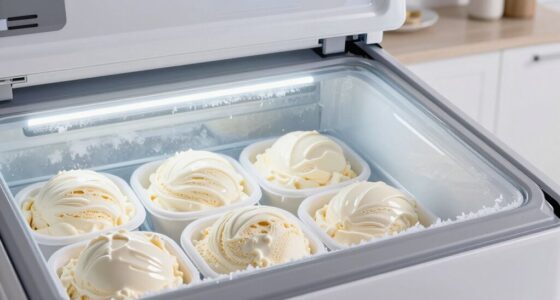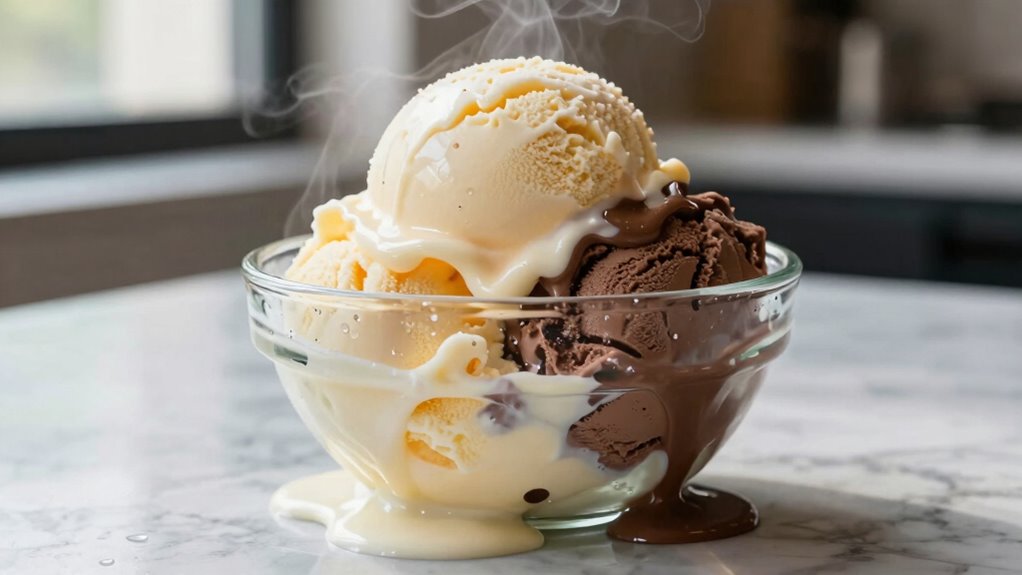

You shouldn’t let ice cream sit out at room temperature for more than two hours, as this heightens the risk of bacteria growth and spoilage. Once melted, it becomes unsafe to eat and loses its texture and visual appeal. If it stays out longer, the danger increases markedly. To keep your treat safe and delicious, it’s best to return it to the freezer promptly. Keep exploring to learn more about proper storage and handling tips.
Key Takeaways
- Ice cream should not be left out at room temperature for more than two hours to prevent bacterial growth.
- Melting ice cream becomes unsafe and loses quality, turning into a soupy, unappetizing mess.
- Keeping ice cream at temperatures above 0°F (-18°C) encourages spoilage and potential health risks.
- Use chilled trays or ice packs during serving to minimize melting time and maintain safety.
- Always return leftovers to the freezer promptly to preserve texture and prevent bacterial contamination.

When ice cream sits out at room temperature for too long, it quickly becomes a melting mess rather than a tempting treat. You might think that a few extra minutes won’t hurt, but in reality, it can compromise both its texture and safety. Proper storage safety involves understanding how temperature control impacts ice cream’s quality and the risk of bacterial growth. If you leave your ice cream out beyond the recommended time, you risk turning a once-perfect scoop into a soupy puddle that’s unappetizing and potentially unsafe to eat.
Leaving ice cream out too long turns it into a soupy, unsafe mess.
The key to maintaining ice cream’s freshness is keeping it at the right temperature—ideally, below 0°F (-18°C). When it’s stored correctly in the freezer, the cold temperature inhibits bacterial growth and preserves the ice cream’s texture. But once it leaves the freezer and sits at room temperature—around 68-72°F (20-22°C)—the ice cream begins to melt rapidly. The longer it stays out, the more it risks entering a zone where bacteria can multiply. Although melting may seem harmless, it can lead to bacterial contamination if the ice cream is left out for too long, especially if it’s been sitting out for more than two hours.
Temperature control is essential for safe storage. If you’re serving ice cream at a party or gathering, it’s best to keep it on a chilled tray or in a cooler with ice packs. This helps maintain a safe temperature longer, preventing it from melting quickly. Once you’re done serving, promptly return any leftovers to the freezer. Every minute the ice cream spends at room temperature increases the risk of spoilage and bacterial growth. Remember, the danger isn’t just about texture; it’s about food safety.
If you’re unsure whether ice cream has been out too long, it’s better to err on the side of caution. Even if it looks and smells okay, bacteria can be present without obvious signs. The general rule is: don’t leave ice cream out for more than two hours. Beyond that, the safety diminishes rapidly. Proper storage safety practices—like promptly returning ice cream to the freezer and maintaining strict temperature control—are the best ways to enjoy your favorite treat without risking your health. So next time you’re tempted to leave a bowl of ice cream out, remember that keeping it cold is the best way to preserve its quality and safety. Additionally, understanding the importance of temperature control can help prevent health risks associated with improperly stored frozen foods.
Frequently Asked Questions
Does the Type of Ice Cream Affect How Long It Can Sit Out?
Yes, the type of ice cream affects how long it can sit out. Dairy content and ingredient quality play a role because higher dairy levels, like in premium ice creams, melt faster and spoil sooner. If your ice cream has more stabilizers and artificial ingredients, it might last a bit longer at room temperature. Always consider these factors to guarantee safety and quality, especially if it’s been out for a while.
Can Ice Cream Be Safely Refrozen After Sitting Out?
Refreezing ice cream that’s been out is like trying to put a broken puzzle back together—you shouldn’t do it. Once it’s melted, bacteria can grow, increasing dairy spoilage risk and causing freezer burn if refrozen. If it’s only partially melted but still cold, you can refreeze it quickly, but for safety and quality, it’s better to discard fully melted ice cream.
How Does Ambient Temperature Influence Ice Cream Safety?
Ambient temperature greatly impacts ice cream safety by causing temperature fluctuations that can promote microbial growth. When temperatures rise above 40°F, bacteria can multiply quickly, risking foodborne illness. If ice cream sits out in warm conditions, it’s no longer safe to refreeze or consume, as bacteria may have developed. Keep your ice cream cold and avoid prolonged exposure to warm environments to guarantee safety and quality.
What Signs Indicate Ice Cream Has Gone Bad After Sitting Out?
You’ll notice signs that your ice cream has gone bad if its texture turns icy or grainy, indicating freezer burn or spoilage. Melting indicators, like a runny or soupy consistency, also suggest it’s been out too long. Sometimes, an off smell or discoloration appears, confirming it’s no longer safe to consume. Trust these visual and tactile clues to decide if your ice cream has spoiled.
Is There a Difference in Safety Between Homemade and Store-Bought Ice Cream?
There is a safety difference between homemade and store-bought ice cream because of their dairy composition and ingredient freshness. Store-bought ice cream usually contains stabilizers and preservatives that help it stay safe longer, even if left out briefly. Homemade ice cream, lacking these additives, is more prone to bacterial growth if not consumed quickly. Always prioritize proper storage and check for signs of spoilage to guarantee safety.
Conclusion
Remember, patience is a virtue, but not when it comes to ice cream. If it’s been sitting out for more than 2 hours, it’s best to play it safe and toss it. Bacteria can sneak in quickly, and no dessert is worth risking your health. So, next time you’re tempted to leave it out, think twice—keeping things cold keeps everyone happy and healthy. Better safe than sorry, after all.