To use a freezer alarm effectively, place the sensor away from door gaskets and vents, near the center of the freezer for accurate readings. Set the alarm to trigger around 0°F (-18°C), and check it regularly to guarantee it’s functioning. Test the alarm periodically and make sure alerts are audible or sent to your device. By following these steps, you’ll catch issues early – and there’s more to fine-tune for ideal protection.
Key Takeaways
- Place sensors away from door gaskets and vents for accurate internal temperature readings.
- Regularly test the alarm to ensure it correctly detects temperature deviations.
- Set the alarm to reflect the freezer’s safe temperature range, around 0°F (-18°C).
- Use visual indicators and audible alerts for immediate notification of temperature issues.
- Reposition sensors or adjust sensitivity if false alarms occur frequently or environmental factors change.
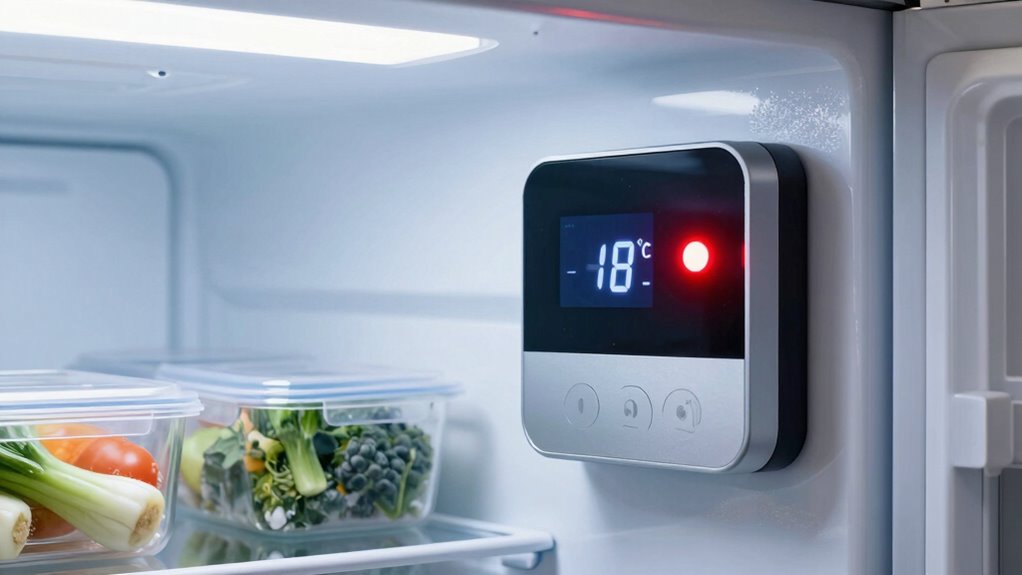
A freezer alarm is a simple yet effective device that helps you prevent food spoilage by alerting you when your freezer’s temperature rises above a safe level. To maximize its benefits, you need to understand proper temperature monitoring and alarm placement. First, verify your alarm is set up in a location that accurately reflects the temperature inside your freezer. Usually, this means placing the sensor near the center or away from the door, where temperature fluctuations are minimal. If the alarm has multiple sensors, position them in different areas to get a thorough view of the freezer’s conditions. Proper alarm placement is essential because it helps prevent false alarms caused by cold air escaping when opening the door or minor temperature dips near the door seal. Keep the sensor away from the door gasket, vents, or any areas prone to temperature variation to ensure accurate readings. Once positioned correctly, you can focus on effective temperature monitoring. Regularly check the alarm’s readings or set it to notify you immediately if the temperature exceeds the recommended range, typically around 0°F (-18°C). Many alarms have visual indicators like LEDs or digital displays, but the key feature is an audible alert that wakes you or alerts you when something’s wrong. You should test the alarm periodically to verify it’s working properly, which involves temporarily raising the freezer temperature or pressing the test button if available. When the alarm sounds, act quickly to identify and fix the problem—whether it’s a power outage, door left open, or malfunctioning thermostat. Monitoring the temperature consistently and verifying proper alarm placement helps you catch issues early, minimizing the risk of food spoilage and waste. Keep in mind that environmental factors, such as frequent door openings or a poorly insulated freezer, can impact temperature stability, so adjust your alarm settings or placement accordingly. If you notice frequent false alarms, consider repositioning the sensor or adjusting the sensitivity settings. Some advanced alarms allow remote notifications via smartphone, making it easier to monitor your freezer remotely. Additionally, understanding proper temperature regulation and how different environments can affect your freezer’s performance can enhance your alarm’s effectiveness. Regardless of the model, the goal remains the same: maintaining a stable temperature to preserve your food and avoid costly losses. By paying attention to temperature monitoring and alarm placement, you’re taking proactive steps to protect your investment and ensure your food stays safe. With regular checks and proper setup, your freezer alarm becomes a reliable safeguard against unexpected temperature rises, giving you peace of mind that your frozen goods are always stored safely.
Frequently Asked Questions
Can Freezer Alarms Be Connected to Smart Home Systems?
Yes, freezer alarms can be connected to smart home systems through smart home integration. Many modern alarms feature wireless connectivity, allowing you to link them with your smart hub or app. This setup enables you to receive real-time alerts on your phone if your freezer’s temperature rises or drops unexpectedly. With wireless connectivity, you can easily monitor your freezer remotely and guarantee your food stays safe, giving you peace of mind.
How Long Do Freezer Alarms Typically Last?
You might think freezer alarms last forever, but they typically have a battery life of about 6 to 12 months. To keep yours working well, follow alarm maintenance tips like checking the battery regularly and replacing it when needed. It’s essential to stay proactive, so you catch freezer issues early and avoid spoiled food. Don’t overlook this small step; it can save you from costly surprises down the line.
Are There Different Types of Freezer Alarms?
Yes, there are different types of freezer alarms designed for temperature monitoring. You can choose between digital alarms, which provide precise alerts, and analog alarms, which use visual indicators like lights or dials. Some alarms connect to your phone via Wi-Fi for remote monitoring. Selecting the right alarm type depends on your needs, ensuring you catch temperature fluctuations early and keep your freezer contents safe.
What Is the Cost Range for Freezer Alarms?
Like a trusted lighthouse guiding ships through storms, freezer alarms keep your food safe. They typically cost between $10 and $50, depending on features and quality. Consider maintenance costs and product warranties when choosing one; a higher price often means better durability and coverage. Investing wisely guarantees you catch issues early, saving money and preventing spoilage—your own personal sentinel against freezer mishaps.
Do Freezer Alarms Require Professional Installation?
Freezer alarms typically don’t require professional installation; most come with straightforward setup instructions. You just need to follow the installation requirements, like placing the sensor inside the freezer and connecting it to a power source or app. To keep your alarm working well, perform regular maintenance tips, such as checking the batteries and ensuring the sensor stays in place. That way, you catch problems early and keep your food safe.
Conclusion
By setting up a freezer alarm, you’re not just protecting your food—you’re potentially preventing costly spoilage and waste. Some say alarms can even detect early signs of freezer failure before you notice, saving you time and money. Imagine catching a problem before it ruins everything—sounds almost like having a guardian angel for your frozen goods. So, don’t wait—install that alarm today and stay one step ahead of freezer trouble. Your food will thank you.