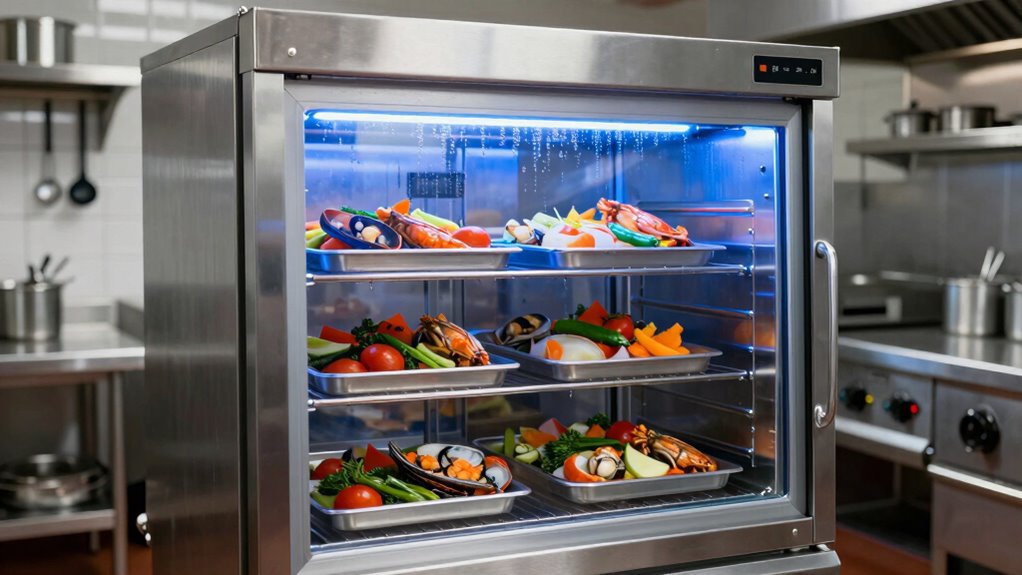

Blast chillers improve food safety by quickly lowering cooked food from above 140°F to about 40°F, controlling the temperature zone where bacteria grow fastest. This rapid cooling prevents bacteria like Salmonella and Listeria from multiplying, reducing the risk of foodborne illnesses. They help you comply with safety regulations and keep food safe during storage. If you want to see how this process guarantees both safety and quality, keep exploring the details.
Key Takeaways
- Rapid cooling from above 140°F to 40°F or below prevents bacteria from multiplying rapidly.
- They minimize the time food spends in the temperature danger zone, reducing contamination risks.
- Blast chillers support compliance with food safety regulations by ensuring proper cooling procedures are followed.
- They help preserve food quality while maintaining safe storage temperatures, reducing spoilage.
- Using blast chillers proactively controls bacterial growth, lowering the risk of foodborne illnesses.

Blast chillers play a essential role in ensuring food safety by rapidly lowering the temperature of cooked foods, which helps prevent bacterial growth. When food is cooked, it often reaches temperatures that can support the rapid proliferation of foodborne bacteria. If not cooled quickly and properly, these bacteria can multiply to dangerous levels, increasing the risk of foodborne illnesses. This is where effective temperature control becomes indispensable. By swiftly reducing the temperature of hot foods, blast chillers minimize the window during which bacteria can thrive, safeguarding your customers and your reputation.
Blast chillers rapidly reduce cooked food temperatures, preventing bacterial growth and ensuring food safety and quality.
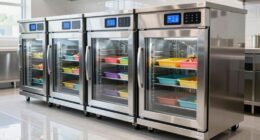
Using a blast chiller, you can bring cooked foods from temperatures above 140°F (60°C) down to refrigerator-safe levels—around 40°F (4°C)—within a matter of hours. This rapid cooling process is critical because it prevents the food from lingering in the temperature danger zone, typically between 40°F and 140°F. In this zone, bacteria grow most rapidly, and the longer food stays there, the higher the risk of contamination. Blast chillers effectively shorten this window, giving you a crucial advantage in maintaining food safety standards.
Temperature control isn’t just about cooling; it’s about controlling the entire cycle of food handling. When you use a blast chiller, you’re actively managing how long food stays at unsafe temperatures. This control is especially important in commercial kitchens where large quantities of cooked food need to be stored safely before serving or further processing. Without proper cooling, even well-cooked food can become a breeding ground for dangerous bacteria, such as Salmonella, Listeria, and Clostridium perfringens. These pathogens can cause severe illnesses, and their presence is preventable with the right cooling methods.
Additionally, blast chillers help preserve food quality by preventing moisture loss, texture deterioration, and flavor degradation that often occur with slow cooling methods. This dual benefit of safety and quality makes blast chillers indispensable in professional kitchens. They also support compliance with food safety regulations, which often specify strict guidelines for cooling procedures to prevent bacterial growth. By adhering to these standards with the help of blast chillers, you reduce liability risks and ensure your operation meets health department requirements.
Furthermore, incorporating blast chillers into your food safety practices aligns with the principles of temperature control, which is fundamental in preventing foodborne illnesses. In essence, blast chillers are more than just a convenience; they are a essential tool for controlling temperature and protecting against foodborne bacteria. They empower you to manage food safety proactively, reduce waste, and deliver high-quality, safe products to your customers. Proper use of blast chillers means you’re taking a critical step in preventing foodborne illnesses and maintaining the integrity of your food service operation.
Frequently Asked Questions
How Do Blast Chillers Prevent Bacterial Growth in Cooked Foods?
You can prevent bacterial growth in cooked foods through rapid cooling with blast chillers. By quickly lowering the temperature, they inhibit bacteria from multiplying, which normally thrives in the “danger zone” between 40°F and 140°F. This bacterial inhibition guarantees your food stays safe longer, reduces spoilage, and maintains quality. Using a blast chiller is a smart, effective way to manage food safety and keep your dishes fresh and secure.
Are Blast Chillers Suitable for All Types of Food?
Like a master chef choosing the perfect ingredient, you’ll find blast chillers suit most foods, but not all. They preserve food texture and guarantee storage compatibility, making them versatile for cooked meats, seafood, and delicate pastries. However, some items with high moisture or specific temperature needs might require alternative methods. You’ll want to assess each food’s characteristics to maximize safety, quality, and efficiency in your kitchen.
What Are the Energy Consumption Differences Between Blast Chillers and Traditional Refrigeration?
You’ll find that blast chillers generally have higher power consumption than traditional refrigeration, but they’re more energy-efficient during rapid cooling cycles. Their advanced technology reduces overall energy use by minimizing temperature fluctuations and optimizing power consumption. While they may use more energy upfront, the improved energy efficiency and faster cooling times can save you money long-term, making blast chillers a smart choice for maintaining food safety and reducing energy costs.
How Do Blast Chillers Impact Overall Food Shelf Life?
Blast chillers extend your food’s shelf life by rapidly lowering temperature, preserving freshness, and preventing spoilage. They enhance food preservation by maintaining ideal quality and texture, while supporting quality control through consistent cooling. This quick process minimizes bacterial growth, reduces waste, and helps you serve safer, fresher meals longer. With blast chillers, you guarantee your food remains at its best, boosting efficiency and customer satisfaction.
Do Blast Chillers Require Special Maintenance or Staff Training?
Yes, blast chillers require staff training to operate safely and efficiently. You should make sure your team understands proper procedures to prevent food safety issues. Regular equipment maintenance is also essential; it keeps the blast chiller functioning correctly and extends its lifespan. By investing in both staff training and routine maintenance, you optimize performance, maintain food safety standards, and reduce the risk of costly repairs.
Conclusion
Now that you understand how blast chillers can revolutionize your food safety, imagine what could happen if you ignore their benefits. Delays in cooling can lead to dangerous bacteria growth, risking your reputation and customer health. Are you prepared to take that chance? By investing in a blast chiller, you’re not just saving time—you’re safeguarding your entire operation. The choice is yours: stay ahead or risk falling behind. Will you act now?