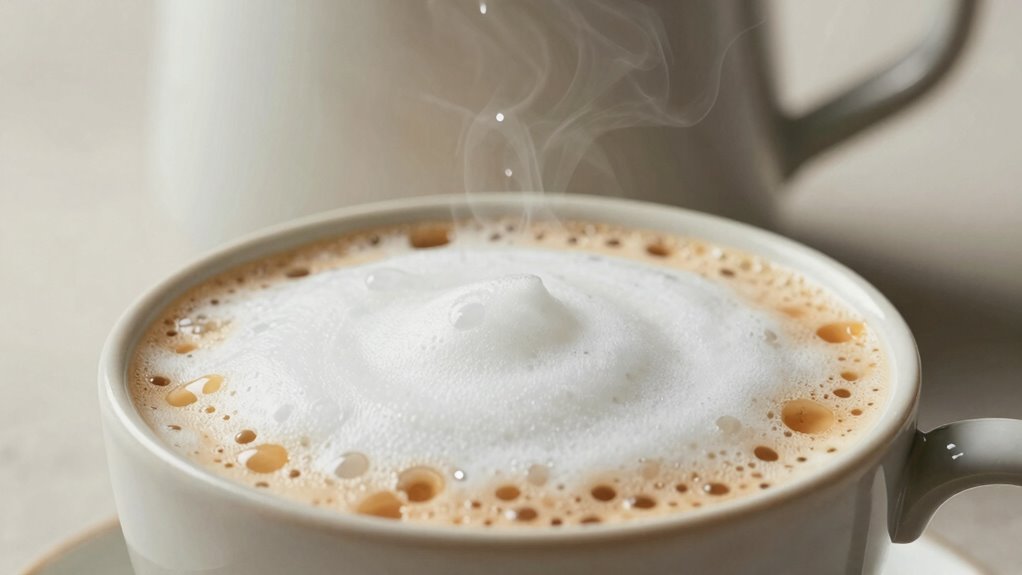

Foam quality in milk frothers drops faster than you think mainly because of buildup from milk residue and mineral deposits. If you don’t clean your device regularly with warm water and gentle brushes, these deposits clog the frother, causing uneven heating and frothing. Over time, this leads to smaller, less stable bubbles and poor foam. Proper maintenance and attention to temperature and milk type will help keep your foam creamy and long-lasting—stick around to get more tips.
Key Takeaways
- Residue buildup and mineral deposits clog the frother, causing uneven heating and foam collapse.
- Lack of regular cleaning allows bubbles to become unstable, reducing foam longevity.
- Improper temperature control leads to overheating or uneven heating, causing foam to deflate quickly.
- Using low-fat or plant-based milk can produce less stable foam, diminishing quality over time.
- Poor device maintenance and worn seals impair performance, resulting in faster foam degradation.
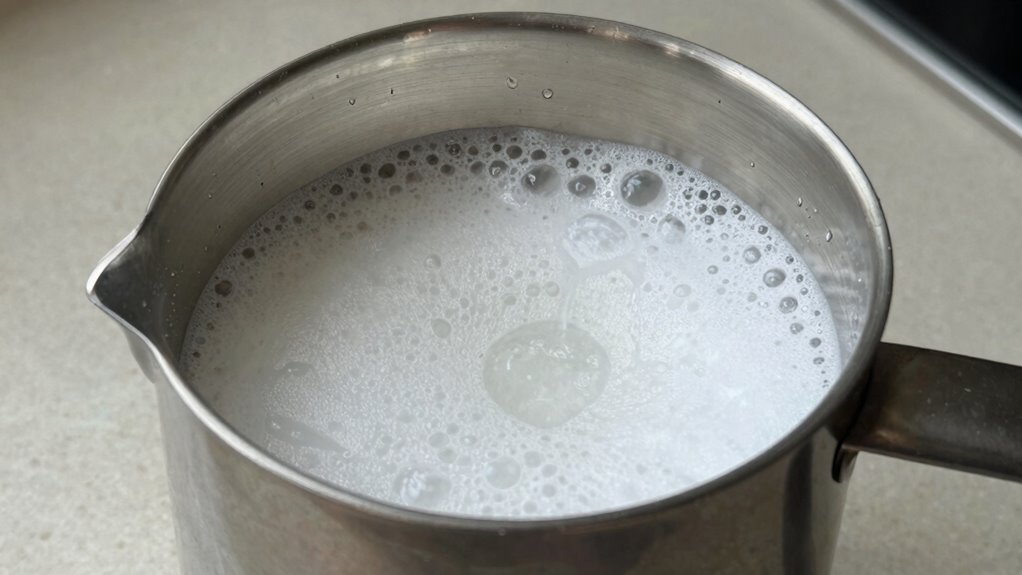
Ever wondered how to create that perfect, creamy foam for your coffee or espresso drinks? Achieving the ideal foam isn’t just about pressing a button; it’s about understanding how your milk frother works and how to keep it in top shape. The quality of foam you produce directly impacts your coffee flavor, making each sip more enjoyable. But many people don’t realize that foam quality can drop surprisingly fast, often due to neglecting proper frother maintenance and a lack of attention to detail during use.
Great foam depends on understanding and maintaining your frother, not just pressing a button.
First, the secret to long-lasting foam starts with your milk frother’s cleanliness. Over time, milk residue and mineral buildup can clog the device, preventing it from heating and frothing evenly. This leads to smaller, less stable bubbles that quickly deflate, diminishing the foam’s creaminess. Regular frother upkeep—cleaning after each use—is essential to prevent these issues. Use warm water and a gentle brush to remove milk residue, and avoid harsh chemicals that could damage sensitive parts. Keeping your frother clean ensures it functions efficiently, helping you maintain that rich, velvety foam which enhances your coffee’s flavor profile. Additionally, understanding device maintenance can help prevent common issues and extend the lifespan of your frother.
Temperature control plays a crucial role here. When your frother isn’t heating milk properly or if it’s overheating, the resulting foam may lack the desired creaminess or stability. Check that your device’s temperature settings are accurate and consistent for the best results. If your frother is not heating evenly or if the foam deflates quickly, it’s often a sign that it needs a thorough cleaning or even a replacement of certain parts. Proper frother maintenance extends beyond cleaning; it involves periodically inspecting seals and heating elements to ensure they perform at their best. Additionally, understanding the importance of regular maintenance routines can make a significant difference in maintaining optimal function and foam quality over time. Moreover, choosing the right milk type can greatly influence the stability and texture of your foam, making it essential to experiment with different options to find what works best for your preferences.
Another factor that influences foam quality is milk choice. Whole milk tends to produce the most stable, creamy foam due to its fat content, which contributes to better foam stability and richer coffee flavor. Lower-fat or plant-based milks can froth well but may require different techniques or adjustments in frothing time and temperature. Experimenting with these options can help you find the perfect balance for your preferred coffee experience. Remember, understanding milk quality—including freshness and composition—can also contribute to achieving superior foam results.
In the end, creating and maintaining perfect foam is a combination of technique and care. Regularly cleaning your frother prevents buildup that causes foam to collapse prematurely, while paying attention to temperature and milk type enhances flavor and foam quality. The effort you put into frother maintenance and understanding how your device works means you’ll enjoy consistently luscious, stable foam—taking your coffee from good to extraordinary, sip after sip.

Milk Foamer Hose Brush, Tube Hose Cleaner Brush Ideal for Espresso & Coffee Machine Attachments,Extra Long Stainless Steel Brush for Cleaning Reusable Drinking Straws, Keg Lines and Pipes(13.7in)
- Deep Cleaning Compatibility: Removes dried milk from espresso systems
- Multi-Size Brush System: Includes three sizes for precision cleaning
- Extra Long Reach: 13.7-inch brush for deep access
As an affiliate, we earn on qualifying purchases.
As an affiliate, we earn on qualifying purchases.
Frequently Asked Questions
How Does Milk Temperature Affect Foam Longevity?
You’ll notice milk temperature considerably impacts foam longevity. When milk is too hot, its composition changes, causing the foam to collapse faster. Ideally, you should froth milk at around 140°F to 150°F for ideal foam stability. Using proper frothing techniques, such as gentle steaming and avoiding over-heating, helps maintain foam quality longer. Temperature control is key to achieving lasting, creamy foam that enhances your coffee experience.
Can Non-Dairy Milk Produce the Same Foam Quality?
Non-dairy alternatives are like a wild card, offering varied foam stability. While some, like oat or soy milk, can produce decent foam, others may struggle to hold their shape. The key is choosing options with higher fat and protein content, which help create richer, more stable foam. Experimenting helps you find the best non-dairy milk for your frothing needs, ensuring your drinks look and taste great.
Does Cleaning Frequency Impact Foam Stability Over Time?
Yes, cleaning frequency greatly impacts foam stability over time. If you neglect regular cleaning routines, residue builds up inside your milk frother, leading to foam degradation. This buildup interferes with the frother’s ability to create and maintain stable foam. To keep your foam quality high, clean your device after each use, ensuring no leftover milk or residue compromises its performance. Consistent cleaning preserves foam stability longer.
Are There Specific Features That Improve Foam Durability?
While some might think all milk frothers deliver the same foam, specific features actually boost foam durability. Look for devices with adjustable temperature controls and powerful motor heads, which enhance foam texture and stability. Your frothing techniques also matter—using the right angle and steady motion creates finer, longer-lasting foam. Combining these features and techniques guarantees your milk foam stays luscious and firm longer, elevating your coffee experience.
How Does Ambient Humidity Influence Foam Lifespan?
Ambient humidity considerably influences foam lifespan because environmental factors affect milk’s stability. When humidity is high, moisture in the air can break down the foam’s structure, causing it to collapse faster. Additionally, milk composition plays a role; higher fat or protein levels can help maintain foam longer, but if environmental conditions aren’t ideal, even the best milk won’t produce lasting foam. Keep your environment dry for longer-lasting froth.
Conclusion
Understanding why foam quality drops quickly helps you enjoy better coffee. Did you know that over 60% of foam deterioration happens within the first five minutes? By paying attention to milk temperature, freshness, and proper frothing techniques, you can extend the life of your foam and savor that perfect café-quality latte longer. So, next time, take a moment to refine your process—you’ll be amazed at how much longer your foam stays perfect.