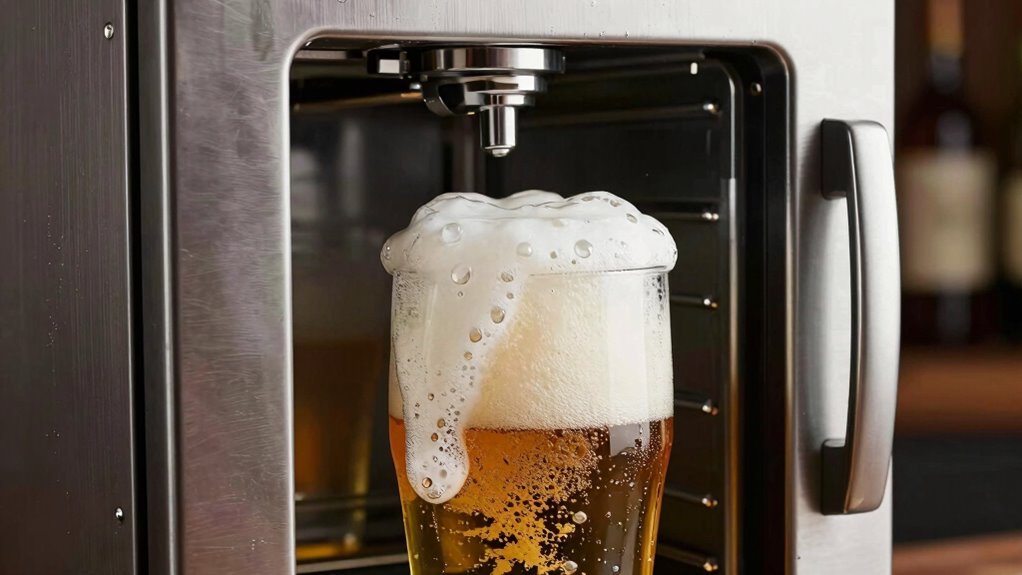
Your kegerator probably foams because of dirty or clogged beer lines, incorrect pressure settings, or temperature issues. If your lines aren’t clean, buildup can disrupt flow and cause excess foam. Too much pressure forces too much CO2, leading to frothy pours, while too little slows down the flow and increases foaming. Additionally, if your beer isn’t kept at the right temperature, it can gush and foam excessively. If you want solutions, keep exploring these common causes.
Key Takeaways
- Excessive CO2 pressure causes over-carbonation and foamy pours; adjust the regulator to the recommended PSI.
- Dirty or clogged beer lines lead to buildup, disrupting flow and increasing foam; regular cleaning is essential.
- Improper temperature control (too warm or fluctuating) results in poor flow and excessive foaming; maintain 36-38°F.
- Faulty or improperly poured taps create turbulence and foam; clean and operate taps correctly with proper pouring technique.
- Leaks or incorrect pressure settings can cause inconsistent flow and foam issues; regularly inspect and calibrate equipment.
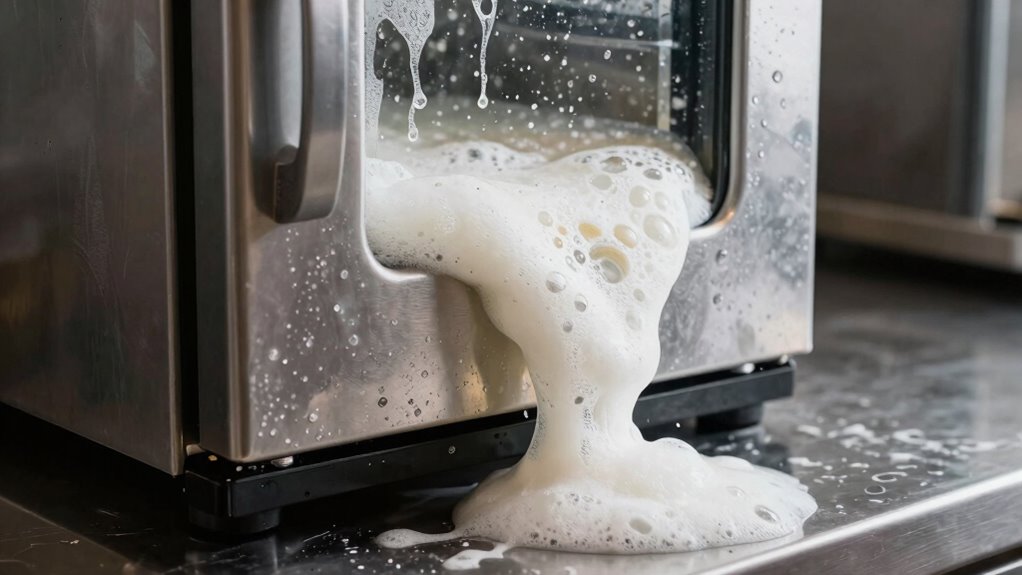
If your kegerator is foaming excessively, it can be frustrating and wasteful. The first thing you should check is your beer line cleaning. Over time, beer lines can accumulate mold, yeast buildup, and beer residue, which disrupts proper flow and causes excessive foaming. Regularly cleaning your beer lines with the right cleaning solutions ensures smooth beer flow and prevents foaming issues. Make sure to flush the lines thoroughly and rinse well to remove any lingering debris or cleaning residue. Neglecting this step often leads to inconsistent pour quality and increased foam, so schedule regular cleanings—especially if you notice your beer tastes off or if foam persists despite other adjustments. Proper maintenance of your equipment, including inspecting seals and fittings, can also prevent leaks that contribute to foaming problems.
Regularly clean beer lines to prevent mold and residue buildup that cause excess foaming.
Another common culprit behind foaming is improper CO2 pressure adjustment. If the pressure is too high, it forces excess CO2 into the tap, resulting in a frothy pour. Conversely, if the pressure is too low, the beer may flow too slowly or not at all, causing inconsistent pouring and foam buildup. To fix this, use a regulator gauge to set the CO2 pressure within the recommended range for your specific beer type—usually between 10-14 PSI for most lagers and ales. Adjust the pressure gradually, then pour a test beer to see if the foam reduces. Proper CO2 pressure not only stops excessive foaming but also maintains the beer’s carbonation and flavor profile.
Temperature management plays an essential role too. If your kegerator isn’t cold enough, the beer won’t flow smoothly, leading to foams and gushers. Ensure your kegerator is set to the right temperature—typically between 36-38°F (2-3°C). If it’s warmer, the beer becomes more volatile, causing foam and spillage. Use a thermometer to verify the temperature regularly and adjust the thermostat as needed. Keeping the beer at a consistent, proper temperature allows for a steady pour, reducing foaming caused by temperature fluctuations. Additionally, the contrast ratio of your kegerator setup can influence how well the beer maintains its clarity and quality during pouring.
Lastly, improper pouring techniques or faulty equipment can contribute to foaming. Make sure your tap is fully cleaned, and that you’re pouring at a proper 45-degree angle, then gradually tilt the glass upright as it fills. Check your tap faucet for any damage or buildup that might hinder a smooth pour. Replacing worn-out parts or thoroughly cleaning the tap can greatly reduce foam. Taking these steps, along with checking your beer line cleaning and CO2 pressure adjustment, will help you achieve a clean, steady pour every time.
Frequently Asked Questions
Can Temperature Fluctuations Cause Kegerator Foaming?
Yes, temperature fluctuations can cause your kegerator to foam. When temperature stability isn’t maintained, the compressor cycles more frequently, leading to inconsistent pressure and carbonation levels. These fluctuations can cause excess foaming when pouring, as the beer’s internal pressure changes rapidly. Keeping your kegerator at a steady temperature minimizes compressor cycles and guarantees your beer pours smoothly without excessive foam.
How Does Beer Type Affect Foaming Problems?
Did you know that certain beer styles, like stouts and IPAs, are more prone to foaming? You’ll notice that beer type considerably impacts foam consistency and clarity; hazier beers tend to foam more because of their carbonation levels and ingredients. When you choose a beer with a high residual sugar content, expect more foam. Adjusting your pouring technique and temperature helps manage these foaming issues effectively.
What’s the Ideal Pressure Setting for Minimal Foaming?
You should set your CO2 pressure around 12-14 PSI for minimal foaming, but it depends on your beer type and temperature stability. Maintaining consistent temperature helps prevent pressure fluctuations that cause foaming. Regularly check and adjust the CO2 pressure to match your beer’s carbonation level, and make sure your kegerator temperature stays steady. This combination keeps beer flowing smoothly with minimal foam.
Does Cleaning the Keg Help Reduce Foam?
Think of your kegerator as a well-tuned orchestra; cleaning it regularly guarantees harmony. Yes, cleaning the keg helps reduce foam by removing beer residuals that can cause obstructions or contamination. Frequent cleaning prevents buildup that disrupts flow and causes foaming. By maintaining a clean keg, you keep the system smooth and your beer tasting perfect, ensuring each pour hits the right note without unwanted foam.
Are There Specific Brands More Prone to Foaming?
Some brands tend to be more prone to foaming due to inconsistent brand reliability and keg compatibility issues. You’ll notice that certain popular brands might not fit perfectly or maintain pressure well, causing excess foam. To minimize this problem, stick with reputable brands known for reliable quality and guarantee your kegs are compatible with your kegerator. Proper brand selection and compatibility checks can markedly reduce foam and improve your tap experience.
Conclusion
Remember, a foaming kegerator isn’t just a minor hiccup—it’s a red flag waving for your beer’s happiness. By checking your temperature, cleaning lines, and ensuring proper pressure, you’re tuning up your setup like a finely crafted instrument. Fix these issues, and your beer will flow smooth as silk. Don’t let foam steal your perfect pour—treat it like a puzzle waiting to be solved, and soon, every sip will be pure liquid gold.