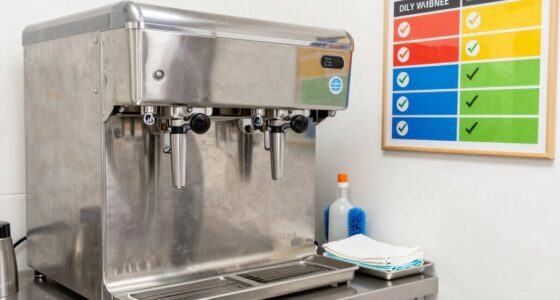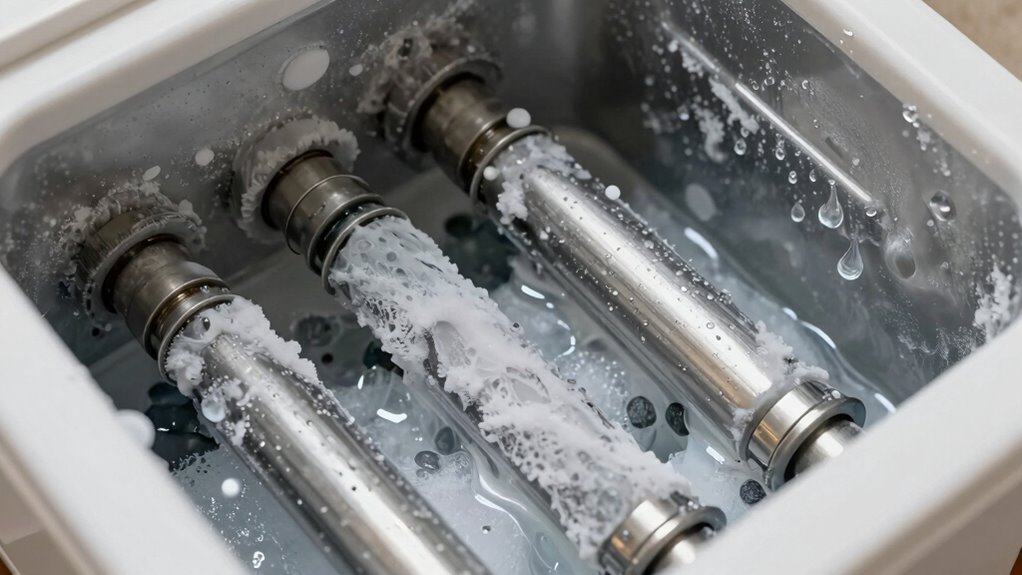
Scale buildup from minerals like calcium and magnesium quietly reduces your ice maker’s performance. It causes cloudy ice, slows production, and can lead to costly repairs if ignored. Hard water with high mineral content accelerates this issue, especially without proper filtration or regular maintenance. If you don’t address it early, your ice maker’s efficiency drops, and its lifespan shortens. Keep watching to discover how to prevent and remove this silent killer before it damages your machine.
Key Takeaways
- Mineral deposits from hard water create crusts that obstruct water flow and reduce ice quality.
- Scale buildup hampers ice maker efficiency, causing cloudy ice and slower production.
- Lack of proper water filtration allows minerals to accumulate and accelerate scale formation.
- Infrequent cleaning and descaling lead to performance decline and potential malfunctions.
- Regular maintenance and filter replacement prevent mineral buildup, ensuring optimal ice production.
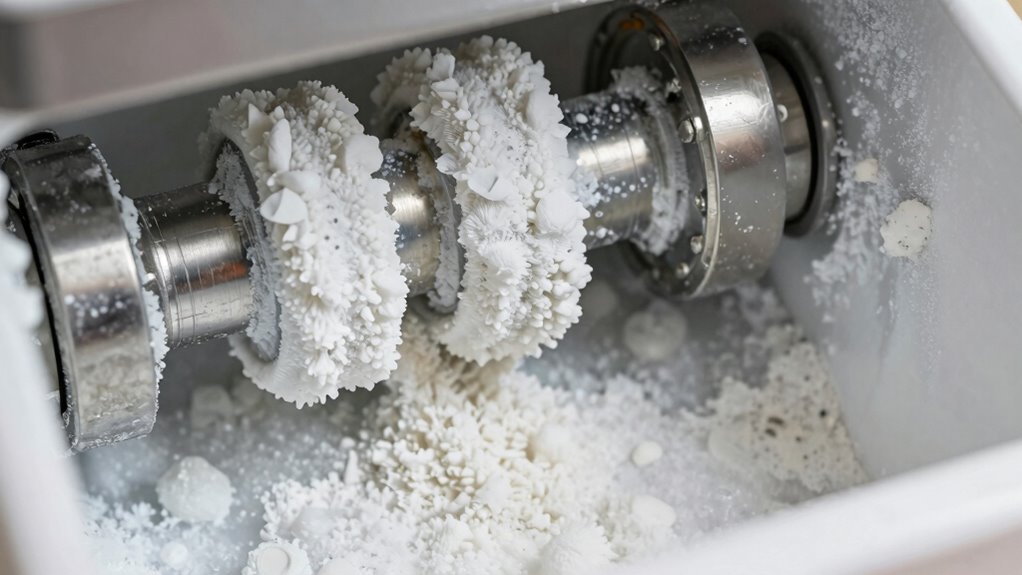
Have you noticed your ice maker producing cloudy or uneven ice? If so, scale accumulation might be the culprit. Over time, minerals in your water can gather inside your ice maker, forming a crust that hampers its efficiency. This buildup not only affects the clarity and quality of your ice but also gradually diminishes the appliance’s performance. Luckily, addressing this issue isn’t complicated if you understand what’s happening and follow some simple steps. One of the most effective ways to prevent scale buildup is guaranteeing proper water filtration. Using a high-quality water filter removes minerals and impurities before they reach your ice maker, considerably reducing the chances of scale forming. Without good filtration, minerals like calcium and magnesium settle inside your machine, creating that stubborn crust that’s so hard to clean once it’s established.
Scale buildup causes cloudy, uneven ice; proper filtration and maintenance keep your ice maker running efficiently.
Regular maintenance is key to keeping your ice maker running smoothly. Start by cleaning the interior and exterior periodically to remove any mineral deposits or residue. Most manufacturers recommend a thorough descaling every six months, especially if your water has a high mineral content. You can do this by running a vinegar or commercial descaling solution through the system, following the manufacturer’s instructions. This process dissolves mineral deposits, restoring proper water flow and ice clarity. Additionally, check the water inlet valve and filters regularly, replacing filters as needed to maintain ideal water quality. Doing so ensures that only clean, filtered water enters your ice maker, considerably reducing mineral buildup.
Another maintenance tip is to keep an eye on the water supply line for any leaks or blockages. Sometimes, mineral deposits can clog the inlet or drain lines, causing uneven ice production or partial blockages. If you notice your ice maker isn’t performing as well as it used to, inspect these lines and clean them if necessary. Remember, consistent water filtration and routine maintenance are your best defenses against scale buildup. Beyond cleaning, consider setting reminders for filter replacements and descaling schedules. These proactive steps prevent mineral accumulation before it becomes a problem, extending your ice maker’s lifespan and maintaining ice quality. Incorporating proper water filtration technology, such as reverse osmosis or specialized filters, can further enhance water purity and prevent scale formation.
In the end, scale buildup is a silent enemy that can drastically reduce your ice maker’s efficiency if ignored. By prioritizing water filtration and adhering to simple maintenance tips, you can keep your machine in top shape. This approach ensures you get clear, fresh ice every time, without the frustrating performance drops or costly repairs. Taking care of your ice maker isn’t just about convenience; it’s about protecting your investment and enjoying consistently high-quality ice for years to come.
Frequently Asked Questions
How Often Should I Descale My Ice Maker?
You should descale your ice maker every 3 to 6 months to maintain ideal performance. Regular maintenance tips include checking for mineral buildup and using a descaling solution when needed. The descaling frequency depends on your water hardness—hard water may require more frequent cleaning. By staying on top of these steps, you’ll prevent scale buildup, ensure clear ice, and extend your ice maker’s lifespan.
Can Scale Buildup Cause Health Issues?
Scale buildup can pose health concerns because mineral deposits can harbor bacteria and mold. Studies show that poorly maintained ice makers can contain bacteria levels up to 60% higher than clean ones. These deposits, mainly from hard water, can contaminate ice, risking health issues like gastrointestinal illnesses. To stay safe, regularly descale your ice maker and make sure it’s clean, especially if you notice scale buildup or strange tastes.
What Tools Are Best for Removing Scale?
For effective scale removal, you should use descaling tools like a plastic scraper or a soft brush to gently loosen buildup. Commercial descaling solutions or vinegar are also excellent for dissolving mineral deposits. Always follow manufacturer instructions to avoid damaging your ice maker. Regular use of these descaling tools and solutions keeps your ice maker running efficiently, preventing performance issues caused by scale buildup.
Does Water Hardness Affect Scale Formation?
Yes, water hardness considerably impacts scale formation. When your water quality has high mineral content, especially calcium and magnesium, it accelerates scale buildup inside your ice maker. Hard water leaves deposits that clog and reduce efficiency. To prevent this, consider installing a water softener or using filtered water. Regular maintenance helps keep mineral levels low, ensuring your ice maker runs smoothly and produces clear, quality ice without unwanted scale.
Are There Preventive Products for Scale Buildup?
Yes, there are preventive products for scale buildup. You can employ scale prevention methods like installing water softeners or using descaling products designed for ice makers. Regularly applying descaling products helps break down existing mineral deposits and prevents new buildup. By incorporating these products into your maintenance routine, you ensure your ice maker operates efficiently and prolongs its lifespan, avoiding costly repairs caused by scale accumulation.
Conclusion
If you ignore scale buildup in your ice maker, it’s like letting a tiny leak sink your ship. Regular cleaning keeps your ice maker running smoothly and prevents performance from slipping away, bit by bit. Think of scale as the silent thief stealing your machine’s efficiency. Stay vigilant, clean often, and keep your ice maker in top shape—otherwise, it’ll just quietly drown in its own buildup, leaving you with less ice and more headaches.