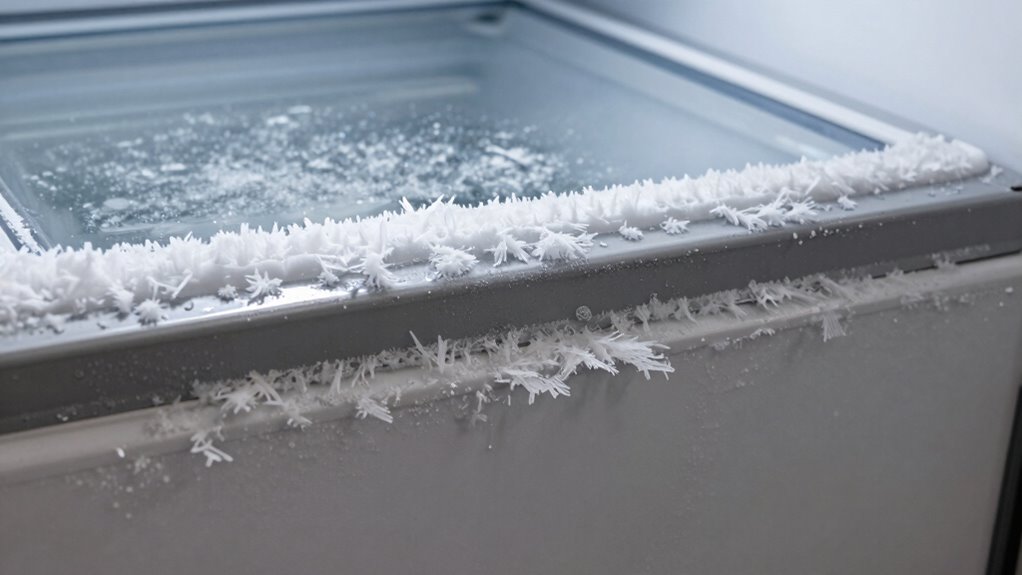

Excessive frost in your chest freezer usually means warm, humid air is getting in, often from a faulty seal or frequent door openings. Hot or uncovered foods add moisture, while poor insulation can cause uneven cooling and more frost. If you see thick ice buildup, it’s a sign you should check the gasket, reduce door openings, and defrost regularly. To prevent damage and keep your freezer efficient, understanding what the ice buildup indicates is key—more tips await if you keep exploring.
Key Takeaways
- Excessive frost indicates frequent or prolonged door openings allowing humid air inside.
- Thick ice buildup suggests poor door seals or gasket leaks letting warm air enter.
- Ice formation from hot or uncovered foods increases moisture inside the freezer.
- Rapid frost accumulation may signal malfunctioning automatic defrost systems or need for manual defrosting.
- Persistent frost can reduce airflow, decrease cooling efficiency, and strain the compressor.

Frost buildup often occurs when warm, humid air enters the freezer, causing moisture to condense and freeze on the interior surfaces. Every time you open the lid, humidity gets into the freezer, and if you don’t regularly defrost, the ice layer can quickly become thick. This thick layer hampers airflow and makes cooling less effective. The key to maintaining ideal energy efficiency is to keep frost levels in check through regular defrosting. Depending on your freezer model, you might need manual or automatic defrosting methods.
Manual defrosting involves turning off your freezer, removing all stored items, and letting the ice melt naturally or with the help of warm water. While it might seem inconvenient, doing this every few months prevents thick frost buildup and keeps your freezer running efficiently. During the defrosting process, you can scrape off ice gently with a plastic spatula and wipe away excess water to avoid messes. Using a hairdryer on a low setting can speed things up, but be cautious to avoid electrical hazards. Regular manual defrosting ensures the appliance operates at peak energy efficiency and prolongs its lifespan.
Automatic defrost freezers, on the other hand, come with built-in defrosting systems that periodically melt away ice without user intervention. If your freezer has this feature, you won’t need to manually defrost often, but it’s still wise to keep an eye on frost levels. When you notice excessive ice buildup, it might indicate a malfunction in the defrost system, which requires professional attention. Proper maintenance and timely defrosting not only improve energy efficiency but also prevent ice from damaging the compressor or other components. Understanding how frost formation occurs can help you better prevent it from happening in the first place.
In any case, keeping the door seal tight helps minimize warm air entry, reducing frost formation. Also, avoid placing hot or uncovered foods directly into the freezer, as this introduces moisture that accelerates ice buildup. Regularly checking and cleaning the gasket ensures a good seal, contributing to more efficient operation. When frost does start to accumulate, addressing it promptly with the right defrosting method restores your freezer’s efficiency and storage capacity. Ultimately, understanding and managing frost buildup is essential for energy savings and maintaining your appliance’s longevity.
Frequently Asked Questions
How Often Should I Defrost My Chest Freezer?
You should defrost your chest freezer when the ice buildup reaches about a quarter-inch thick. A good defrosting schedule is every 3 to 6 months, depending on usage and humidity. Regular freezer maintenance helps prevent excessive frost, ensuring efficient operation. Keep an eye on the frost level, and defrost sooner if you notice it’s thickening, to maintain peak performance and save energy.
Can Frost Buildup Damage My Freezer?
A stitch in time saves nine, so frost buildup can indeed damage your freezer. Excessive frost formation can compromise freezer insulation, making it less efficient and risking motor strain. Over time, thick ice layers can cause parts to malfunction or even break. To prevent this, regularly defrost your freezer and keep an eye on frost formation, ensuring your appliance runs smoothly and lasts longer.
What Temperature Should My Chest Freezer Be Set To?
You should set your chest freezer to 0°F (-18°C) for ideal performance. Confirm proper temperature calibration by regularly checking with a thermometer, as inaccurate settings can lead to frost buildup or spoilage. Maintaining this temperature boosts energy efficiency and keeps your food safe. Adjust the thermostat if needed, and avoid overloading to prevent unnecessary strain on the compressor, which helps keep the temperature steady.
Is Frost a Sign of a Faulty Door Seal?
Frost formation signs often whisper about hidden issues, and a faulty door seal could be one. You should conduct a door seal inspection to verify it’s airtight, preventing warm air from sneaking in. When the seal isn’t tight, moisture enters, causing ice buildup. Fixing or replacing the seal stops frost from forming, helping your freezer run efficiently and protecting your stored food. Don’t ignore these subtle signs—they’re telling you something important.
How Long Does It Take to Defrost a Chest Freezer?
It typically takes 4 to 6 hours to defrost a chest freezer, depending on its size and how thick the ice buildup is. To keep it running efficiently, follow a regular defrosting schedule as part of your freezer maintenance. During this time, unplug the freezer, remove the ice, and wipe down the interior. Regular defrosting prevents excessive frost and guarantees your freezer stays in good shape.
Conclusion
Understanding what your freezer’s frost buildup is telling you can save you from bigger problems down the line. When ice keeps accumulating, it’s like a silent alarm, signaling issues with door seals or temperature settings. Addressing these signs promptly keeps your freezer running smoothly, much like tuning a finely crafted instrument. By paying attention to these icy clues, you ensure your frozen treasures stay fresh, and your appliance remains a reliable workhorse in your kitchen.