
To calibrate your freezer thermostat and keep your ice cream just right, start by placing a reliable thermometer inside the middle of the freezer and setting the thermostat to the recommended 0°F (-18°C). Wait about 30 minutes and check the temperature. If it’s off, adjust the thermostat slightly—turning it colder if it’s warmer, or warmer if it’s colder—and wait again. Fine-tuning ensures your freezer maintains ideal conditions, so if you want to master the process, keep going for detailed steps.

Get baking supplies delivered free with Prime
- Fast, free delivery on millions of items
- Prime Video, Amazon Music and more included
- Member-only deals all year
Key Takeaways
- Locate the thermostat control and set it to the recommended 0°F (-18°C) before calibrating.
- Place a freezer thermometer in the middle compartment and wait 30 minutes for an accurate reading.
- Adjust the thermostat or calibration screw gradually, then wait several hours for the temperature to stabilize.
- Compare the thermometer reading to the ideal 0°F, and make incremental adjustments as needed.
- Repeat the process until the thermometer consistently shows the correct temperature to ensure ice cream stays firm.
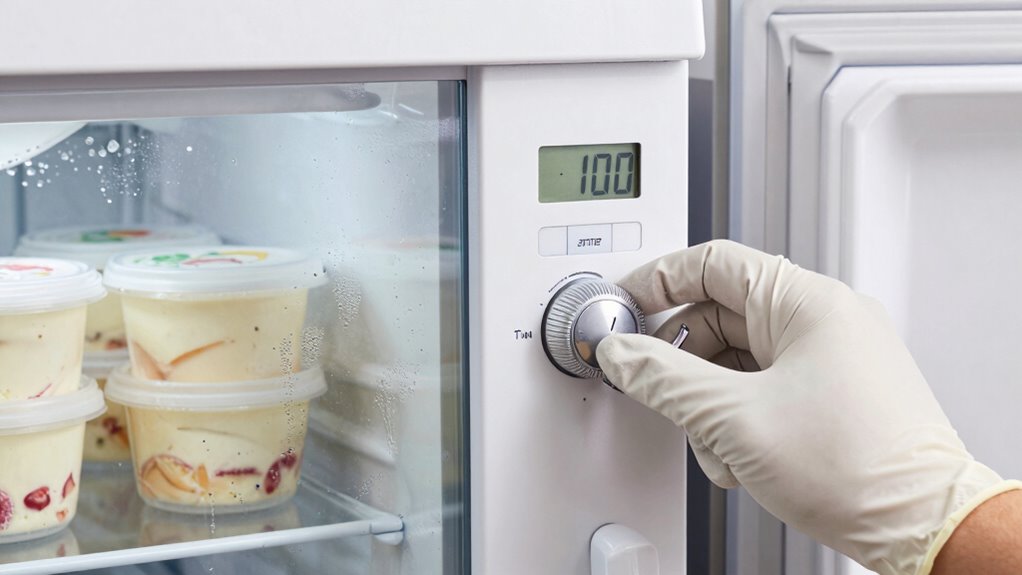
Calibrating your freezer thermostat guarantees your appliance maintains the correct temperature, preventing spoilage and saving energy. If your ice cream is melting too quickly or your frozen vegetables aren’t as firm as they should be, it’s time to check the calibration. Proper temperature adjustment ensures your freezer operates efficiently and keeps your food fresh. To do this accurately, you’ll need some calibration tools, such as a good thermometer designed for freezers or a digital temperature probe. These tools provide precise readings, allowing you to make informed adjustments.
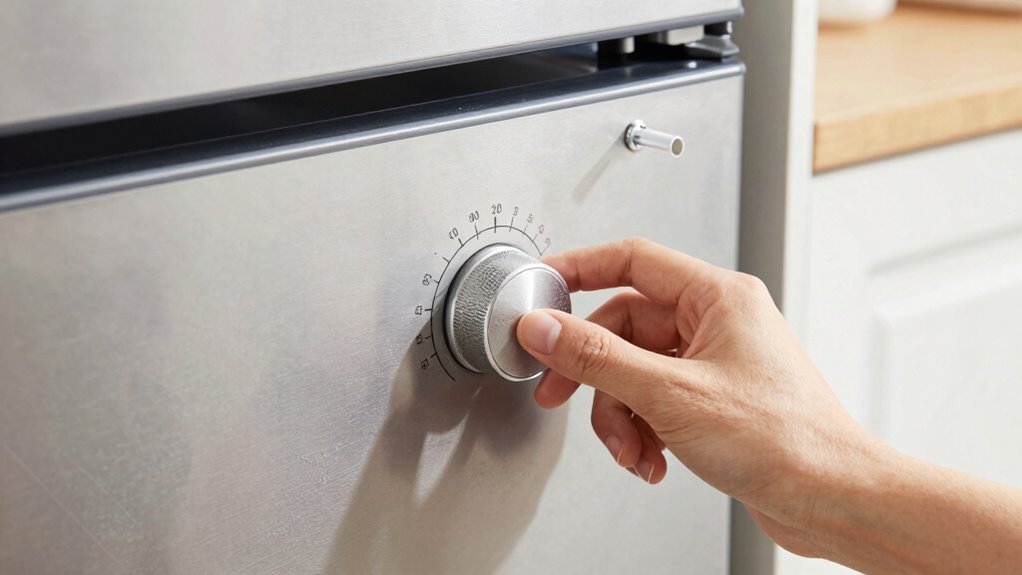
Start by locating your freezer’s thermostat control. Usually, it’s a dial or a digital panel, often marked with numbers or settings. Before you do any adjustments, set the freezer to its recommended temperature—typically around 0°F (-18°C). Keep in mind that temperature can fluctuate due to frequent opening or ambient room temperature, so it’s best to give your freezer a few hours to stabilize after any changes.
Next, take a temperature reading directly inside your freezer. Place your calibration tool in the middle of the compartment, ensuring it’s not touching the walls or door. Wait about 30 minutes for an accurate measurement. If the reading isn’t close to the ideal 0°F, you’ll need to perform a temperature adjustment. Many freezers have a small screw or dial for calibration, or you may need to adjust the control dial itself if no dedicated calibration feature exists.
Using calibration tools, you can fine-tune the thermostat’s setting. For example, if your thermometer reads 10°F when it should be 0°F, you’ll want to turn the dial slightly towards a colder setting. Conversely, if it’s too warm, adjust it towards a warmer setting. Make incremental changes and then wait another 3-4 hours before rechecking. Repeat this process until the thermometer consistently reads the correct temperature. Additionally, understanding the contrast ratio of your freezer’s insulation can help you optimize its energy efficiency and maintain stable temperatures.
As an affiliate, we earn on qualifying purchases.
Frequently Asked Questions
How Often Should I Recalibrate My Freezer Thermostat?
You should recalibrate your freezer thermostat at least once a year to guarantee thermostat accuracy. Regular calibration frequency helps you maintain ideal temperature control, preventing your ice cream from suffering. Check the temperature regularly and recalibrate if you notice fluctuations or inconsistent cooling. Keeping your thermostat calibrated ensures your freezer runs efficiently and keeps your frozen items at the right temperature, saving energy and extending the lifespan of your appliance.
Can a Faulty Thermostat Cause My Freezer to Stop Freezing?
Did you know that nearly 30% of freezer malfunctions stem from thermostat issues? A faulty thermostat can indeed cause your freezer to stop freezing by leading to temperature fluctuations that hinder compressor efficiency. When the thermostat doesn’t regulate temperature properly, your freezer may run constantly or not enough, risking food spoilage. Check and replace a faulty thermostat promptly to restore proper functioning and keep your food frozen solid.
Is It Safe to Manually Adjust the Thermostat?
Yes, it’s generally safe to perform a manual adjustment on your freezer thermostat, but you should still follow safety considerations. Turn off the power before accessing the thermostat to avoid electrical shocks. Use insulated tools if necessary and handle components carefully. Once adjusted, turn the power back on and monitor the temperature. If you’re unsure or uncomfortable, consult a professional to guarantee safe and proper calibration.
What Tools Are Needed for Thermostat Calibration?
Think of calibration as tuning a musical instrument, ensuring perfect harmony. To do this, you’ll need simple calibration tools like a screwdriver, a digital thermometer, and possibly a nut driver. These tools help you make precise thermostat adjustments, ensuring your freezer stays at the right temperature. With the right calibration tools, you can confidently fine-tune your thermostat, preventing ice cream suffering and keeping your freezer in perfect tune.
How Do I Know if My Thermostat Needs Replacing?
You’ll want to replace your thermostat if it’s nearing its lifespan or causing temperature inconsistency. Signs include frequent temperature fluctuations, the freezer not maintaining a steady cold, or your ice cream suffering from freezer burn. If your thermostat is old or consistently inaccurate despite calibration, it’s time for a replacement. Addressing these issues promptly will help keep your freezer running efficiently and your food properly preserved.
Conclusion
Now that you know how to calibrate your freezer thermostat, you’re the captain steering your appliance back on course. With a few simple steps, you can guarantee your ice cream stays perfectly frozen instead of turning to soup. Think of it as tuning a finely crafted instrument—once it’s dialed in just right, everything plays in harmony. Keep testing and adjusting, and you’ll enjoy consistently icy treats without breaking a sweat.
Fall Picks
fall essentials
As an affiliate, we earn on qualifying purchases.