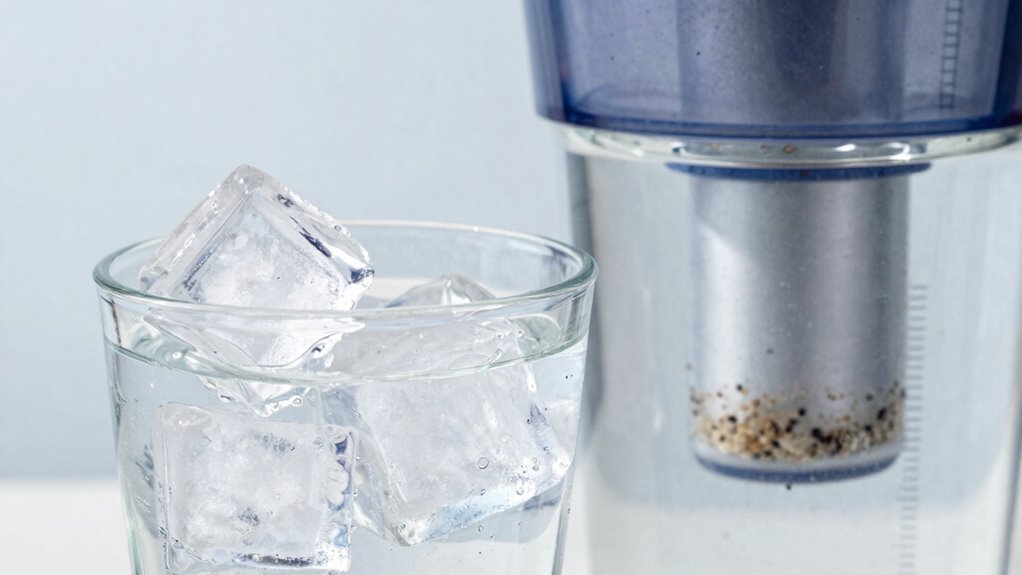

Water filters matter more for ice because impurities like minerals, sediments, and organic matter can make ice cloudy and less visually appealing. Filtration removes chemicals and contaminants that could affect safety and taste, ensuring your ice looks clear and stays safe to consume. Plus, clean water prevents scale buildup in your ice maker, extending its lifespan. If you want to discover how proper filtration can improve both your ice and equipment, keep exploring the details.
Key Takeaways
- Impurities trapped during freezing cause cloudiness, affecting ice appearance more than drinking water.
- Filtered water prevents scale buildup in ice machines, ensuring equipment longevity.
- Clear ice enhances beverage presentation, making visual appeal more critical than in drinking water.
- Contaminants can be concentrated in ice, posing greater safety concerns than in the liquid water.
- Water filtration improves ice clarity, taste, and safety, which are more visibly noticeable and impactful.
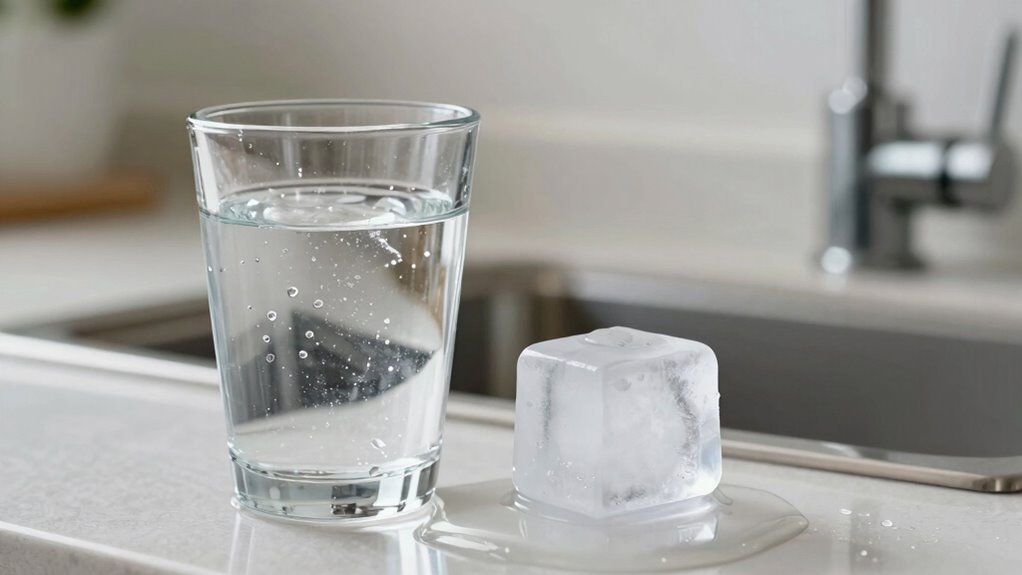
When it comes to your health and taste preferences, water filters are essential—especially for the ice you serve in drinks. You might think that if your tap water tastes fine, the ice produced from it will be just as harmless. But that’s not entirely true. Ice can look clear and appealing but still harbor impurities that could affect its quality and your health. The key issue isn’t just taste; it’s ice clarity. Clear, beautiful ice is often associated with purity, but without proper filtration, freezing impurities can become trapped inside the ice. These impurities include minerals, sediments, and even organic matter, which can cause cloudiness and compromise the appearance of your ice. More importantly, they can impact your health, especially if you’re serving drinks to others or using the ice in cocktails and food presentation.
Freezing impurities is a common problem when you don’t filter your water. When water freezes, impurities don’t necessarily freeze evenly; they tend to get pushed into pockets or trapped within the ice. This results in cloudy, less appealing ice that might seem harmless but could contain contaminants. These impurities can also affect the texture and melting rate of your ice, making it less crisp and more prone to melting quickly. If you’re serving drinks at a party or in a restaurant, that cloudy, impure ice can detract from the overall experience, making your presentation look less professional. A good water filter reduces the amount of minerals and sediments that end up in your water, ensuring that the ice produced is not only clearer but also safer. Additionally, using filtered water can prevent scale buildup that impacts your ice maker’s performance and longevity.
Filtered water also prevents the buildup of mineral deposits on your ice maker or freezer components. Over time, unfiltered water can cause scale buildup, which affects the efficiency of your appliance and compromises ice quality. By filtering out these minerals, you prolong the lifespan of your equipment and keep your ice fresh and visually appealing. Furthermore, incorporating regular filter maintenance can ensure your system continues to operate effectively and provides consistently high-quality water. Regularly checking and replacing filters helps maintain optimal performance and prevents contamination from passing through into your ice. Proper filtration can also help remove chemicals like chlorine or chloramine that are common in tap water, which can improve the taste and clarity of your ice, making your drinks more enjoyable. Proper filtration also helps reduce chemical runoff, which can affect both flavor and safety. So, investing in a quality water filter isn’t just about taste; it’s about ensuring your ice is crystal clear, free from freezing impurities, and safe for consumption. When you prioritize filtration, you’re not only enhancing the visual appeal of your drinks but also safeguarding your health and extending the life of your appliances.
As an affiliate, we earn on qualifying purchases.
Frequently Asked Questions
Do Ice Makers Have Built-In Water Filtration Systems?
Many ice makers don’t come with built-in water filtration systems, so you need to think about adding an external filter. Regular ice machine maintenance, including replacing filters, helps ensure clean ice and extends filter lifespan. Without proper filtration, minerals and contaminants can build up, affecting ice quality. By installing a filter and maintaining your machine, you’ll enjoy clearer, better-tasting ice and prolong your appliance’s efficiency.
Can Unfiltered Ice Cause Health Issues?
Unfiltered ice can cause health issues because it may contain contamination risks like bacteria, viruses, and chemical pollutants. These contaminants can lead to illnesses if ingested. Additionally, mineral buildup from unfiltered water can affect the ice’s quality and taste. Since ice is often consumed directly or used in drinks, using filtered water helps reduce these risks, ensuring safer, cleaner ice for your health and enjoyment.
How Does Water Temperature Affect Ice Quality?
You’ll notice that water temperature directly impacts ice quality through water crystallization and temperature control. When water is too warm, crystals form unevenly, resulting in cloudy, weak ice. Keeping water cold ensures consistent crystalization, producing clear, solid ice. Proper temperature control minimizes impurities and improves texture, making your ice aesthetically pleasing and more enjoyable. So, maintaining the right water temperature helps you craft perfect, high-quality ice every time.
Are Certain Water Filters Better for Ice Production?
Yes, some water filters are better for ice production because they improve ice clarity and freezing speed. Look for filters that effectively remove impurities, chlorine, and minerals, since these can cause cloudiness and slow freezing. By choosing a high-quality filter, you guarantee cleaner, clearer ice that freezes faster, enhancing your overall experience. Investing in the right filter makes a noticeable difference in ice quality and production efficiency.
Does Filtered Ice Taste Different From Unfiltered Ice?
Filtered ice often tastes better and has clearer appearance because the water’s impurities are removed, improving ice clarity. You’ll notice a subtle flavor enhancement, making your drinks more enjoyable. Unfiltered ice can carry off-flavors or odors from contaminants, which affect taste. So, using a good water filter results in cleaner, tastier ice, enhancing your beverage experience and ensuring your drinks look appealing and taste fresh.
Conclusion
So, remember, your ice is just as important as your drink—perhaps even more. Water filters guarantee your ice stays pure, preventing unwanted tastes and contaminants from sneaking into your glass. Don’t let your invigorating beverage be a Trojan horse for impurities—think of your filter as your trusty armor, much like a knight’s shield in a medieval tale. Protect your drinks and enjoy every sip, knowing your ice is just as clean as your water.