
Low-fat frozen desserts need more structure support because they lack the natural stabilizing and creamy qualities that fat provides. Without enough fat, the texture tends to be softer, more prone to ice crystal formation, and less stable, leading to separation or a watery feel. To achieve a satisfying texture, you must carefully manage ingredients like stabilizers, emulsifiers, and sugars. If you’re curious about how to improve stability and creaminess, keep exploring these important factors.
Key Takeaways
- Reduced fat content weakens emulsion stability, making it harder to maintain a firm, cohesive structure.
- Low fat decreases overall creaminess, requiring additional support to prevent overly soft or icy textures.
- Less fat leads to increased ice crystal formation, necessitating stabilizers to preserve smoothness.
- Lower fat levels diminish natural emulsification, demanding emulsifiers to prevent separation and watery textures.
- Balancing sugar crystallization is critical, as low-fat formulations are more prone to graininess without proper structure support.
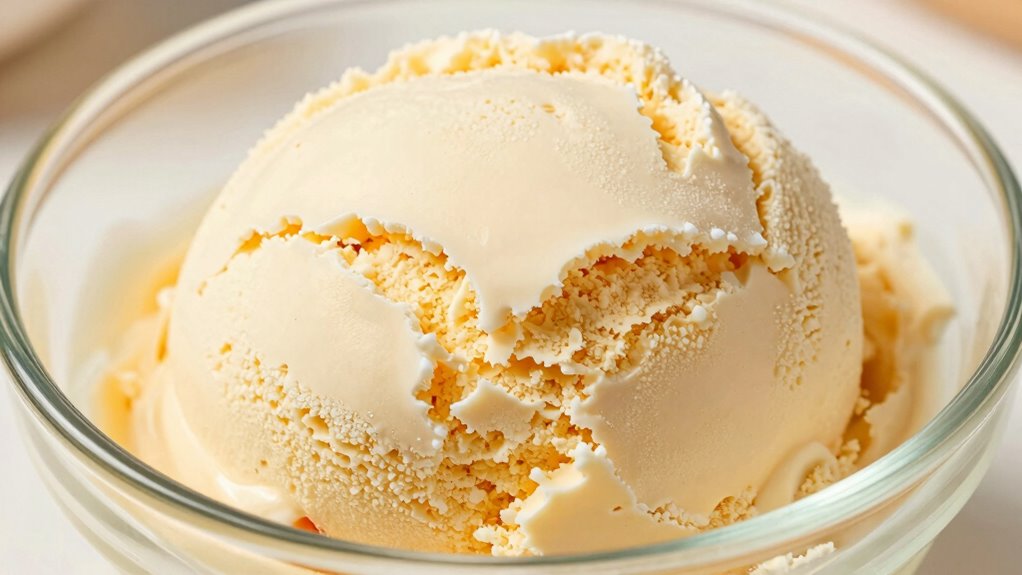
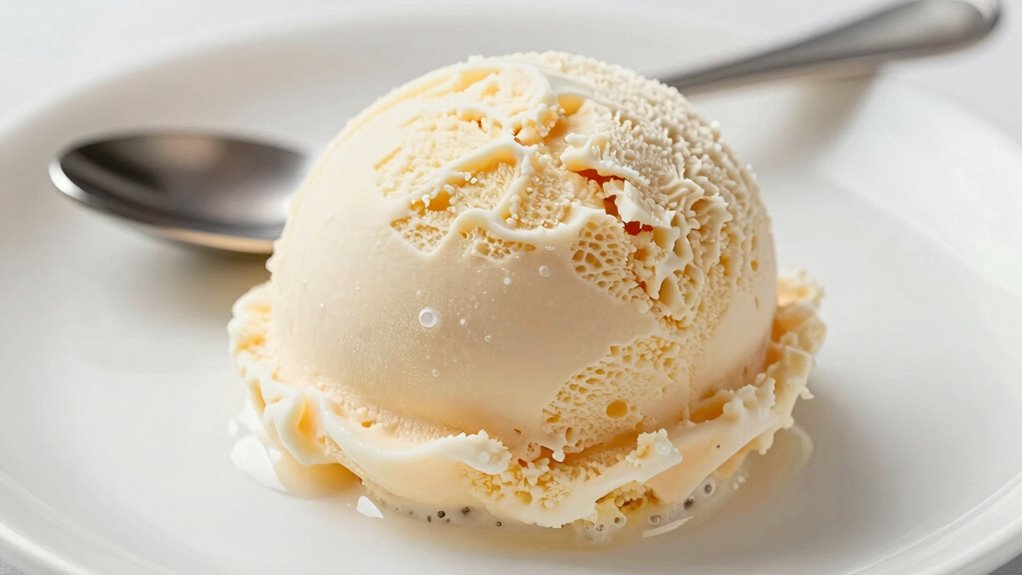
Low-fat frozen desserts often lack the structure and creaminess found in full-fat options, making them less satisfying and more difficult to enjoy. Without the richness of fat, these desserts tend to be softer and can develop ice crystals more quickly, impacting texture and mouthfeel. To combat this, manufacturers need to pay close attention to how ingredients interact, especially when it comes to sugar crystallization and emulsifier stability. These factors are critical for maintaining a desirable consistency and preventing undesirable graininess or ice crystal growth.
Low-fat frozen desserts require careful ingredient management to maintain smoothness and prevent ice crystal formation.
Sugar crystallization is a common challenge in low-fat frozen desserts. When sugar molecules form large crystals, the texture becomes gritty and unappealing. To control this, you need to manage the sugar concentration and its interaction with water during freezing. Using appropriate sweeteners or sugar substitutes that have lower crystallization tendencies helps maintain a smooth, scoopable texture. Additionally, incorporating ingredients that interfere with crystal growth, like certain gums or stabilizers, can keep the sugar in a more amorphous state, ensuring the dessert remains creamy rather than gritty.
Emulsifier stability plays an equally essential role in supporting the structure of low-fat frozen desserts. Without enough fat, the emulsion—where fat droplets are dispersed within the aqueous phase—becomes less stable. As a result, the mixture can separate or develop a thin, watery texture. Emulsifiers, such as lecithin or mono- and diglycerides, help maintain this emulsion by reducing surface tension between the fat and water phases. Their stability ensures that fat particles remain evenly dispersed, giving the dessert better body and a more satisfying mouthfeel. When emulsifiers break down or are used in insufficient quantities, the structure collapses, leading to iciness or a watery consistency.
Furthermore, the interaction between sugar crystallization and emulsifier stability influences the overall quality of the low-fat frozen dessert. Proper formulation ensures that the sugar remains in a smooth, amorphous state, while the emulsifiers keep the structure intact, preventing ice crystal formation and separation. Managing these ingredient interactions carefully is essential to optimize the texture and stability of the final product. Understanding the molecular interactions between ingredients is key to preventing defects and achieving a desirable product. Achieving this balance requires precise control over ingredient ratios and processing conditions. When done correctly, your dessert will have a more satisfying texture that mimics the richness of full-fat options, even without the added fat content.
Additionally, understanding the interplay of ingredients helps optimize the formulation for better stability and texture. In essence, understanding and managing sugar crystallization alongside emulsifier stability is key to enhancing the structure and appeal of low-fat frozen desserts. This knowledge allows you to craft a product that is not only healthier but also enjoyable, with a smooth, creamy texture that satisfies your cravings without the heaviness of full-fat alternatives. Proper formulation and careful control of ingredient interactions are crucial for achieving the desired texture and mouthfeel in these desserts.
low fat frozen dessert stabilizers
As an affiliate, we earn on qualifying purchases.
As an affiliate, we earn on qualifying purchases.
Frequently Asked Questions
How Does Fat Content Affect Frozen Dessert Texture?
Fat content directly influences frozen dessert texture by affecting fat crystallization, which helps create a smoother, creamier mouthfeel. When you reduce fat, there’s less fat to stabilize the ice crystals, leading to a grainier texture. To compensate, you often need additional structure support, like stabilizers, to enhance mouthfeel and prevent ice crystal growth. So, higher fat levels naturally improve texture, while lower-fat options require more careful formulation.
What Ingredients Improve Structure Without Added Fat?
You can enhance structure and stabilize texture in low-fat frozen desserts without added fat by using ingredients like guar gum, carrageenan, or pectin. These thickeners provide excellent texture support, preventing ice crystal formation and improving mouthfeel. Plus, they boost flavor perception and overall quality, ensuring your dessert remains creamy and satisfying even with reduced fat. Incorporating these ingredients makes your low-fat treat both enjoyable and structurally sound.
Can Alternative Stabilizers Replace Fat in Recipes?
Yes, alternative stabilizers can replace fat in recipes, enhancing flavor pairing and shelf stability. You might use ingredients like pectin, gelatin, or hydrocolloids, which help give structure without adding fat. These stabilizers improve texture and prevent ice crystal formation, ensuring your frozen desserts stay smooth and appealing over time. By choosing the right stabilizer, you maintain desirable flavor profiles while boosting shelf life and overall quality.
How Does Sugar Impact the Firmness of Low-Fat Desserts?
When you add sugar to low-fat desserts, it enhances firmness by improving flavor balance and sweetness perception, but there’s a twist. Too much sugar can make the texture overly soft or icy, undermining structure. It’s a delicate dance—balance your sugar carefully. By doing so, you’ll achieve the perfect harmony of sweetness and firmness, keeping your dessert enticing without sacrificing that satisfying bite you crave.
What Techniques Prevent Ice Crystal Formation in Low-Fat Options?
To prevent ice crystal formation in low-fat options, you should employ techniques like rapid freezing, which promotes smaller crystals, and incorporate stabilizers such as gums or gelatin for texture stabilization. These methods also enhance flavor by maintaining a smooth, creamy mouthfeel. Regular churning during freezing helps distribute crystals evenly, ensuring your dessert stays soft and enjoyable. This approach delivers better flavor and a more consistent, appealing texture.
Conclusion
Think of low-fat frozen desserts as delicate sculptures—they need a sturdy armature to hold their shape. Without enough fat, they lack natural richness and stability, making them prone to melting or becoming icy. By adding structure support, you’re fundamentally giving your dessert a strong skeleton to stand on. With the right balance, your treat will not only taste delicious but also hold its form, turning a simple scoop into a masterpiece you can truly enjoy.