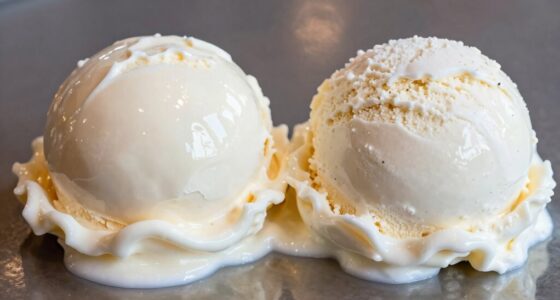
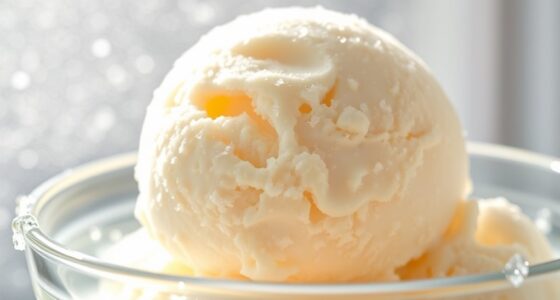
The science behind chewy Turkish-style frozen desserts relies on carefully chosen ingredients, stabilizers, and controlled freezing techniques to create their signature texture and intense flavor. You’ll want to balance sugars, fruits, and spices with stabilizers that prevent large ice crystals, ensuring a smooth, elastic mouthfeel. Precise freezing rates concentrate flavors while preserving chewiness. If you keep exploring, you’ll uncover how these techniques combine to produce that perfect chewy, flavorful treat you love.
Key Takeaways
- Proper freezing rates and stabilizers prevent large ice crystal formation, resulting in a smooth, chewy texture.
- Ingredient interactions during freezing concentrate flavors and enhance mouthfeel through specific composition adjustments.
- Stabilizers like starches or gums improve elasticity and prevent ice crystal growth, contributing to chewiness.
- Sugar content and flavoring agents are optimized during freezing to intensify taste and achieve a balanced flavor profile.
- Precise ingredient quality and scientific techniques allow for controlled texture and flavor manipulation in Turkish-style frozen desserts.
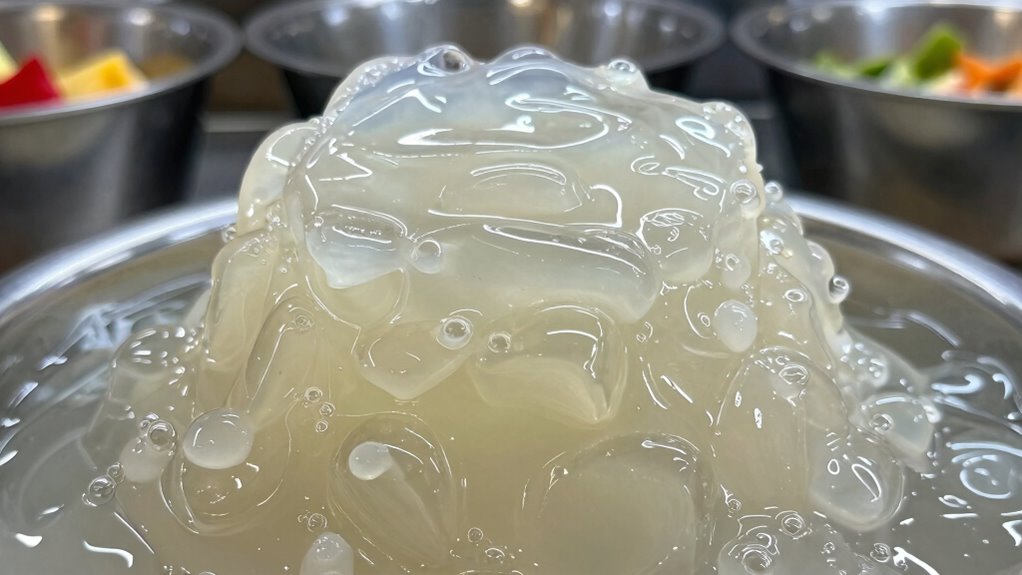
Turkish-style frozen desserts, known for their irresistibly chewy texture, owe their unique mouthfeel to a precise combination of ingredients and techniques grounded in food science. When you dive into these treats, you’re experiencing more than just sweetness; you’re tasting a carefully crafted balance of flavor and texture that keeps you coming back. The secret lies in how the ingredients interact during the freezing process, allowing flavor enhancement and texture modification to work hand in hand.
Turkish frozen desserts achieve their chewy, flavorful perfection through precise ingredient interactions during freezing.
To achieve that signature chewiness, traditional recipes often incorporate starches or gums, which act as stabilizers. These ingredients help modify texture by preventing the formation of large ice crystals that would otherwise make the dessert icy and hard. Instead, they encourage a smoother, more elastic consistency. When you bite into such a dessert, you’re experiencing the result of this meticulous texture modification, which guarantees a chewy yet soft mouthfeel. This process is essential because it influences how flavors are perceived; a well-modified texture can amplify the taste experience, making each bite more satisfying. Understanding the freezing process is crucial because it directly impacts both texture and flavor development, allowing for precise control over the final product. Additionally, controlling the freezing rate can help optimize the texture and flavor concentration, ensuring a consistent quality in each batch.
Flavor enhancement in Turkish frozen desserts is achieved through the precise balance of sweeteners, flavoring agents, and sometimes fruit purees or spices. The freezing process itself plays a key role here. As the dessert freezes, flavors become concentrated, intensifying the overall taste. Additionally, certain ingredients, like natural fruit extracts or aromatic spices, are added at specific stages to optimize flavor release. During freezing, these compounds are trapped within the matrix formed by stabilizers, ensuring that each spoonful delivers a burst of vivid flavor. By controlling the freezing rate and ingredient proportions, you can elevate the dessert’s flavor profile, making it more vibrant and memorable.
Understanding the flavor development that occurs during freezing is essential for creating a well-balanced and flavorful dessert. The science behind these techniques allows you to manipulate both flavor and texture intentionally. For example, adjusting the amount of stabilizer can alter the chewiness, while varying the sugar content influences both sweetness and how flavors develop during freezing. This level of control means you can personalize the dessert to your preferences, creating a chewy treat with intensified flavors and a perfect, elastic texture. Moreover, paying attention to the initial ingredient quality can further enhance the overall flavor profile of the final product.
In essence, mastering the science behind Turkish-style frozen desserts means understanding how ingredients interact during freezing. With careful attention to flavor enhancement and texture modification, you can craft a dessert that’s not only delicious but also uniquely chewy, with a rich, concentrated flavor in every bite.

Turkish Traditional Desserts: 2-Pack Irmik Dessert
As an affiliate, we earn on qualifying purchases.
As an affiliate, we earn on qualifying purchases.
Frequently Asked Questions
What Are the Traditional Ingredients Used in Turkish-Style Frozen Desserts?
You’ll find traditional Turkish-style frozen desserts often contain ingredients like milk, sugar, and fruit flavors, creating vibrant flavor combinations. Common additions include pistachios, rosewater, and mastic, which reflect cultural variations across regions. These ingredients give the desserts their signature chewy texture and rich taste. By blending these elements, you experience a delightful balance of sweetness, aroma, and cultural richness in each bite.
How Does Freezing Affect the Texture of Chewy Desserts?
Imagine biting into a chewy dessert that’s been frozen—freezing causes texture modification by creating tiny ice crystals during frozen crystallization, which can make the dessert firmer or more brittle. When you freeze chewy Turkish-style desserts, the ice crystals can alter their elasticity, sometimes making them crunchier or harder than fresh. Proper freezing controls these crystal formations, ensuring the dessert retains its signature chewiness rather than becoming overly icy or crumbly.
Can Alternative Sweeteners Be Used Without Changing the Texture?
Yes, you can use sugar substitutes for chewy Turkish-style frozen desserts without considerably altering the texture. To achieve good texture preservation, choose substitutes like erythritol or allulose, which mimic sugar’s properties more closely. Keep in mind that some sweeteners may affect sweetness levels or ice crystallization, so adjust quantities carefully. Testing small batches can help you find the right balance, ensuring your dessert remains chewy and delicious.
What Role Does Pectin or Gelatin Play in These Desserts?
Think of gelatin and pectin as the backbone and heart of your dessert. Gelatin stabilization gives your treat its chewy, resilient character, like the strength of a sturdy bridge. Pectin thickening acts like a gentle hug, adding smoothness and body. Together, they create a harmonious balance—gelatin for elasticity and pectin for richness—ensuring your frozen dessert remains delightfully chewy, stable, and irresistibly satisfying with every bite.
How Long Can These Desserts Be Stored Without Losing Quality?
You can typically store chewy Turkish-style frozen desserts for about 1 to 2 months without losing quality. To maximize flavor enhancement and maintain texture, keep them in an airtight container and at a consistent freezing temperature. Over time, they may become less chewy or develop freezer burn, so it’s best to enjoy them sooner. Proper storage helps preserve their authentic flavor and chewy consistency longer.

UPlama 600PCS Fake Crushed Ice Rocks, Acrylic Diamond Crystals Fake Diamonds Plastic Clear Ice Cubes Diamond Table Scatters Acrylic Gems For Vase Fillers Home Decoration Wedding Birthday (Clear)
Complete package: Our set includes 600 high-quality, non-toxic, and safe-to-use fake ice cubes made of transparent acrylic plastic…
As an affiliate, we earn on qualifying purchases.
As an affiliate, we earn on qualifying purchases.
Conclusion
Now that you understand the science behind chewy Turkish-style frozen desserts, you can appreciate the perfect balance of ingredients and techniques that create their irresistible texture. Think of it as a delicate dance between starches, sugars, and freezing methods—each step essential to achieving that delightful chewiness. With this knowledge, you’re ready to craft your own frozen masterpiece, turning scientific principles into a sweet symphony that keeps your taste buds dancing long after the last bite.
starches for chewy frozen treats
As an affiliate, we earn on qualifying purchases.
As an affiliate, we earn on qualifying purchases.

Strawberry Fruit Puree – Frozen – By Les Vergers Boiron – 85% Fruit – 2.2 Lbs Tub – Kosher & Halal Certified
2.2 Lbs Tub / 1 Kg
As an affiliate, we earn on qualifying purchases.
As an affiliate, we earn on qualifying purchases.