Using raw eggs in ice cream can give you a smooth, creamy texture and richer flavor, but it also carries the risk of Salmonella contamination, which can cause illness. To stay safe, you can cook eggs thoroughly, use pasteurized eggs, or try egg substitutes like cornstarch or gelatin. If you’re curious about safer options that still deliver great results, there’s more to discover below.

Get baking supplies delivered free — and shop member deals
- Fast, free delivery on millions of items
- Access to Prime Big Deal Days deals on October 6–7
- Prime Video, Amazon Music and more included
Key Takeaways
- Raw eggs can carry Salmonella bacteria, posing food safety risks when used in ice cream.
- Heating eggs to 160°F or using pasteurized eggs eliminates bacterial risks while maintaining texture.
- Egg substitutes like cornstarch, gelatin, or commercial replacers can replicate creaminess safely.
- Proper refrigeration, hygiene, and sourcing high-quality eggs reduce contamination and cross-contact.
- Using cooked or pasteurized eggs offers a safer way to enjoy traditional ice cream textures without health hazards.
As an affiliate, we earn on qualifying purchases.
Why Are Raw Eggs Used in Homemade Ice Cream and Are They Safe?
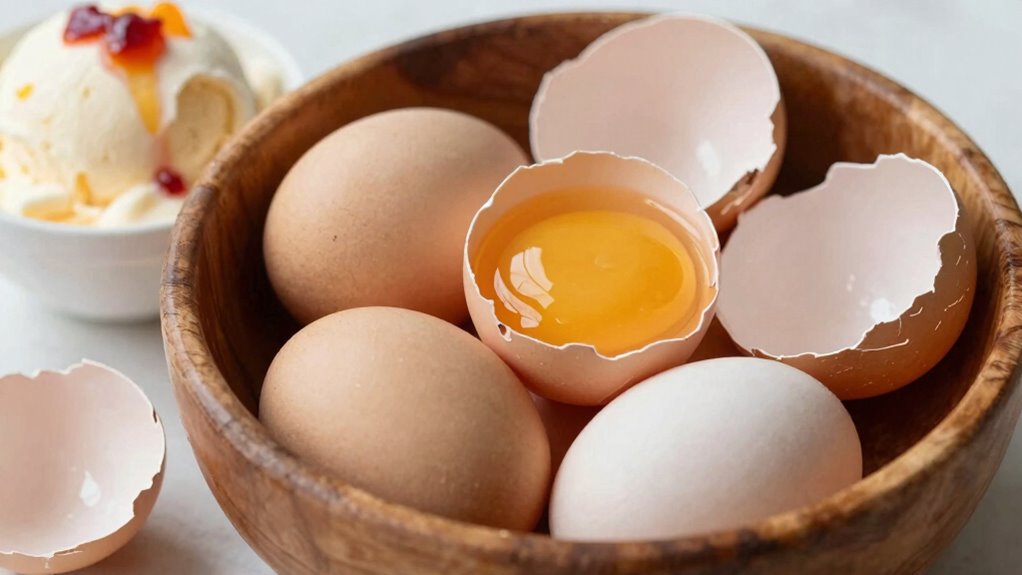
Raw eggs are commonly used in homemade ice cream because they help create a smooth, creamy texture and act as a natural emulsifier, blending fats and liquids effectively. When making homemade recipes, many bakers and ice cream enthusiasts include eggs for their binding qualities and rich flavor. Additionally, the proteins in eggs can contribute to a better overall texture and consistency of the final product. However, egg safety is a concern, especially if you’re using raw eggs directly. While some people believe that cooking eggs or using pasteurized eggs can reduce health risks, it’s essential to understand that raw eggs may carry bacteria like Salmonella. If you’re making ice cream at home, weigh the benefits of using raw eggs against potential safety issues. Proper handling and sourcing high-quality eggs can help mitigate risks while allowing you to enjoy traditional, creamy homemade ice cream. Additionally, using pasteurized eggs can provide a safer alternative without sacrificing the desired texture and flavor.
What Are the Food Safety Risks of Using Raw Eggs in Ice Cream?

Using raw eggs in ice cream can pose significant food safety risks because they may contain harmful bacteria like Salmonella. Egg contamination occurs when bacteria are present on the shell or inside the egg, which can lead to bacterial growth if the eggs are not properly handled or stored. Consuming contaminated eggs increases your risk of food poisoning, with symptoms like nausea, vomiting, and diarrhea. Bacterial growth is especially concerning when eggs are left at improper temperatures, allowing bacteria to multiply rapidly. Even if eggs look and smell normal, they can still harbor dangerous bacteria. As a result, many food safety guidelines recommend proper cooking temperatures to eliminate harmful bacteria. Additionally, incorporating technology-driven safety measures can help reduce these risks. For example, some producers now utilize pasteurization techniques to make eggs safer for raw consumption. This process involves applying controlled heat to destroy pathogens without cooking the egg, thereby reducing the risk of illness. Consequently, using raw eggs in ice cream without adequate safety measures could expose you to serious health risks. It’s vital to understand these risks to make safer choices.
How Do Salmonella and Bacteria Spread Through Raw Eggs?
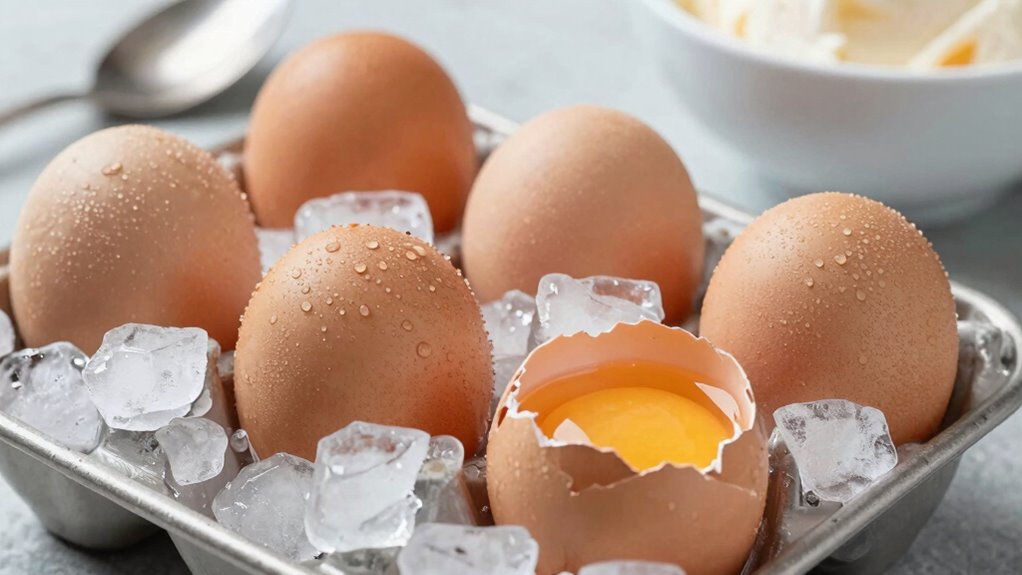
Salmonella and other bacteria can spread through raw eggs in several ways, often starting with contamination on the eggshell or inside the egg itself. Salmonella transmission usually occurs when bacteria from infected hens contaminate the eggs during formation or through cracks in the shell. Bacteria contamination can also happen if eggs come into contact with dirty surfaces, manure, or contaminated equipment. When you handle raw eggs, bacteria can transfer to your hands, utensils, or other foods, increasing the risk of spreading infection. Proper handling and storage of eggs can significantly reduce the likelihood of bacterial growth and contamination. Additionally, the conditions inside the egg can promote bacterial growth if not properly managed. Using proper refrigeration techniques can slow bacterial multiplication and help keep eggs safer to consume. It is also essential to be aware of cross-contamination risks in the kitchen to prevent spreading bacteria from raw eggs to other surfaces or foods.
What Are Safer Ways to Make Ice Cream Without Raw Eggs?

You can make ice cream safer by using cooked egg bases, which eliminate the risk of bacteria. Another option is to incorporate egg substitutes or pasteurized eggs, ensuring a creamy texture without raw ingredients. These methods help you enjoy homemade ice cream with less worry about food safety. Incorporating food safety practices is essential when preparing dishes that traditionally use raw eggs, to minimize health risks. Utilizing energy-efficient cloud servers can also support sustainable food production practices by reducing the environmental impact of manufacturing and distribution processes. Additionally, selecting pasteurized egg products can further minimize the chance of contamination while maintaining the desired consistency, and employing proper handling techniques can further reduce the risk of foodborne illness.
Use Cooked Egg Bases
Replacing raw eggs with cooked egg bases is a popular way to make ice cream safer without sacrificing creaminess. Cooking eggs properly destroys harmful bacteria, reducing egg contamination risks. To guarantee safety, use high-quality egg sourcing, such as pasteurized eggs or eggs from reputable suppliers. When making a cooked base, heat your mixture gently to about 160°F (71°C), stirring constantly to prevent curdling. This process kills bacteria while maintaining a smooth texture. Once cooked, chill the base thoroughly before churning. Proper temperature control during cooking is essential to ensure the eggs are fully pasteurized without overcooking. Using a food thermometer can help monitor the temperature accurately. This method not only minimizes health risks associated with raw eggs but also produces a rich, custard-like flavor. Additionally, employing safe cooking techniques ensures the eggs are properly heated without compromising quality. By using cooked egg bases, you enjoy homemade ice cream with the same creamy consistency and flavor, but with considerably less concern about egg contamination. Implementing proper heating methods can further improve safety and texture in your homemade ice cream.
Incorporate Egg Substitutes
To make ice cream safely without raw eggs, using egg substitutes is an effective solution. Egg substitutes, such as commercial vegan alternatives, cornstarch, or gelatin, help achieve the creamy texture without the safety concerns associated with raw eggs. These options eliminate the risk of Salmonella and other bacteria, making your homemade ice cream safer to enjoy. You can also use sweetened condensed milk or coconut milk as bases, which naturally lack raw eggs and carry fewer safety concerns. By choosing these substitutes, you avoid the dangers linked to raw eggs while still creating delicious, smooth ice cream. Always check labels and recipes to ensure you’re selecting the safest, most suitable egg substitute for your preferred flavor and texture.
How Can You Make Eggless or Pasteurized Egg Ice Cream at Home?
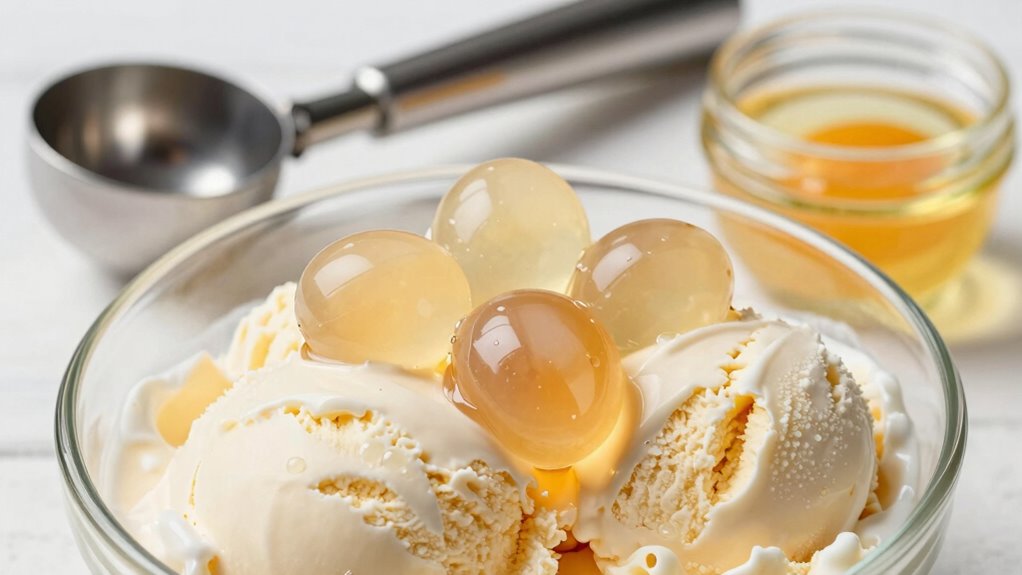
Making eggless or pasteurized egg ice cream at home is simpler than you might think. To achieve a creamy texture without raw eggs, use egg substitution options like cornstarch, gelatin, or commercial egg replacers. These ingredients help mimic the richness and smoothness that eggs provide while reducing food safety concerns. For flavor enhancement, incorporate ingredients like vanilla extract, cocoa, or fruit purees to boost taste without relying on eggs. If you prefer pasteurized eggs, you can gently heat eggs to a safe temperature (around 160°F) while stirring constantly, then cool before mixing into your ice cream base. This method guarantees safety while maintaining the desired texture. Temperature control is key to ensuring eggs are safely pasteurized without overcooking. Additionally, understanding food safety practices can help prevent contamination and ensure your homemade ice cream is safe to enjoy. Proper storage techniques also play a crucial role in preserving freshness and preventing bacterial growth. Incorporating smart kitchen appliances like precise temperature controls or food safety monitoring devices can further help in achieving optimal pasteurization and safety. Being aware of and following these practices ensures your homemade ice cream remains both delicious and food safe for your family and friends.
Tips to Reduce Food Safety Risks When Using Raw Eggs
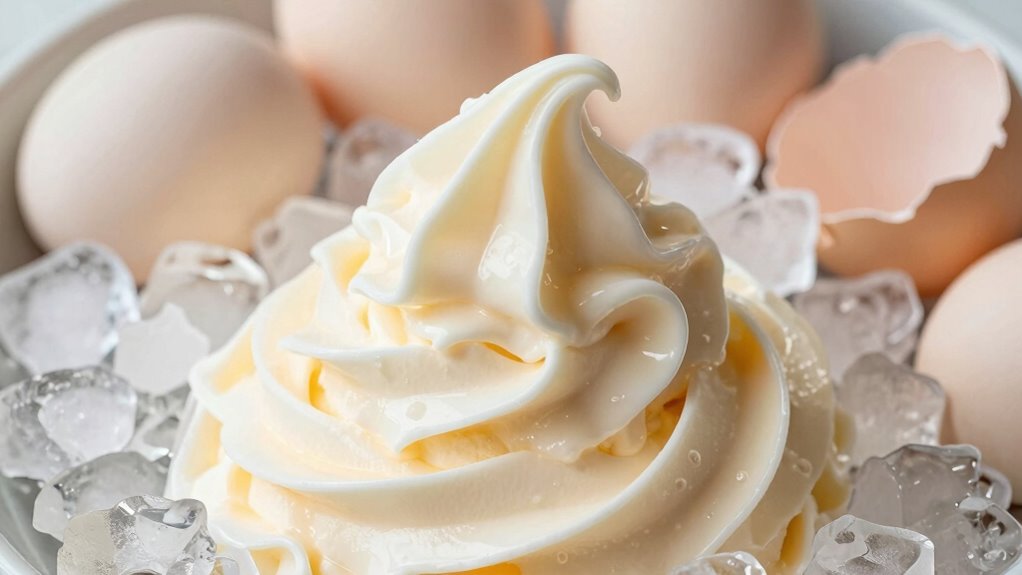
To lower your risk when using raw eggs, start by choosing pasteurized eggs, which are safer for raw consumption. Keep your ingredients cold by maintaining proper refrigeration, and always wash your hands and utensils thoroughly. These simple steps help protect you from potential foodborne illnesses. Additionally, understanding food safety practices can further reduce the risk of contamination.
Use Pasteurized Eggs
Using pasteurized eggs is one of the safest ways to enjoy homemade ice cream with raw eggs, as they have been heat-treated to kill harmful bacteria without cooking the egg itself. This makes them an excellent choice for egg safety, especially if you prefer using raw eggs in your recipes. Pasteurized options are widely available in grocery stores and can be used just like fresh eggs, ensuring you reduce the risk of Salmonella or other bacteria. When using pasteurized eggs, you don’t need to worry about the potential dangers associated with raw eggs, making your homemade ice cream both delicious and safer. Always check labels to confirm that eggs are pasteurized, and follow safe handling practices for best results.
Maintain Proper Refrigeration
Proper refrigeration is crucial for keeping raw eggs safe when making homemade ice cream. Correct food storage prevents bacterial growth and preserves egg quality. Always keep eggs refrigerated at or below 40°F (4°C) to inhibit pathogen development. Regular refrigeration maintenance ensures your appliance functions properly and maintains consistent temperatures. Avoid leaving eggs out for extended periods, especially in warm environments, as this increases the risk of contamination. When storing eggs, keep them in their original carton to protect against damage and reduce exposure to other foods. Check your fridge’s temperature regularly with a thermometer, and adjust as needed. Proper food storage and refrigeration maintenance are simple but essential steps to minimize food safety risks associated with raw eggs.
Practice Good Hygiene
Maintaining clean hands and work surfaces is the first step to reducing food safety risks when handling raw eggs for homemade ice cream. Practicing good hand hygiene prevents the spread of bacteria and minimizes the chance of cross contamination. Always wash your hands thoroughly with soap and water before and after handling raw eggs. Clean all utensils, bowls, and surfaces immediately after use to eliminate any bacteria that could transfer to other foods. Avoid touching other ingredients or equipment with contaminated hands. Use separate tools for raw eggs and other ingredients to further reduce cross contamination risks. By keeping everything sanitized and practicing proper hand hygiene, you considerably lower the likelihood of foodborne illnesses linked to raw eggs.
Should You Skip Raw Eggs in Your Ice Cream? Pros and Cons

Deciding whether to skip raw eggs in your ice cream depends on weighing safety concerns against texture and flavor preferences. Using high-quality eggs can reduce health risks while adding richness and flavor enhancement. However, consider these pros and cons:
- Safety: Raw eggs can carry Salmonella; skipping them minimizes health risks.
- Texture: Eggs contribute to creaminess; skipping may result in a less smooth ice cream.
- Flavor: Egg yolks add depth; removing them might dull the taste.
- Egg quality: Choosing fresh, high-quality eggs can make raw inclusion safer and improve flavor.
Ultimately, if safety is your priority, skip raw eggs or use pasteurized options. If you value texture and flavor, high-quality eggs can be a worthwhile addition.
Frequently Asked Questions
Are There Any Differences in Taste Between Raw and Pasteurized Egg Ice Cream?
You might notice a slight taste difference between raw and pasteurized egg ice cream. The taste comparison shows that raw eggs can add a richer, more intense flavor, while pasteurized eggs may have a milder, cleaner taste. Ingredient differences, like the heat used in pasteurization, can subtly alter the flavor profile. Overall, though, many find the taste difference minimal, making pasteurized options a safer choice without sacrificing much flavor.
Can Pregnant Women Safely Consume Ice Cream Made With Raw Eggs?
Pregnant women should avoid consuming ice cream made with raw eggs due to egg safety concerns. Raw eggs can carry Salmonella, which poses serious pregnancy risks like miscarriage or infection. To stay safe, opt for pasteurized egg products or ice cream made without raw eggs. Always check labels or ask about ingredients to guarantee you’re minimizing exposure to potential bacteria and protecting your health and your baby’s.
How Long Can Homemade Raw Egg Ice Cream Be Stored Safely?
You can store homemade raw egg ice cream in the freezer for up to two weeks. During storage, check for spoilage indicators like off odors, discoloration, or ice crystals. If you notice any of these signs, discard the ice cream to avoid health risks. For safety, it’s best to consume it within this timeframe and keep it tightly sealed to prevent contamination.
Are There Specific Egg Brands That Are Safer for Ice Cream Recipes?
Imagine your ice cream as a fortress, and only the most trustworthy egg brands are its loyal knights. When it comes to egg safety, brands like Vital Farms or Davidson’s offer higher quality, safer options for recipes. These brands use pasteurized eggs or strict safety standards, making them your best allies. Stick with reputable labels, and you’ll keep your dessert delicious and your health protected.
What Are the Signs of Foodborne Illness From Raw Egg Consumption?
If you consume raw eggs and develop symptoms like nausea, vomiting, diarrhea, or abdominal cramps, you might have a foodborne illness. Symptom onset usually occurs within 6 to 48 hours. Pay attention to illness severity; dehydration and fever can indicate a more serious infection. Seek medical advice if symptoms persist or worsen, especially for vulnerable groups like young children, pregnant women, or the elderly.
Conclusion
Just like steering a minefield, using raw eggs in ice cream can be risky if you’re not careful. But with safer alternatives and proper precautions, you can still enjoy creamy, delicious treats without the danger. Think of it as guiding your dessert journey away from hidden pitfalls and toward a safe, sweet destination. So, weigh the risks, choose safer options, and savor your homemade ice cream with peace of mind. Your taste buds—and health—will thank you.
Fall Picks
fall essentials
As an affiliate, we earn on qualifying purchases.





![[Mimi] Sandwich Order. [20]](https://icecreamhater.com/wp-content/uploads/2026/09/mimi-sandwich-order-20-featured-260x140.jpg)