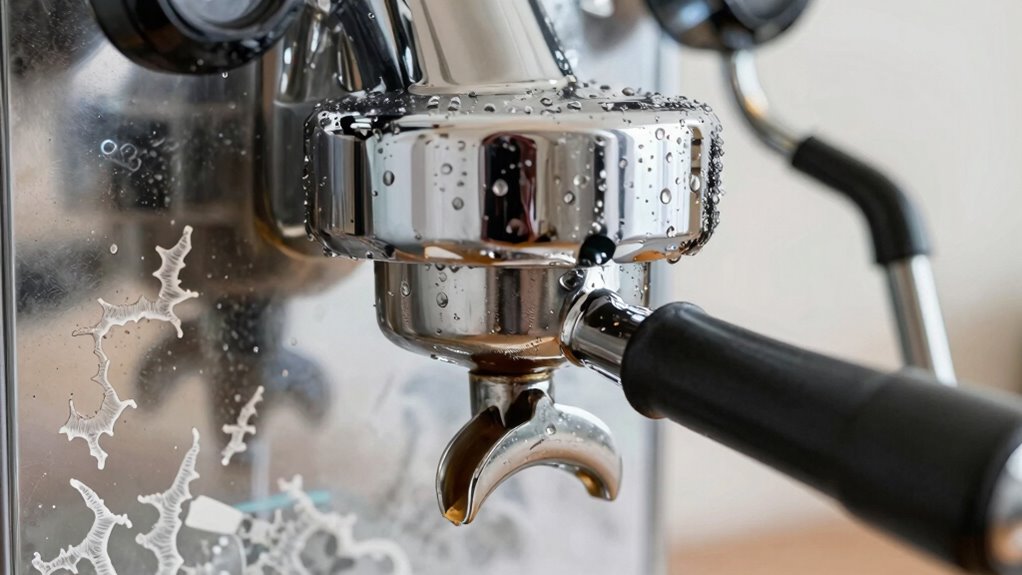

Using the right water for espresso is key to balancing flavor and preventing issues like scale buildup. Hard water with too many minerals can cause bitter tastes and damage your machine, while soft water may lead to flat espresso. Ideally, you want water with a moderate mineral content that enhances extraction and keeps your equipment running smoothly. Keep an eye on hardness levels and stay tuned to discover how to optimize your water for the best espresso experience.
Key Takeaways
- Water hardness, caused by calcium and magnesium, influences espresso flavor and machine scaling risks.
- Too hard water leads to scale buildup, reducing efficiency and increasing maintenance costs.
- Soft water may produce flat, dull espresso with insufficient mineral content for proper extraction.
- Balancing mineral levels enhances flavor complexity and prevents harmful scale formation inside equipment.
- Using filtered or treated water helps maintain optimal mineral balance for taste and machine longevity.
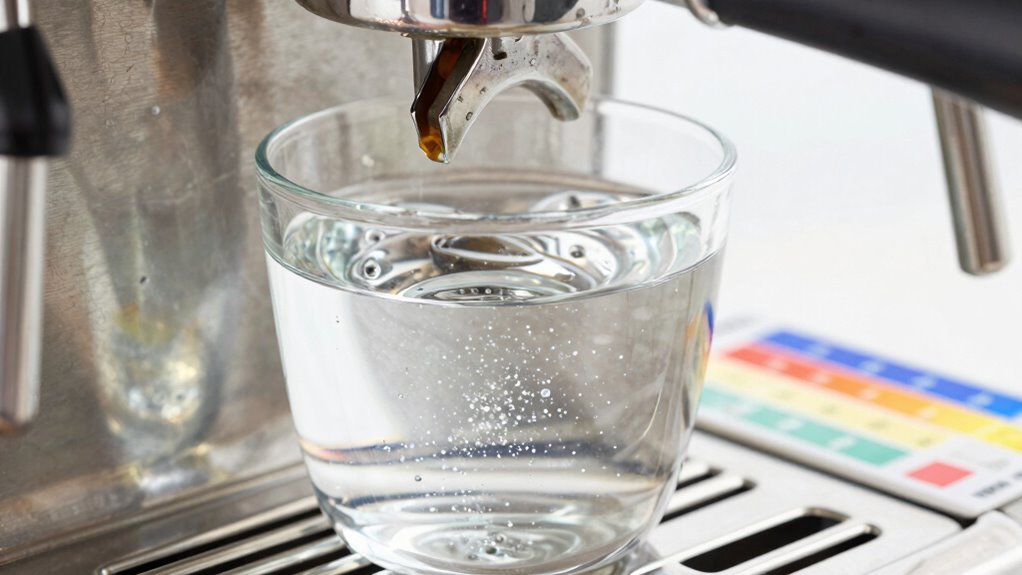
Have you ever wondered how water quality impacts the perfect shot of espresso? The quality of water you use isn’t just about cleanliness; it directly influences the taste, aroma, and even the longevity of your espresso machine. Water quality involves various factors, but one of the most critical is mineral balance. The minerals in water—mainly calcium, magnesium, and bicarbonates—play a vital role in brewing. Too many minerals can lead to problems like scale buildup, while too few might result in flat, dull flavors. Achieving the right mineral balance ensures you extract the best flavors from your coffee beans and keep your equipment in top shape.
When your water has the right mineral content, it enhances the extraction process. Minerals like calcium and magnesium help to soften the coffee grounds, allowing water to flow evenly and dissolve the flavorful compounds efficiently. Balanced mineral levels also contribute to a well-rounded taste profile, balancing acidity and richness. If your water is overly soft, lacking minerals, your espresso might taste weak or flat because there’s little to enhance the coffee’s natural flavors. Conversely, if your water is too hard, with excessive minerals, it can cause a harsh, bitter taste and lead to scaling inside your machine. Scaling occurs when minerals deposit on heating elements and pipes, reducing efficiency and increasing maintenance needs.
Maintaining proper mineral balance in your water is crucial for both taste and equipment longevity. Using water with too high mineral content accelerates scaling, forcing you to descale your machine more frequently, which can be time-consuming and costly. On the other hand, water with low mineral content can produce inconsistent extraction, leading to a less satisfying espresso. The key is to find a sweet spot—water that provides enough minerals to enhance flavor and facilitate extraction, but not so much that it causes scaling. This often involves using filtered or specially treated water designed for espresso machines, or adjusting your water source to achieve the ideal mineral profile.
As an affiliate, we earn on qualifying purchases.
Frequently Asked Questions
How Does Water Temperature Affect Espresso Extraction?
Water temperature greatly impacts your espresso extraction quality. If the water’s too hot, it can over-extract, leading to bitter flavors; too cold, and the extraction will be weak and underdeveloped. Ideally, you want your water around 195-205°F to optimize flavor and balance. By controlling water temperature precisely, you guarantee consistent extraction quality, highlighting the coffee’s nuanced flavors without bitterness or sourness.
Can Mineral Content Change Over Time in the Water Supply?
Yes, mineral content can change over time in your water supply due to factors like water composition fluctuations. You might notice mineral fluctuation caused by seasonal changes, source variations, or treatment processes. These shifts can impact your espresso’s taste and scaling potential. It’s wise to regularly test your water and adjust your filtration or softening systems to maintain consistent mineral levels, ensuring ideal flavor and equipment longevity.
What Are the Environmental Impacts of Water Scaling?
Water scaling can harm the environment by contributing to environmental pollution through the disposal of descaled mineral deposits, which may contain harmful substances. It also impacts water conservation efforts, as scaling reduces the efficiency of appliances, leading to increased energy and water use. By maintaining proper water quality and reducing scale buildup, you help minimize these environmental impacts, promoting a healthier planet and more sustainable water usage.
How Often Should I Replace My Water Filter for Espresso?
You should replace your espresso water filter based on its filter lifespan, which is usually every 2 to 3 months. Follow the recommended replacement schedule provided by the manufacturer, as factors like water hardness and usage frequency can affect this. Regularly changing your filter guarantees the best water quality, prevents scaling, and maintains the taste of your espresso. Don’t wait too long, or you risk flavor degradation and machine damage.
Do Different Coffee Beans Require Different Water Hardness Levels?
Did you know that different coffee beans can influence the ideal water hardness? You should adjust water hardness based on brew techniques and bean origin, as some beans, like those from Ethiopia, prefer softer water to enhance delicate flavors. Hard water might overpower subtle notes, while softer water can accentuate brightness. Experimenting with water hardness levels tailored to your beans and brewing style helps you unearth the best taste.
Conclusion
Remember, the water you use can make or break your espresso experience. Properly balanced, mineral-rich water guarantees your brew is bursting with flavor and avoids the nightmare of scale buildup. Think of your water as the secret ingredient—like a wizard’s magic potion—transforming a good shot into an extraordinary one. So, pay attention to hardness, scale, and taste; your perfect espresso is just a well-prepared water tweak away from perfection!