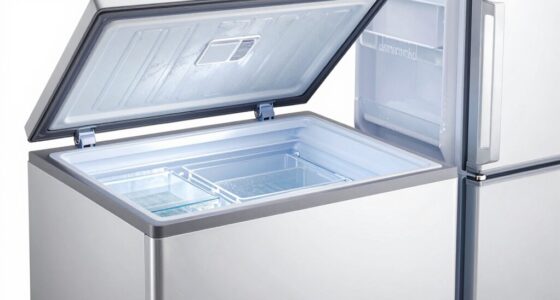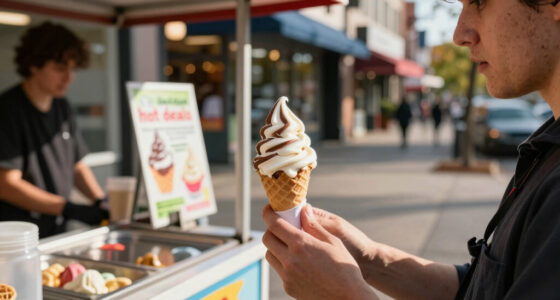
To prevent ice cream from melting during transport, use high-quality insulated containers lined with reflective materials and surround the ice cream with ice packs or dry ice. Keep the cooler tightly sealed, minimize openings, and pre-cool all items beforehand. Plan your route to reduce transit time and monitor temperatures frequently with reliable thermometers. Replenish ice packs as needed, and add extra insulation layers. Mastering these thermal rules will help you keep your ice cream frozen until it arrives.
Key Takeaways
- Use high-quality insulated containers lined with reflective materials to create a thermal barrier.
- Pre-cool coolers, ice packs, and ice cream to ensure a low starting temperature.
- Pack ice cream at the center of the cooler, surrounded by ample ice packs for optimal cold retention.
- Minimize transit time and avoid opening the cooler frequently to prevent heat exposure.
- Continuously monitor temperature with digital probes and replenish ice packs as needed during transport.

Transporting ice cream without melting can be challenging, especially if you need to move it over long distances or in warm weather. To keep your ice cream solid and fresh, you must master effective insulation techniques and maintain strict temperature monitoring. Proper insulation creates a barrier against external heat, helping to preserve the cold interior. Using high-quality coolers, foam containers, or insulated boxes lined with reflective materials can considerably slow down heat transfer. Wrap your ice cream in thick layers of insulation, and consider adding extra ice packs or dry ice to keep the temperature consistently low. The key is to create a thermal barrier that minimizes heat exchange between the outside environment and your ice cream. Ensuring your entire setup is properly insulated is crucial for maintaining optimal cold temperatures during transit.
Use quality coolers and thick insulation to keep ice cream cold and prevent melting during transport.
Temperature monitoring is equally essential. Without real-time data, you risk letting the temperature climb above the safe threshold, causing the ice cream to soften or melt. Invest in reliable digital thermometers with probes that can stay embedded within the container. Check the temperature frequently, especially during long journeys. If you notice the temperature creeping upward, add more ice packs or replace them if possible. Avoid opening the cooler unnecessarily, as every exposure to warmer air accelerates melting. Maintaining a steady, cold environment requires vigilance and quick adjustments.
Another fundamental aspect is pre-cooling your storage containers and ice cream. Chill your cooler and ice packs in advance, ideally overnight, to ensure they’re already cold before loading your product. This way, the initial temperature difference is minimized, and your ice cream stays frozen longer. When packing, position the ice cream at the core of the cooler, surrounded by ice packs, to maximize cold retention. Layering your insulation with additional materials like towels or blankets can help buffer against external temperature fluctuations, especially during extended transportation.
Timing also plays a role. Plan your route to minimize transit time, and avoid peak heat hours if possible. The longer your ice cream spends exposed to warmth, the higher the risk of melting. Using insulated covers or thermal blankets during stops adds another layer of protection. Remember, consistent temperature control is the key to success—regularly monitor, adjust, and insulate as needed. By combining effective insulation techniques with diligent temperature monitoring, you greatly increase your chances of arriving at your destination with perfectly frozen ice cream intact.

CIVJET Insulated Food Delivery Bag, XXXL Insulated Reusable Grocery Cooler/Hot Bags, Tote Bag for Shopping/Travel/Doordash, Catering Bag Doordash 22x14x13, Black, 1-Pack
- Large Capacity: 79L/20.5 Gallon storage space
- Insulated to Keep Food Warm or Cold: Maintains temperature for over 1.5 hours
- Multi-Purpose Use: Suitable for shopping, travel, delivery, and catering
As an affiliate, we earn on qualifying purchases.
As an affiliate, we earn on qualifying purchases.
Frequently Asked Questions
How Long Can Ice Cream Be Kept at Room Temperature Before Melting?
You can typically keep ice cream at room temperature for about 5 to 10 minutes before it starts melting markedly. Beyond this, the ice cream’s shelf life diminishes quickly, and it becomes too soft to serve properly. To maintain quality, avoid exceeding the recommended room temperature limits, especially during transport or storage. Keep ice cream refrigerated or frozen to ensure it stays solid and fresh until you’re ready to enjoy it.
What Are the Best Materials for Insulated Ice Cream Containers?
Like a fortress guarding its treasure, your insulated ice cream container needs top materials. Foam (like polystyrene or polyurethane) offers excellent insulation effectiveness, keeping ice cream cold longer. Stainless steel is durable and resists breaking, making it perfect for rugged transport. Combining these materials, such as a stainless steel exterior with foam insulation inside, guarantees your ice cream stays frozen while your container withstands the journey.
Does Pre-Chilling the Transport Vehicle Improve Ice Cream Stability?
Pre-cooling techniques definitely improve ice cream stability during transport. When you pre-cool the transport vehicle, you reduce the internal temperature, helping thermal insulation methods work more effectively. This means your ice cream stays colder longer, preventing melting. By maintaining a consistently low temperature from the start, you enhance the overall insulation and minimize heat transfer, ensuring your ice cream remains in prime condition upon arrival.
How Does Ambient Humidity Affect Ice Cream Transportation?
Like a knight facing a dragon, you must battle humidity impact when transporting ice cream. High ambient humidity causes condensation, which can lead to ice cream melting or clumping. To prevent this, use effective condensation control by sealing containers tightly and maintaining a consistent cold environment. Keep the transport environment dry and monitor humidity levels closely, ensuring your ice cream stays frozen and pristine upon arrival.
Are There Eco-Friendly Options for Maintaining Low Temperatures During Transit?
Yes, you can choose eco-friendly options like biodegradable packaging and reusable coolers to keep ice cream cold during transit. Biodegradable packaging reduces waste, while reusable coolers lower environmental impact compared to single-use containers. By using these solutions, you help protect the planet while maintaining low temperatures effectively. Just make sure your coolers are well-insulated and properly sealed, and opt for eco-friendly cooling materials to maximize sustainability and efficiency.
Conclusion
Now that you know the thermal rules, you can transport ice cream like a pro—keeping it as frozen as a glacier in the Arctic! Just remember to pack it in insulated containers, use ice packs, and minimize exposure to heat. Follow these simple steps, and your ice cream won’t stand a chance of melting into a puddle of disappointment. With these tips, you’ll be the superhero of frozen treats, saving desserts from disaster every time!