
To keep your beer tasting fresh and prevent bacteria buildup that can spoil flavor, you should clean your beer lines at least every two weeks if you have a busy bar or restaurant. Smaller operations might stretch to once a month, but regular cleaning is key to avoiding off-flavors and ensuring hygiene. Consistent maintenance not only improves taste but also extends your equipment’s lifespan. Keep going to discover more about proper cleaning routines and best practices.
Key Takeaways
- Clean beer lines at least every two weeks to prevent bacteria buildup and maintain fresh taste.
- Regular cleaning removes organic residues that can cause off-flavors and spoilage.
- Use approved cleaning solutions and follow manufacturer instructions for effective sanitation.
- Inspect lines regularly for mold or residue, cleaning immediately if issues are detected.
- Consistent maintenance ensures optimal taste, hygiene, and equipment longevity.
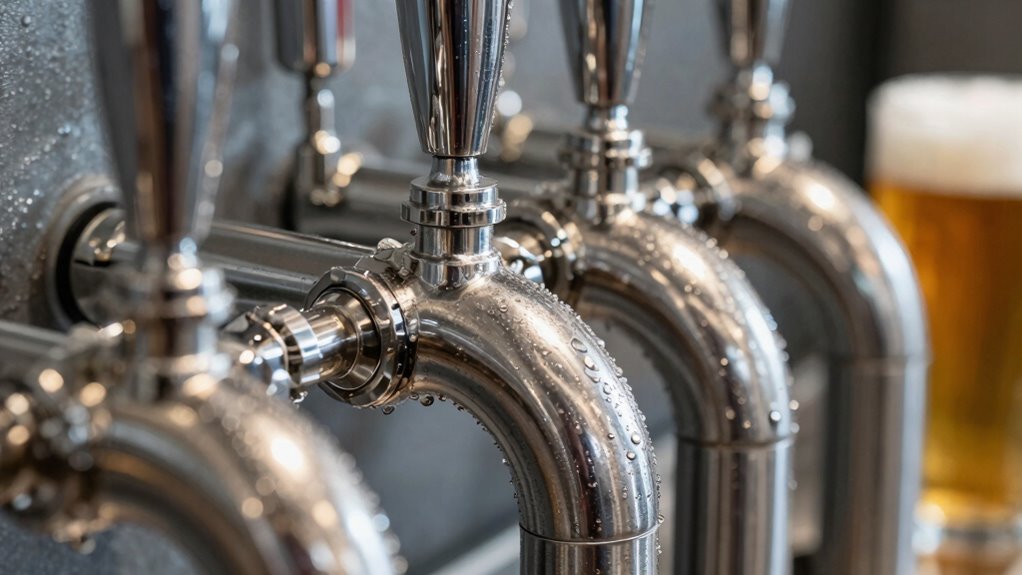
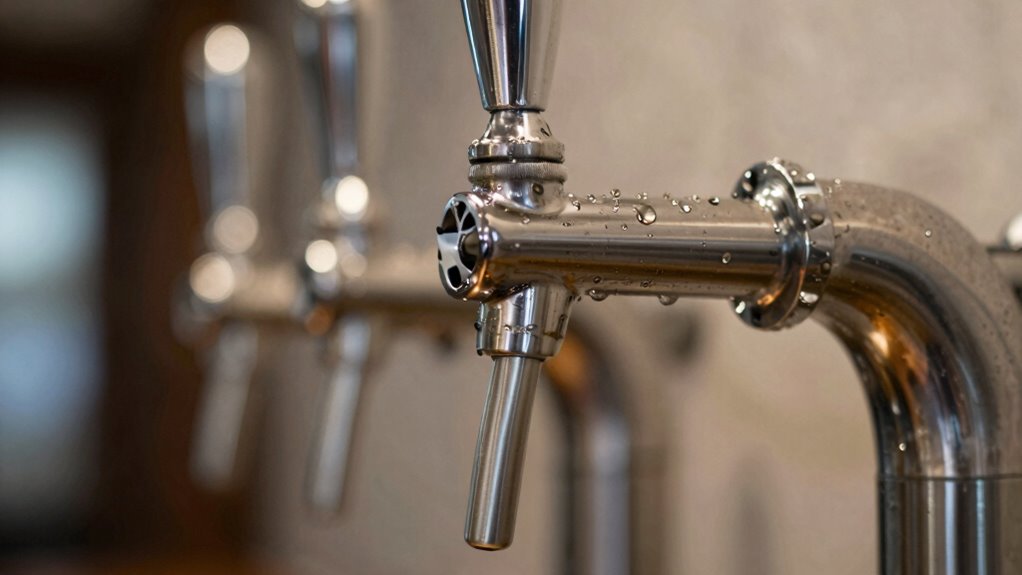
If you want your beer to taste fresh and consistent, understanding how beer lines, taste, and bacteria are connected is essential. Proper beer line maintenance is crucial in preventing bacteria buildup that can spoil your beer’s flavor and compromise hygiene. When beer lines aren’t cleaned regularly, bacteria can develop inside the lines, leading to off-flavors, foam issues, and even health risks. Bacteria control is a fundamental aspect of maintaining the quality of your beer, and neglecting it can quickly turn a well-crafted brew into an unpleasant experience for your customers or guests.
Regular cleaning of beer lines removes residue, yeast, mold, and bacteria that accumulate over time. These contaminants not only affect taste but also create a breeding ground for bacteria that can cause spoilage or health concerns. The buildup of organic matter provides a perfect environment for bacteria to thrive, which is why diligent beer line maintenance is non-negotiable. When you clean your lines correctly and on a consistent schedule, you prevent bacterial growth from taking hold, ensuring each pour tastes as intended. This process involves flushing the lines with cleaning solutions designed to break down deposits and sanitize the system thoroughly. Additionally, using proper cleaning techniques helps ensure all residues and bacteria are effectively removed, maintaining optimal hygiene.
The frequency of cleaning depends on your volume of use, but a common rule is to clean lines at least every two weeks for busy establishments. If you’re running a smaller operation or serving fewer customers, cleaning once a month might suffice, but never neglect the importance of routine maintenance. In addition to regular cleaning, always inspect your lines for signs of buildup or mold, and address issues immediately. Incorporate bacteria control into your maintenance routine by choosing quality cleaning products approved for beer lines, and follow manufacturer instructions carefully. This not only prolongs the lifespan of your equipment but also guarantees the beer’s integrity from tap to glass.

Beer Line Standard Beer Draft Keg Cleaning kit with 4oz Beer Line Powder Cleaner PBW compatible- Hand Pump Pressurized – Easy Safe to Use Keg Cleaner – w/Brush, Faucet Brush, Instruction Manual
- Complete Beer Line Cleaning Kit: All-in-one cleaning tools for kegs and lines
- User-Friendly Operation: Easy to use with gentle pump and no leaks
- Includes Essential Accessories: Pump, faucet plug, cleaning solution, brushes, manual
As an affiliate, we earn on qualifying purchases.
As an affiliate, we earn on qualifying purchases.
Frequently Asked Questions
Can Cleaning Beer Lines Improve Overall Beer Quality?
Yes, cleaning beer lines can greatly enhance overall beer quality. Regular cleaning schedules guarantee that your beer stays fresh by preventing bacteria buildup and residue that can spoil taste. When you keep lines clean, you maintain ideal beer freshness, which keeps every pour tasting its best. Skipping cleanings might save time initially, but it leads to stale, off-flavored beer. Prioritize consistent cleaning to enjoy consistently high-quality, fresh beer.
What Are the Signs of Contaminated Beer Lines?
You notice a foul odor, and suddenly, mold growth appears on your beer lines. These are clear signs of contamination. If your beer tastes off or there’s a slimy film, don’t ignore it. Regularly inspecting your lines for mold or a sour smell helps catch problems early. When these signs pop up, it’s time to clean thoroughly, ensuring your beer stays fresh and free from bacteria.
Are There Specific Cleaning Products Recommended for Beer Lines?
You should use cleaning agents specifically designed for beer lines, as they meet brewery standards for sanitation. Look for products labeled for beer line cleaning, which effectively remove bacteria and residue. Avoid using household cleaners, since they may not be safe or effective. Regularly check the manufacturer’s instructions to guarantee proper use. Following these guidelines helps keep your lines clean, your beer tasting fresh, and your establishment compliant with industry standards.
How Does Temperature Affect Bacteria Growth in Beer Lines?
Temperature control plays a vital role in bacteria proliferation in beer lines. If you keep the lines too warm, bacteria can grow rapidly, leading to potential contamination and off-flavors. To prevent this, make sure to maintain proper temperature levels, ideally between 36-38°F (2-3°C). Regularly monitoring and adjusting temperature helps inhibit bacteria growth, ensuring your beer stays fresh and safe for consumption.
Can Improper Cleaning Cause Health Issues?
Did you know that dirty beer lines can harbor bacteria that cause health risks? If you don’t clean them properly, you risk contamination, which can lead to illnesses like food poisoning. Improper cleaning leaves behind bacteria and mold, making your patrons sick. Prevent health issues by regularly sanitizing your lines. Clean lines reduce contamination risks, ensuring your customers stay safe and your reputation stays intact.
Conclusion
To keep your beer tasting fresh and bacteria at bay, think of cleaning your lines as tending a garden—regular care prevents weeds from taking over. Don’t wait for the signs of spoilage to act; instead, establish a routine that suits your beer flow. Consistent cleaning isn’t just maintenance; it’s the secret ingredient that preserves your tap’s integrity. Keep your lines pristine, and your beer will thank you with every satisfying sip.