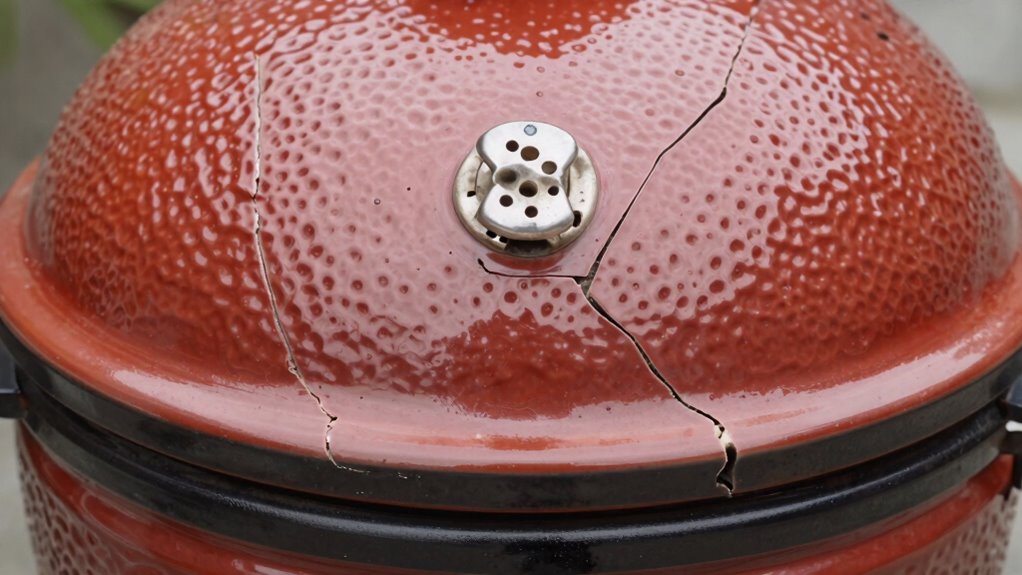

Cracks and leaks in your kamado grill are often normal signs of ceramic wear from regular use and temperature changes. Superficial cracks or tiny fissures usually don’t affect performance, but larger or growing cracks can cause leaks, uneven heat, and safety concerns. If you notice ceramic pieces chipping or cracks widening, it’s time to take action. Knowing the difference helps keep your grill safe and functioning well—there’s more to uncover below.
Key Takeaways
- Small surface cracks are common and usually do not affect grill performance or safety.
- Larger, widening cracks or ceramic chipping indicate potential leaks and require inspection or repair.
- Cracks caused by temperature fluctuations are normal; persistent or growing cracks signal problems.
- Regular inspection and maintenance help identify cracks early and prevent safety hazards.
- Minor cracks can often be sealed with high-temperature sealants; major damage may need professional repair or replacement.
Kamado grills are known for their durability and excellent heat retention, but over time, cracks and leaks can develop, compromising their performance. Recognizing what’s normal versus what’s a sign of trouble is key to keeping your grill in top shape. When it comes to seasoned maintenance, understanding how material durability plays a role can help you make better decisions about repairs and upkeep. The ceramic material used in most kamado grills is designed to withstand high temperatures and harsh weather, but it’s not invincible. Small surface cracks are common, especially after prolonged use or exposure to temperature fluctuations. These superficial fissures often don’t affect the grill’s ability to hold heat or function properly. However, larger cracks or those that appear to grow over time can be problematic, leading to leaks that diminish heat retention and could cause safety concerns.
You should pay close attention to how your grill behaves during cooking. If you notice a sudden drop in temperature or uneven heat distribution, it might indicate a crack or leak developing in the ceramic shell. Regularly inspecting your grill’s exterior and interior is part of seasoned maintenance. When you see hairline cracks, it’s usually nothing to panic over—these are typically harmless and don’t impact the grill’s performance. But, if you find cracks that are wider or if pieces of ceramic are chipping away, these are signs you need to address the issue promptly. Ignoring these signs can lead to worsening leaks, which not only hamper cooking but also pose safety risks, especially if ceramic fragments break off during use.
To prevent cracks from worsening, you should avoid sudden temperature changes, such as pouring cold water on a hot grill or closing the lid abruptly after a high-temperature cook. Properly maintaining the material durability of your kamado involves seasoning it correctly and ensuring it’s stored in a protected environment. Seasoned maintenance means regularly cleaning the interior, avoiding abrasive scrubbing that can weaken the ceramic, and applying a high-temperature sealant if necessary. When cracks are minor, some enthusiasts use ceramic repair kits designed for high heat, but these are temporary fixes. For significant cracks or leaks, replacing the damaged components or consulting a professional is the safest route.
Additionally, understanding the material durability of your grill can guide you in selecting the right maintenance practices and repairs, ensuring longevity and safe operation. Ultimately, understanding the signs of normal wear versus genuine issues allows you to extend your grill’s lifespan. With proper care, including seasoned maintenance and awareness of material durability, you can enjoy consistent, high-quality grilling for years to come. Recognizing the difference between harmless surface cracks and those that threaten your grill’s integrity ensures you can take timely action, preserving both your investment and your safety.

Wire Mesh Gasket Kit Fit for Kamado Joe Classic – 150" Fiberglass Gasket Replacement Kit – Fit for Big Green Egg – Kamado Accessories & Replacement Parts – Smoker Gasket Seal
- Compatible with Kamado Joe & Big Green Egg: Fits Kamado Joe Classic and other ceramic grills
- Fiberglass gasket for a tight seal: Ensures optimal heat and smoke retention
- Easy to install: Quick upgrade for better performance
As an affiliate, we earn on qualifying purchases.
As an affiliate, we earn on qualifying purchases.
Frequently Asked Questions
How Long Do Kamado Grills Typically Last Before Cracking?
Your kamado grill typically lasts 10 to 20 years, depending on material durability and how well you maintain it. High-quality ceramic or thick, durable materials tend to extend its lifespan, making cracks less likely early on. Proper cleaning, avoiding thermal shock, and storing it in a sheltered area can also help prevent cracking. With good care, your grill can serve you well for many years, providing reliable performance and delicious meals.
Can Cracks Affect the Grill’s Cooking Temperature Consistency?
Cracks can definitely affect your grill’s ceramic integrity, causing uneven heat retention. When the ceramic isn’t solid, heat escapes more easily, making it hard to maintain a consistent cooking temperature. You might notice fluctuations or cooler spots. Small cracks may have minimal impact, but larger ones compromise heat retention and can lead to uneven cooking. Keep an eye on cracks and consider repairs to make certain your grill performs reliably.
Are Leaks in the Vent System Common or Problematic?
Did you know that about 30% of kamado grill owners report venting concerns? Leaks in the vent system are fairly common, but they can lead to airflow issues that affect cooking. While small leaks are often normal, significant ones might cause temperature swings or difficulty controlling heat. Keep an eye on the vent, guarantee it seals properly, and address leaks early to maintain consistent cooking performance.
How Do I Prevent Cracks From Forming in My Kamado Grill?
You can prevent cracks in your kamado grill by applying ceramic reinforcement to strengthen the ceramic material. Additionally, protect your grill from harsh weather conditions by using a high-quality cover or storing it in a sheltered area. Avoid rapid temperature changes and handle it gently when cleaning or moving. Consistent weather protection and ceramic reinforcement considerably reduce the risk of cracks forming over time.
Is It Safe to Use a Cracked Kamado Grill?
Think of your cracked kamado grill as a vessel carrying your culinary dreams. If the crack is a small fissure, it’s often safe to employ, but keep an eye on material durability. Larger leaks or deep cracks threaten safety. Repair options like high-temperature epoxy or replacing damaged parts can restore strength. If in doubt, consult a professional—safety first ensures your grilling journey continues without risk.
Conclusion
In the end, understanding what cracks and leaks are normal helps you care for your kamado grill like a seasoned chef tending to their craft. Think of your grill as a finely tuned instrument—small imperfections might be like tiny scratches on a vintage guitar, adding character rather than hindering performance. Keep an eye on any unusual changes, but don’t fret over minor flaws. With proper care, your grill will serve you well, creating delicious meals as effortlessly as a painter’s brushstroke.