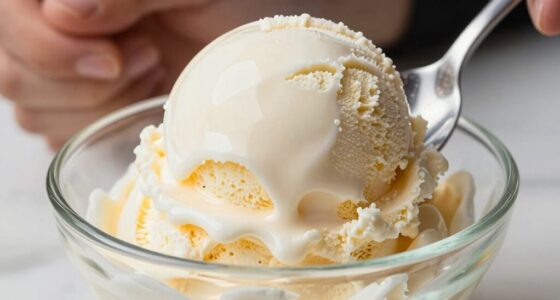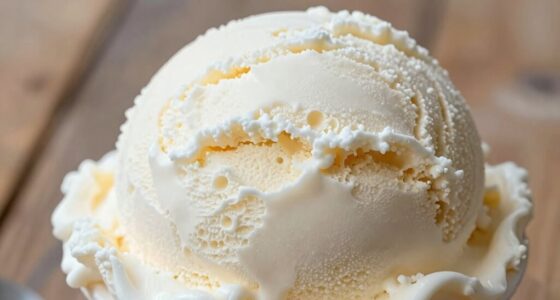
Your ice cream base separates in the fridge mainly because fats, liquids, and stabilizers aren’t properly emulsified or evenly mixed, especially if the ingredient ratios are off or temperatures fluctuate. Poor mixing techniques or storage at inconsistent temperatures cause fats to rise and liquids to separate. To prevent this, guarantee thorough mixing, add stabilizers correctly, and store at a consistent -18°C. Keep your mixture homogeneous and stable—there’s more to learn to perfect your technique.

Get baking supplies delivered free with Prime
- Fast, free delivery on millions of items
- Prime Video, Amazon Music and more included
- Member-only deals all year
Key Takeaways
- Temperature fluctuations cause fats and liquids to destabilize, leading to separation in the fridge.
- Insufficient emulsification or improper mixing prevents a stable, homogeneous ice cream base.
- Excess dairy or inadequate stabilizers weaken the emulsion, increasing separation risk during storage.
- Using airtight, properly sized containers helps maintain consistent temperature and prevents separation.
- Regular stirring or re-emulsification can fix minor separation before freezing.
As an affiliate, we earn on qualifying purchases.
Why Does My Ice Cream Base Separate in the Fridge?
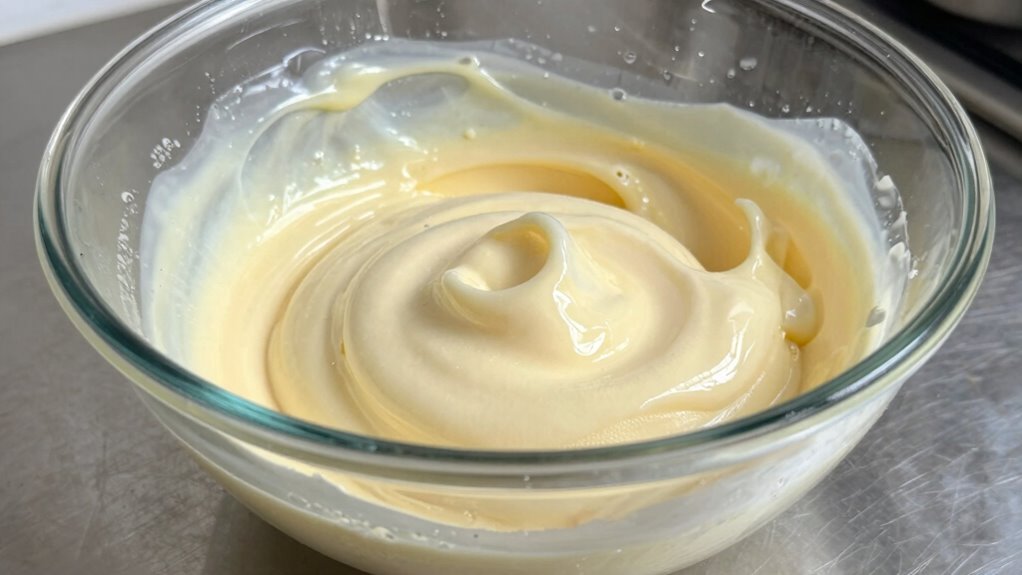
Have you ever noticed your ice cream base separating after sitting in the fridge? That’s often due to poor ice cream emulsification, where fats and liquids don’t blend properly. When emulsification isn’t stable, fats can rise to the top, causing separation. This issue can also be influenced by temperature fluctuations, which destabilize the emulsion and worsen separation. It disrupts flavor stability because the ingredients aren’t evenly distributed, which affects taste and texture. Factors like inadequate mixing, temperature fluctuations, or missing emulsifiers can weaken this process. Without proper emulsification, your ice cream won’t maintain a smooth, uniform consistency. Incorporating proper mixing techniques can help improve emulsion stability and prevent separation. To prevent this, ensure thorough mixing of ingredients and consider adding emulsifiers like egg yolks or lecithin. Keeping the base at a consistent temperature also helps maintain the stability of the emulsion, resulting in a creamier, more cohesive ice cream. Additionally, understanding the sound vibrations involved in food science can help optimize texture and stability during the freezing process, especially since food science principles emphasize the importance of controlling physical parameters to achieve desired outcomes. Employing temperature control technologies can further help maintain consistent conditions and enhance emulsion stability during storage.
How Do Temperature and Storage Conditions Affect Ice Cream Stability?

Proper temperature and storage conditions are key to maintaining your ice cream’s stability. Fluctuations in temperature can cause the fat and water components to separate, leading to a grainy texture or separation. Keeping your ice cream at a consistent storage temperature, ideally around -18°C (0°F), prevents these issues. Here’s a quick picture:
| Storage Temperature | Effect on Ice Cream | Consequence |
|---|---|---|
| Consistent -18°C | Maintains stability | No separation or ice crystals |
| Fluctuating temps | Causes melting and refreezing | Texture changes and separation |
| Above -12°C | Accelerates spoilage | Rapid quality loss |
Storing your ice cream properly helps avoid temperature fluctuations, ensuring it stays smooth and scoopable. Additionally, proper storage conditions help preserve texture quality over time. To further prevent separation, minimizing exposure to air and preventing temperature swings during storage are important. Maintaining an appropriate environment can also help extend the shelf life of your ice cream. For example, using an airtight container can reduce air exposure and help maintain a consistent temperature, which is crucial for ice cream stability. Furthermore, understanding the effects of temperature on ingredients can help in choosing the optimal storage methods.
Which Ingredients and Ratios Help Prevent Separation?
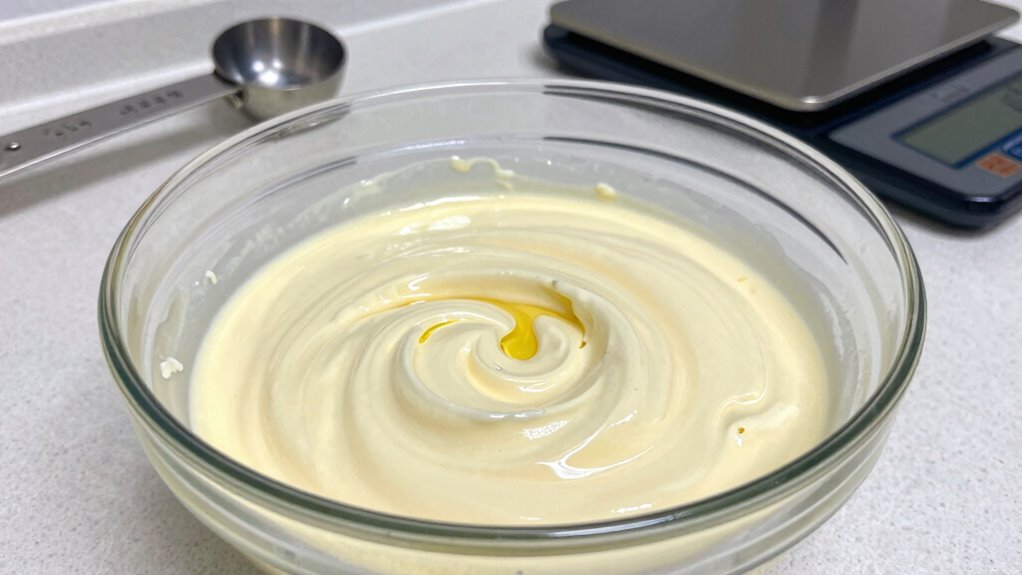
Choosing the right ingredients and ratios is vital to prevent separation in ice cream. Maintaining proper ingredient ratios ensures a balanced mixture that stays smooth. For example, controlling dairy content is essential; too much dairy can cause the base to separate, while too little may affect creaminess. Using the right balance of milk, cream, and stabilizers helps create a stable emulsion that resists separation. Additionally, understanding emulsification is key to creating a stable, well-blended ice cream base. To enhance stability, incorporating ingredients like stabilizers or emulsifiers can improve texture and consistency, especially when combined with appropriate dairy ratios. Furthermore, understanding emulsification techniques can aid in achieving a more homogeneous mixture. Adjusting ingredient ratios based on your recipe and storage conditions will help your ice cream stay smooth and uniform, reducing the chances of separation over time. Proper temperature control during mixing and storage also plays a crucial role in maintaining emulsion stability.
What Preparation Steps Can Keep Your Ice Cream Base Smooth?
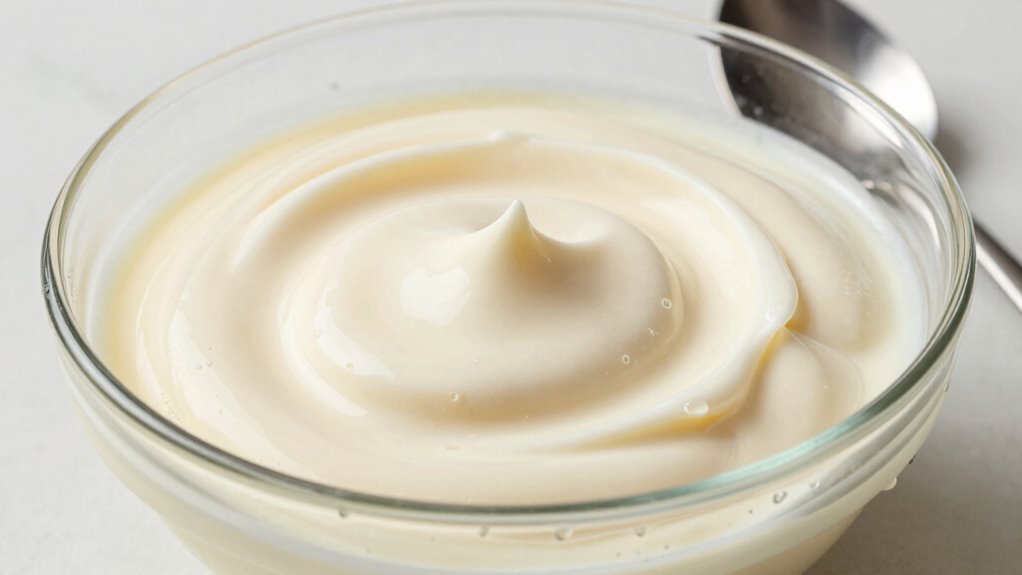
To keep your ice cream base smooth, focus on thorough mixing and proper temperature control during preparation. Use effective mixing techniques, such as gradually incorporating ingredients and ensuring everything is well combined to prevent lumps or separation. Pay attention to ingredient substitutions; for example, replacing cornstarch with gelatin or stabilizers can improve the texture and stability of your base. Keep the mixture chilled during and after mixing to prevent separation caused by temperature fluctuations. Avoid overmixing, which can introduce air and cause inconsistency, but do ensure all ingredients are evenly dispersed. Proper preparation, including careful mixing and thoughtful ingredient substitutions, helps create a smooth, cohesive ice cream base that resists separation in the fridge. Additionally, understanding ingredient interactions can further enhance the stability and texture of your mixture. Maintaining the right temperature control throughout the process also plays a crucial role in preventing separation and ensuring optimal texture. Being aware of seasonal temperature variations can also help you adjust your process accordingly to maintain consistency.
How Can I Tell When My Ice Cream Base Is About to Separate?

Watching for signs that your ice cream base is about to separate can save you from ending up with a lumpy or greasy texture. One warning sign is an overmixed batter, which can cause the fats and liquids to start separating prematurely. If you notice the mixture becoming uneven or developing streaks of oil, it’s a sign to stop mixing. Additionally, if you’re experimenting with flavor variations and see the ingredients beginning to look inconsistent or start to break down, separation may be imminent. Keep an eye on the consistency—if it starts to look oily or curdled, it’s time to chill the mixture gently or adjust your process. Recognizing these signs early helps maintain a smooth, creamy base and prevents separation before it occurs.
What Are Easy Fixes If My Ice Cream Base Starts Separating?
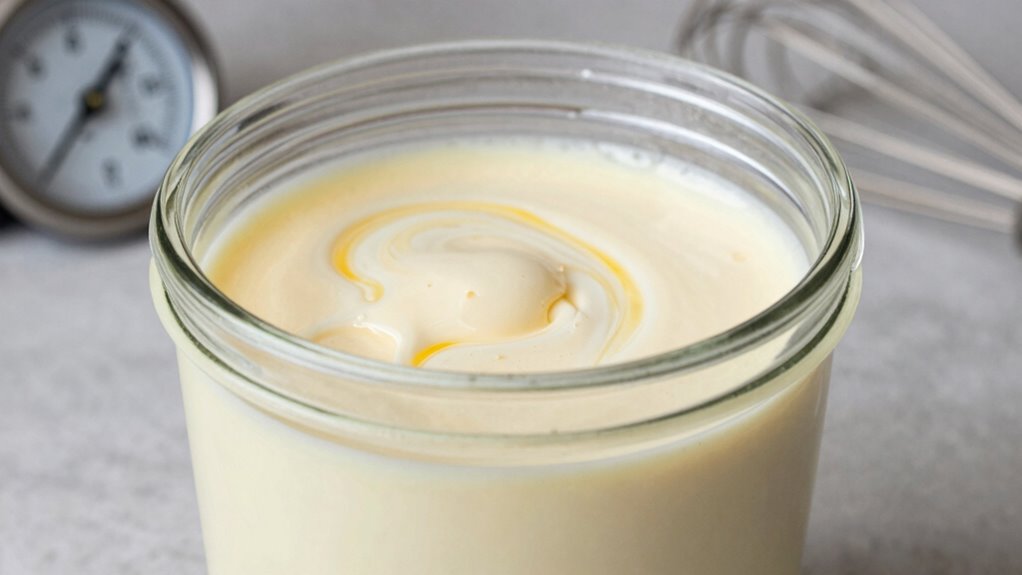
If your ice cream base starts to separate, don’t panic—there are simple fixes. Stir it thoroughly before freezing to recombine the ingredients, or add stabilizers and thickeners to help maintain a smooth texture. These quick steps can often restore your base and save your batch.
Stir Thoroughly Before Freezing
Noticing your ice cream base separating during freezing can be frustrating, but a simple fix often does the trick. Before freezing, whisk thoroughly to recombine any separated ingredients and restore a smooth consistency. Ensuring your base is chilled completely before pouring it into the freezer helps reduce separation caused by temperature fluctuations. This step allows fats and liquids to settle evenly, minimizing the chance of separation during freezing. Stirring the base well distributes ingredients and creates a uniform mixture, which prevents separation from forming later. If you notice separation after initial mixing, giving the base a vigorous whisk can re-emulsify the fats and liquids. Additionally, understanding the role of proper mixing techniques and temperature control can help prevent separation issues from occurring in the first place. Maintaining a consistent freezing temperature throughout the process is crucial for preventing ingredient separation. Using emulsifiers or stabilizers can also improve the texture and prevent separation during freezing. Incorporating proper ingredient ratios can further improve the stability of your ice cream base. Paying attention to ingredient quality can make a significant difference in the final product. Taking these quick steps ensures your ice cream stays creamy and well-blended, making for a better final product.
Use Stabilizers or Thickeners
When your ice cream base begins to separate, adding stabilizers or thickeners can quickly restore its smooth texture. Gelatin stabilization is an effective option; dissolve a small amount in warm water and blend it into your base before freezing. Guar gum is another excellent choice—just whisk in a pinch to improve consistency and prevent further separation. These stabilizers work by binding water and fats, keeping the mixture uniform. Be cautious not to add too much, as it can alter the texture. Using gelatin or guar gum is a simple fix that helps maintain a creamy, cohesive ice cream base, especially if it’s been sitting too long in the fridge. Incorporate these stabilizers early in your process for best results.
How Should I Store My Ice Cream Base for Best Results?

Choosing the right container helps prevent contamination and keeps your base fresh longer. Make sure your refrigerator is set to the proper temperature, ideally around 37°F (3°C), to slow down separation. Proper storage conditions are key to maintaining a smooth, consistent ice cream base.
Proper Container Choice
Selecting the right container is essential to preserving the quality of your ice cream base. Opt for a container with a durable, non-reactive material like glass or high-quality plastic to prevent any unwanted flavors or chemical reactions. Make sure the container has a lid that fits tightly; this helps maintain a consistent temperature and prevents air from entering, which can cause separation. Avoid containers that are too large for the amount of ice cream base you’re storing, as excess space can lead to freezer burn and moisture buildup. Proper container choice guarantees your ice cream base stays uniform and fresh, reducing the risk of separation. With the right container and a secure lid, you’ll keep your ice cream base in the best shape for when you’re ready to churn.
Optimal Refrigerator Settings
To keep your ice cream base fresh and prevent separation, set your refrigerator to a consistent temperature between 35°F and 40°F (1.5°C to 4°C). Maintaining a stable refrigerator temperature is essential for maximum storage duration and preventing ingredients from separating. Fluctuating temperatures can cause the fats and liquids to split, leading to an undesirable texture.
To optimize storage:
- Keep the temperature steady, avoiding frequent door openings
- Use a refrigerator thermometer for accuracy
- Store the base in an airtight container to prevent temperature fluctuations
- Limit storage duration to 2-3 days for best results
Quick Tips for Perfectly Homogeneous Ice Cream Every Time
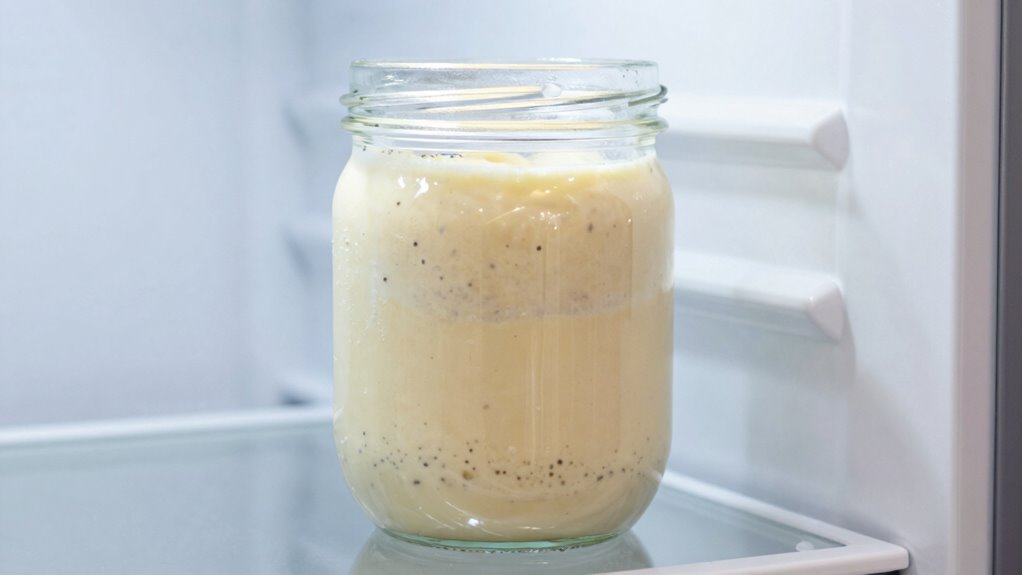
Achieving a perfectly homogeneous ice cream every time starts with proper mixing techniques. Ensure your ingredients are well combined before churning; this helps prevent separation and creates a smooth texture. When experimenting with flavor combinations, blend ingredients thoroughly to distribute flavors evenly. If you plan to add mix-ins like fruit or chocolate, incorporate them at the right stage to avoid clumping. For consistent results, chill your mixture before freezing, minimizing the risk of separation. Once ready to serve, use the ice cream within a few days for ideal texture. For serving suggestions, pair your flavor choices with complementary toppings or sauces to enhance the experience. Following these tips guarantees a creamy, uniform ice cream base that’s perfect for any flavor or presentation.
Frequently Asked Questions
Can Using Alternative Sweeteners Affect Ice Cream Base Stability?
Using alternative sweeteners like sugar substitutes or natural sweeteners can affect your ice cream base stability. These substitutes often have different chemical properties, which may cause the base to separate or become less smooth over time. To prevent this, choose stable sweeteners and consider adjusting the recipe slightly. You might also incorporate stabilizers or emulsifiers to maintain a consistent texture, ensuring your ice cream stays creamy and well-blended in the fridge.
Does Adding Alcohol Help Prevent Separation in the Base?
Absolutely, adding alcohol can help prevent separation by stabilizing your ice cream base. Alcohol’s effects include lowering the freezing point, which keeps ingredients evenly mixed, and it also boosts flavor enhancement. But be cautious—too much alcohol can make your ice cream too soft. Use it sparingly to balance stability and texture, ensuring a smoother, more consistent treat that’s flavorful and fabulous.
How Does Over-Processing Impact Ice Cream Base Emulsification?
Over-processing your ice cream base worsens emulsification challenges, causing issues like separation or a grainy texture. When you blend or churn it too much, the fat and liquid particles break down, making it harder for them to stay evenly mixed. To prevent this, stop blending once the ingredients are just combined, and avoid overworking the mixture. Gentle processing helps maintain stable emulsification and results in smoother, creamier ice cream.
Are There Specific Dairy Types That Reduce Separation Risk?
Did you know that whole milk has a higher dairy fat content than skim milk? Choosing dairy with balanced milk composition, like whole milk or cream, reduces separation risk by maintaining emulsification. These types contain more dairy fat, which helps stabilize your ice cream base. So, when selecting dairy, opt for those with ideal milk composition, as they keep your ice cream smooth and well-mixed longer in the fridge.
Can Homemade Stabilizers Improve the Consistency of My Ice Cream?
Yes, homemade stabilizers can improve your ice cream’s consistency. By experimenting with stabilizer recipes like gelatin, cornstarch, or egg yolks, you can achieve smoother texture and prevent separation. Be sure to adjust ingredient ratios carefully; too much can affect flavor and texture, while too little may not be effective. Properly balanced stabilizer recipes help keep your ice cream creamy and well-integrated, even after storage.
Conclusion
Think of your ice cream base like a delicate dance—each ingredient needs to stay in sync. When it separates, it’s like dancers losing their rhythm. By following proper storage tips and mindful preparation, you keep that dance smooth and flawless. Just like a well-choreographed routine, your ice cream will come out perfectly creamy every time. With a little attention, you’ll enjoy desserts that stay harmonious, no matter how long they’ve been chilling in the fridge.
Halloween Picks
halloween
As an affiliate, we earn on qualifying purchases.