
Water activity impacts both the texture and shelf life of ice cream by controlling how freely water molecules move. Higher water activity can make ice cream melt faster, cause larger ice crystals, and promote microbial growth, leading to spoilage. Managing it carefully — through ingredients like sugars and stabilizers — helps keep your ice cream smooth, creamy, and safe for longer. Continue exploring to discover how precise control can perfect your ice cream’s quality.
Key Takeaways
- Lower water activity results in smaller ice crystals, enhancing ice cream’s creaminess and smooth texture.
- High water activity promotes microbial growth, reducing shelf life and increasing spoilage risk.
- Proper water activity control prevents large ice crystals, maintaining consistent texture and preventing graininess.
- Managing water activity with stabilizers and sugar content extends shelf life by inhibiting microbial activity.
- Optimal water activity balances flavor retention, texture stability, and microbial safety for longer-lasting ice cream.
What Is Water Activity and Why Is It Important for Ice Cream Quality?
Water activity (a_w) measures how freely water molecules move within ice cream, directly affecting its texture and stability. You can determine this through water activity measurement, which helps you understand how much water is available for reactions or microbial growth. Controlling water activity is crucial to prevent ice crystal growth, spoilage, and texture changes. By managing water activity levels, you ensure your ice cream remains creamy and holds its structure during storage. Proper water activity control also influences shelf life, making it an essential part of production. When you monitor and adjust water activity, you optimize both the quality and safety of your ice cream, delivering a product that’s consistently smooth, stable, and enjoyable for consumers.
How Does Water Activity Affect Ice Cream’s Texture and Creaminess?
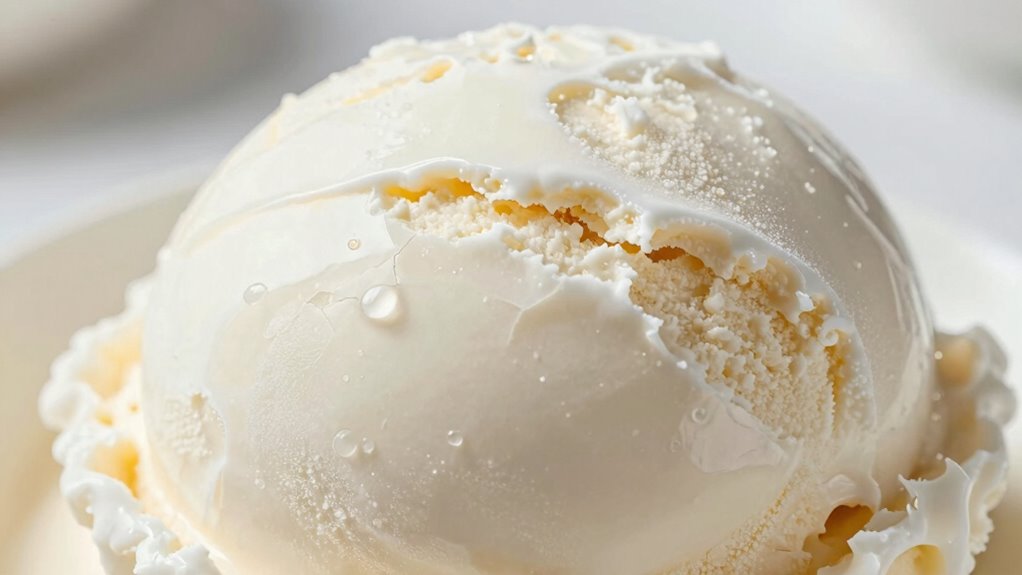
When water activity levels are high in ice cream, they allow more water molecules to move freely, which directly impacts its texture and creaminess. Higher water activity can cause the ice cream to melt faster, affecting melting behavior and reducing its smoothness. This also influences flavor retention, as more free water can lead to the loss of volatile flavor compounds. To illustrate, consider this table:
| Water Activity Level | Texture Impact | Flavor & Melting Behavior |
|---|---|---|
| Low | Firmer, denser | Better flavor retention, slower melting |
| Moderate | Creamy, soft | Balanced melting, good flavor retention |
| High | Soft, slushy | Faster melting, flavor loss |
| Very High | Watery, unstable | Poor texture, rapid flavor loss |
| Prime | Smooth, creamy | Ideal melting and flavor retention |
Understanding this helps you control texture and maintain flavor quality. Controlling water activity is essential for ensuring the desired shelf life and product stability, which also involves managing moisture content and ingredients effectively.
How Water Activity Influences Ice Crystal Formation and Mouthfeel

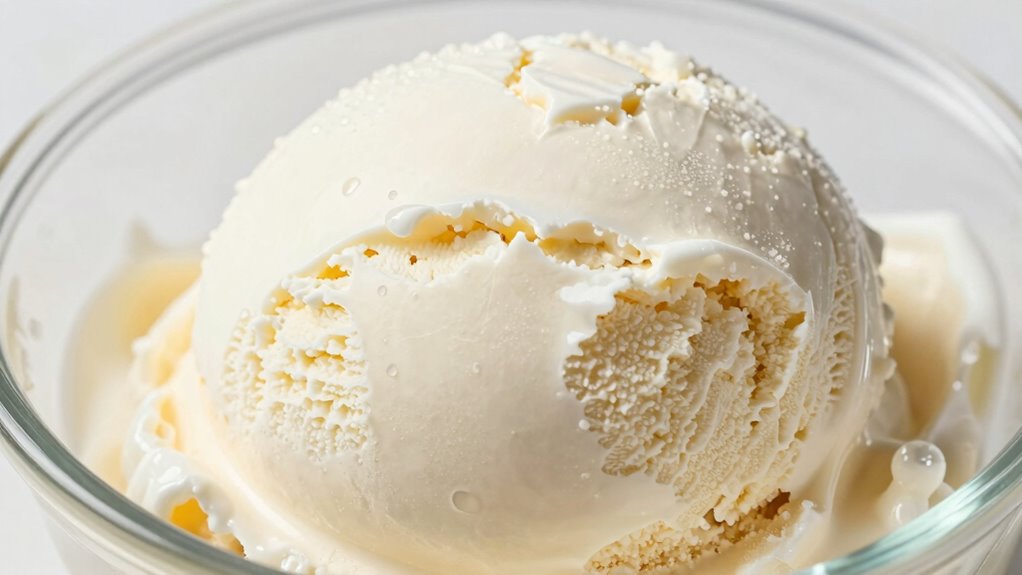
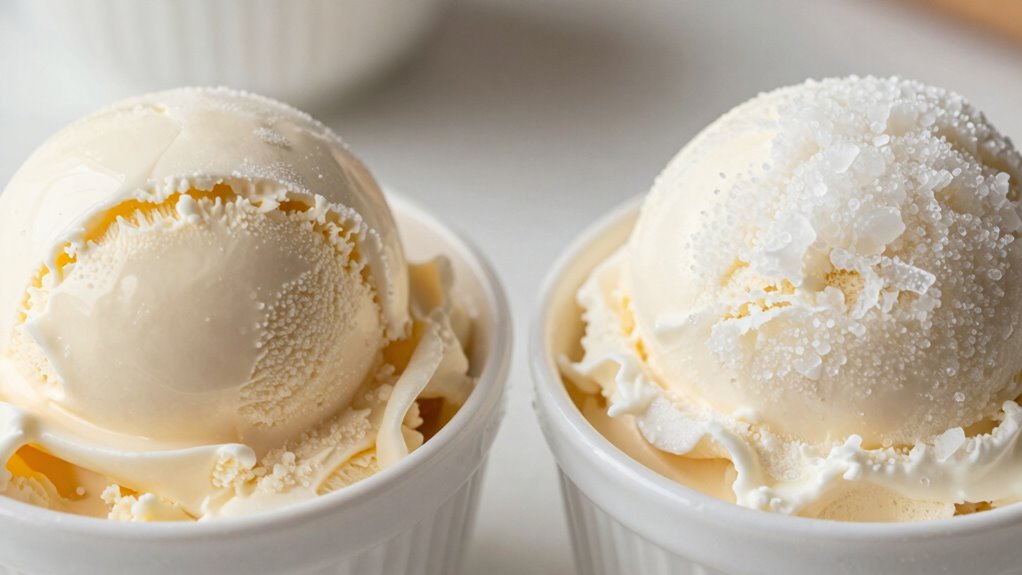
Water activity directly affects how ice crystals grow, shaping the texture and mouthfeel of your ice cream. Smaller crystals lead to a smoother, creamier experience, while larger ones can cause a grainy texture. Managing water activity also helps prevent freezer burn, ensuring your ice cream stays fresh and enjoyable. Proper control of water activity through formulation techniques is crucial for achieving the desired consistency and preventing unwanted crystallization. Controlling water activity can be achieved through proper formulation and storage techniques to maintain optimal texture. Understanding art conservation techniques can further help in preserving your ice cream’s quality over time. Additionally, maintaining proper storage conditions is essential for consistent quality and preventing spoilage. Incorporating water activity regulation methods can also enhance shelf life and product stability.
Crystal Growth Dynamics
Have you ever wondered how ice crystals grow and influence the texture of your ice cream? Crystal growth begins with nucleation control, where water molecules arrange themselves into tiny ice nuclei. Water activity plays a pivotal role here: lower water activity limits the availability of free water, slowing down crystal growth and resulting in smaller, smoother crystals. Additionally, controlling water activity helps regulate the paranormal phenomena that may occur in storage environments, ensuring product stability. Proper water activity management can also influence predictive validity, helping manufacturers optimize texture and shelf life. Conversely, higher water activity fosters rapid crystal growth, leading to larger crystals that can cause a gritty texture. By managing water activity, you can influence crystal growth dynamics, ensuring a consistent, pleasant mouthfeel. Controlling nucleation and crystal growth helps prevent ice crystal coalescence and growth during storage, extending shelf life and maintaining the desired creaminess of your ice cream. Additionally, understanding the net worth of key figures involved in related industries can provide insights into market trends and technological advancements.
Texture and Creaminess
The texture and creaminess of ice cream are directly impacted by how water activity influences ice crystal formation. When water activity is carefully regulated, smaller ice crystals develop, giving you a smoother, more indulgent mouthfeel. This enhances flavor perception because a well-structured ice cream allows flavors to release gradually, boosting overall enjoyment. Additionally, stable water activity levels help maintain ingredient stability, preventing unwanted changes in texture over time. If water activity is too high, larger ice crystals form, resulting in a coarse texture that diminishes creaminess. Conversely, too low water activity can cause excessive ice formation, making the ice cream icy and less enjoyable. Proper management of water activity also plays a crucial role in preventing freezer burn and extending shelf life. Managing water activity levels is essential for controlling ice crystal size, which directly influences the smoothness of the final product. By managing water activity, you ensure consistent texture, ideal flavor enhancement, and ingredient stability, keeping your ice cream irresistibly smooth and creamy. Understanding water activity levels is essential for controlling ice crystal size and ensuring the perfect texture. Additionally, maintaining optimal water activity can aid in preventing microbial growth, thereby enhancing food safety and shelf life. Furthermore, precise control of water activity can optimize the freeze-thaw stability of ice cream, reducing the risk of texture degradation during storage and serving.
Freezer Burn Prevention
Since controlling water activity is key to preventing freezer burn, understanding how it influences ice crystal formation is essential. Higher water activity allows moisture to migrate, leading to larger ice crystals that cause rough texture and diminished mouthfeel. To prevent this, keep water activity low by minimizing air exposure and ensuring proper sealing. This also helps preserve flavor infusion, maintaining the ice cream’s rich taste without dilution. Additionally, controlling water activity supports color stability, preventing fading or discoloration caused by moisture migration. Proper storage at consistent freezing temperatures slows ice crystal growth, reducing freezer burn risk. Managing water activity also involves understanding ice crystal formation, a critical factor in preserving texture and shelf life. By managing water activity effectively, you ensure the ice cream remains smooth, flavorful, and visually appealing for longer shelf life.
How Water Activity Impacts Ice Cream Shelf Life and Spoilage Risk
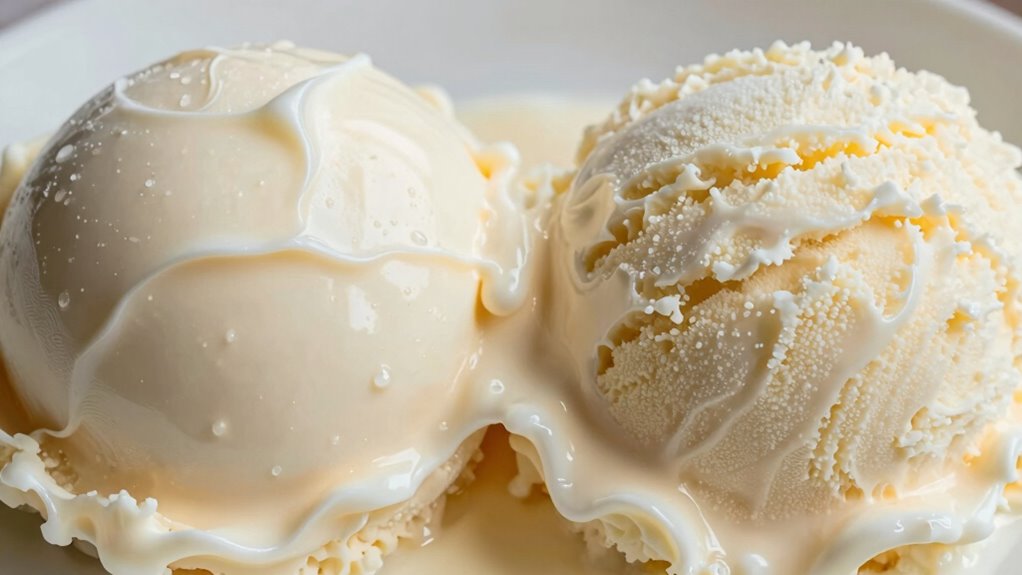
Water activity plays a crucial role in determining how long ice cream stays fresh and safe to eat. Higher water activity levels can lead to faster microbial growth, increasing spoilage risk and compromising safety. When water activity is too high, bacteria, yeasts, and molds thrive, shortening shelf life. Conversely, lowering water activity helps inhibit microbial activity, extending freshness. Additionally, water activity influences flavor stability; if it’s too high, flavors can degrade or develop off-notes due to microbial activity. Maintaining ideal water activity balances shelf life, flavor integrity, and safety. Proper management is key to delivering high-quality, safe ice cream to your customers. Implementing safe storage practices and regular quality checks further help control water activity and prevent spoilage.
What Techniques Are Used to Control Water Activity During Production?

To regulate water activity during ice cream production, you can adjust the sugar content, which binds water and decreases its availability. Using humectants helps retain moisture while reducing free water that affects texture and shelf life. These techniques ensure a smoother texture and better stability in your final product. Implementing high-quality MP3 output techniques can also improve the overall sensory experience of the ice cream by enhancing flavor perception. Additionally, understanding the benefits of curiosity can inspire further innovation in developing new formulations and techniques for better product quality. Maintaining proper storage conditions aligns with food preservation principles, ensuring the ice cream remains fresh longer. Incorporating hydrotherapy principles can also promote better understanding of water’s role in maintaining product integrity. Recognizing how water activity influences microbial growth is crucial for ensuring safety and extending shelf life.
Adjusting Sugar Content
Adjusting sugar content is a key technique for controlling water activity in ice cream production. By modifying the sugar concentration, you can effectively lower the available free water, which helps inhibit ice crystal growth and microbial growth, extending shelf life. Maintaining the right sweetness balance is essential; too much sugar can make the product overly sweet and affect texture, while too little may result in higher water activity and decreased stability. During formulation, you carefully select the amount of sugar to achieve the desired water activity level without compromising flavor. This precise adjustment ensures a smooth, creamy texture and enhances shelf life. Controlling sugar content is a straightforward, effective way to influence water activity, balancing sweetness and stability in your ice cream.
Using Humectants
Using humectants offers a practical approach to controlling water activity during ice cream production. By carefully selecting the right humectant, you can effectively enhance moisture retention without compromising texture. Glycerol and sorbitol are common options that help bind water molecules, reducing free water available for ice crystal growth. Proper humectant selection ensures the product remains smooth and creamy, while also extending shelf life. These ingredients work by maintaining moisture levels at a suitable point, preventing ice crystallization and spoilage. When integrating humectants into your recipe, consider their compatibility with other ingredients and the desired final texture. Additionally, understanding how water activity influences microbial growth and spoilage can help optimize preservation strategies. Controlling water activity strategically allows you to fine-tune water activity, resulting in high-quality ice cream with improved stability and enjoyable mouthfeel.
Tips to Maintain the Perfect Water Activity for Fresh, Delicious Ice Cream
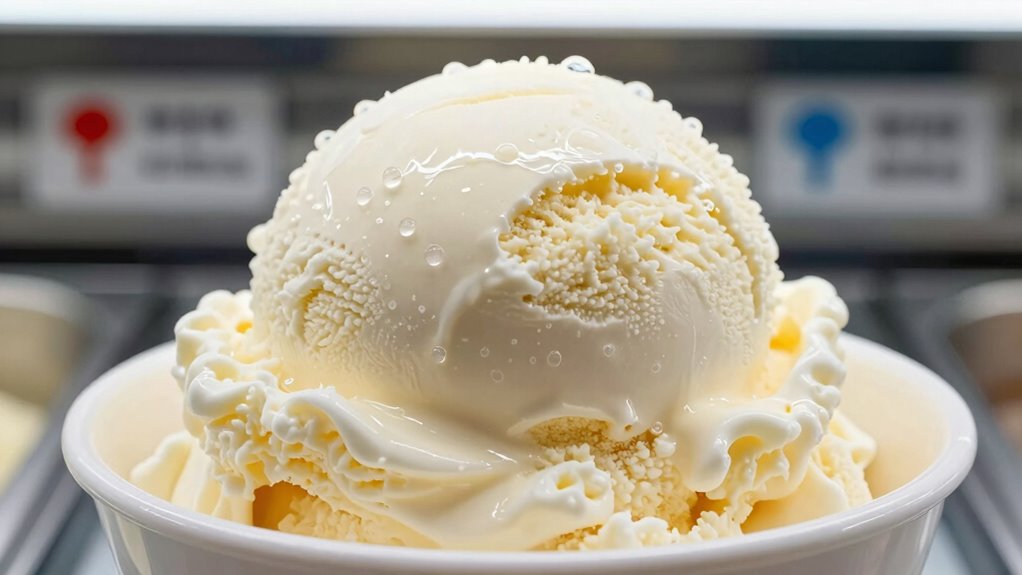
Maintaining the right water activity is essential for guaranteeing your ice cream stays fresh and has the perfect texture. To achieve this, control moisture levels by using ingredients like stabilizers and humectants, which help balance water activity and prevent ice crystal growth. Proper mixing and pasteurization also contribute to consistent water distribution, enhancing flavor and overall quality. Keep storage temperatures steady; fluctuations can alter water activity, affecting texture and shelf life. Adjusting water activity not only preserves the ideal mouthfeel but also boosts flavor enhancement by preventing moisture loss. Additionally, maintaining ideal water activity minimizes microbial growth, supporting nutritional impact by keeping nutrients intact longer. By paying attention to these factors, you ensure your ice cream remains delicious, fresh, and safe for longer periods.
Frequently Asked Questions
How Does Water Activity Influence Ice Cream Flavor Stability Over Time?
You should know that water activity directly impacts ice cream flavor stability over time. Higher water activity allows microbial growth, which accelerates flavor degradation. As microbes thrive, they produce off-flavors, causing your ice cream to taste stale sooner. To maintain flavor stability, controlling water activity is essential, as it helps inhibit microbial growth and preserves the original flavor, ensuring your ice cream stays fresh and delicious longer.
Can Water Activity Levels Be Adjusted After Ice Cream Production?
Water activity regulation after ice cream production is like trying to tame a wild river; it’s challenging but possible. You can’t dramatically change it once frozen, but post-production modifications like adding humectants or adjusting storage conditions can influence water activity levels. These adjustments help optimize texture and shelf life, ensuring your ice cream remains creamy and delightful longer, even after it’s left the factory.
What Role Does Water Activity Play in Preventing Ice Cream Freezer Burn?
You play a key role in preventing freezer burn by controlling water activity in your ice cream. Lowering water activity minimizes moisture migration, which causes freezer burn and affects texture. By maintaining proper packaging and storage conditions, you reduce exposure to air and humidity, keeping moisture in place. This helps preserve quality, prevents ice crystal growth, and extends shelf life, ensuring your ice cream stays creamy and delicious longer.
How Do Different Ingredients Affect Water Activity in Ice Cream Recipes?
You might be surprised how ingredients influence water activity in your ice cream. Sugar lowers water activity by binding moisture, preventing sugar crystallization and creating a smoother texture. Meanwhile, fat emulsification traps water molecules, reducing their availability for ice crystal growth. These interactions keep your ice cream creamy and extend shelf life, but altering ingredient ratios can dramatically change the final result. Stay attentive—small tweaks make a big difference.
Are There Natural Methods to Modify Water Activity in Homemade Ice Cream?
Yes, you can naturally modify water activity in homemade ice cream by using natural sweeteners like honey or agave, which help bind water and reduce free water. Adding fruit purees also lowers water activity by increasing solids and sugars, creating a less hospitable environment for ice crystal growth. These methods enhance texture and shelf life without synthetic additives, allowing you to craft healthier, delicious ice cream at home.
Conclusion
Maintaining essential water activity is key to ensuring your ice cream stays delicious and has a long shelf life. Did you know that controlling water activity can extend ice cream’s freshness by up to 30%? By understanding and managing this vital factor, you can enjoy consistently creamy textures and prevent spoilage. So, pay attention to water activity during production—it’s the secret to perfect, irresistible ice cream every time.