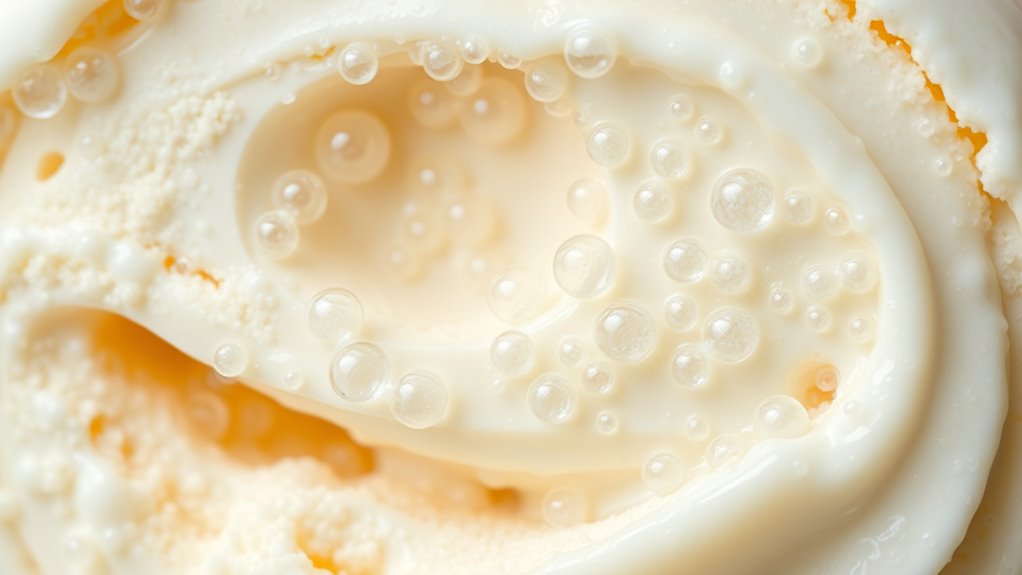

Smaller air bubbles in ice cream create a creamier texture by forming a fine, uniform foam that melts smoothly on your tongue. When you incorporate tiny, stable bubbles, they distribute evenly and trap less air overall, resulting in a silkier, more luxurious mouthfeel. Larger bubbles tend to make ice cream feel crumbly or icy. To discover how perfecting bubble size can improve your desserts, keep exploring these helpful tips.
Key Takeaways
- Smaller air bubbles create a denser, more uniform structure, resulting in a smoother, creamier ice cream texture.
- Tiny air cells reduce icy graininess, enhancing melt-in-the-mouth sensation.
- Controlled air cell size ensures consistent distribution, improving overall creaminess and mouthfeel.
- Fine bubbles prevent large ice pockets that can cause a crumbly or icy texture.
- Proper churning and freezing techniques promote small bubble formation, leading to richer, more luxurious ice cream.

Have you ever wondered how the size of an air cell impacts the overall quality of an egg? The same principle applies when you’re making whipped cream or crafting ice cream. Tiny air bubbles, or small air cells, are indispensable for creating that smooth, creamy texture you crave. When the air cells are small, the foam stability increases, meaning the whipped cream holds its shape longer and resists collapsing. This happens because smaller bubbles pack tightly together, forming a more cohesive structure that can withstand gravity and temperature changes. Larger air cells, on the other hand, tend to make the foam airy but less stable, leading to quicker deflation and a less desirable consistency.
Small air cells boost foam stability, keeping whipped cream and ice cream smooth and long-lasting.
If you’re whipping cream and want it to be perfectly fluffy and stable, controlling the size of those air bubbles is key. When you beat the cream, you’re essentially injecting air, creating a network of tiny bubbles. As the bubbles grow, they can either stay small and stable or merge into larger ones, which compromise foam stability. To achieve smaller bubbles, you need to whip at the right speed and temperature, ensuring the air incorporates evenly without overbeating. This is vital because larger bubbles tend to burst more easily, leading to a runny or watery texture, whereas smaller bubbles give whipped cream that firm, velvety feel that holds its shape for longer. Proper technique and equipment, such as using a chilled bowl and whisk, can also facilitate the formation of smaller, more stable air cells.
Similarly, in ice cream, the size of air cells influences creaminess. During churning, air is incorporated into the mixture, and smaller bubbles result in a smoother, more luxurious mouthfeel. Larger air pockets create a lighter, but sometimes crumbly or icy texture, which isn’t as appealing. Achieving a fine, uniform distribution of tiny air cells involves precise churning and proper freezing techniques. When done correctly, the ice cream not only feels creamier but also melts smoothly on your tongue, thanks to the even distribution of small air pockets that reinforce its structure without making it overly airy.
Understanding how smaller bubbles improve foam stability helps you produce better whipped cream and ice cream at home. Whether you’re aiming for a stable whipped topping or a silky scoop of ice cream, controlling air cell size is essential. It’s about creating a delicate balance: enough air to make the product light and fluffy, but small enough bubbles to keep it stable and creamy. With practice, you’ll notice how manipulating the size of air cells transforms your desserts from good to gourmet, delivering that perfect, indulgent texture every time. Recognizing the role of air cell size in dessert quality can lead to more consistent and impressive results.
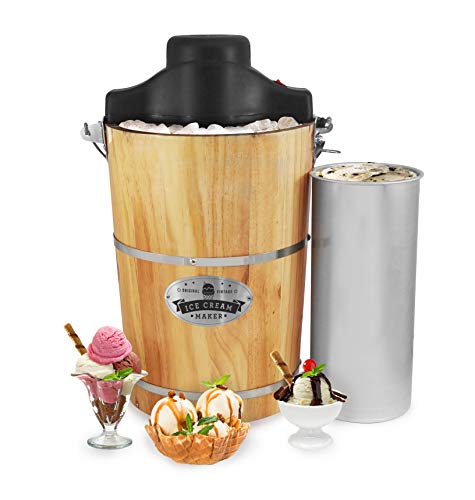
Elite Gourmet EIM916 Old Fashioned 6 Quart Vintage Wood Bucket Electric Ice Cream Maker Machine Appalachian, Bonus Classic Die-Cast Hand Crank for Churning, Uses Ice and Rock Salt
- Capacity: 6 Quarts for large batches
- Simple 3-Step Process: Mix, assemble, and churn
- User-Friendly Operation: Automatic motor or hand-crank
As an affiliate, we earn on qualifying purchases.
As an affiliate, we earn on qualifying purchases.
Frequently Asked Questions
How Does Air Cell Size Affect Ice Cream Melting Speed?
Smaller air bubbles slow down the melting rate of ice cream because they create a denser structure, making it more resistant to heat. When you have fine air bubble formation, the ice cream retains its shape longer and melts more gradually. Larger air cells, however, tend to melt faster, causing the ice cream to lose its creamy texture quickly. So, smaller air cell size helps keep your ice cream fresher and longer.
Can Air Cell Size Be Controlled During Commercial Production?
Yes, you can control air cell size during commercial production through ingredient impact and manufacturing techniques. By adjusting stabilizers and emulsifiers, you influence bubble formation, while techniques like controlled churning speed and freezing rate help create smaller bubbles. These methods allow you to produce ice cream with a creamier texture and consistent quality, ensuring the desired air cell size is achieved for ideal mouthfeel and melting properties.
What Role Does Flavor Impact Air Bubble Formation?
Ironically, flavor actually influences air bubble formation, enhancing your ice cream’s texture. As flavor permeates the mixture, it can alter surface tension, affecting how bubbles form and stabilize. This taste enhancement might seem subtle, but it impacts the creaminess you experience. So, when you savor that rich, flavorful scoop, remember it’s not just taste—it’s also about how flavor guides those tiny bubbles, making your ice cream irresistibly smooth.
Is There a Health Difference Between Ice Creams With Different Air Cell Sizes?
You might notice no significant health difference between ice creams with different air cell sizes, but they can impact your nutritional content and calorie count. Denser ice cream with fewer air bubbles often has higher calories and richer nutrients, while lighter versions with more air tend to be lower in calories. So, if you’re watching your intake, choosing ice cream with larger air cells can help reduce calorie consumption without sacrificing flavor.
How Does Storage Temperature Influence Air Cell Stability?
Did you know that improper storage conditions can cause ice crystal growth, increasing by 50% with just minor temperature fluctuations? Storage temperature directly affects air cell stability; colder, consistent temperatures help maintain small bubbles, keeping ice cream creamy. Temperature fluctuations, even small ones, cause air cells to collapse or expand, leading to icy texture. To preserve quality, keep your ice cream at a steady, ideal temperature and avoid frequent temperature changes.
Conclusion
So, next time you indulge in that creamy delight, remember it’s the tiny bubbles working behind the scenes, like a secret orchestra crafting each scoop. Smaller air cells weave a silky tapestry of texture, turning ordinary ice cream into a velvety dream. It’s as if each spoonful is a cloud condensed into a delicious masterpiece, inviting you to savor the magic of science in every bite. Embrace the tiny bubbles—they’re the real artists of creamy perfection.