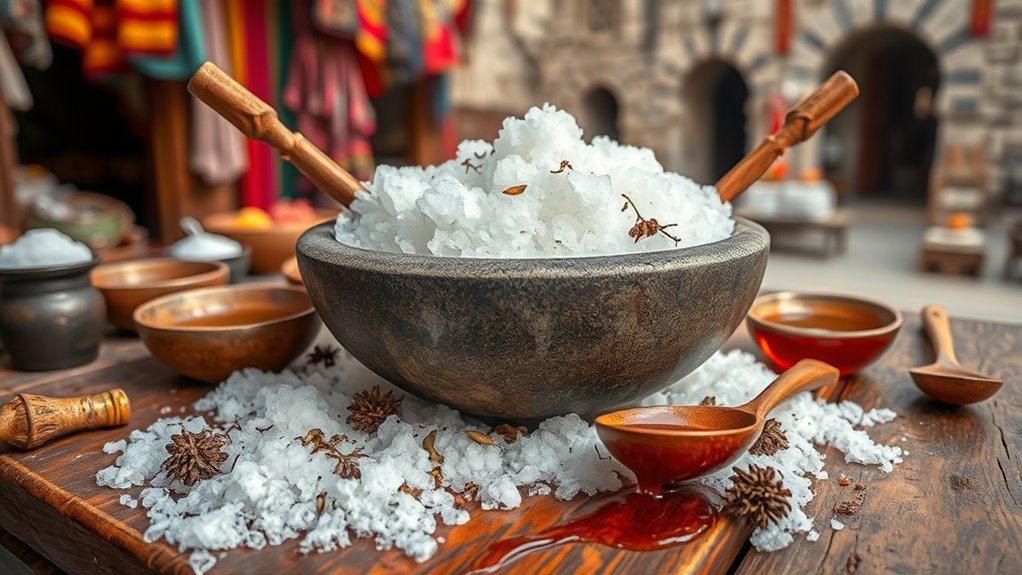

Ancient civilizations used snow, ice, and natural ingredients like honey, fruit, herbs, and wine to create early frozen treats. They stored snow in underground chambers or packed it around flavored mixtures to keep them cold, long before modern refrigeration. These inventive methods laid the groundwork for ice cream’s origins, showcasing human resourcefulness with simple technology. If you want to explore how these ancient techniques evolved into today’s ice cream favorites, there’s more to discover ahead.
Key Takeaways
- Ancient civilizations used natural snow and ice to create cooled treats, laying the foundation for ice cream.
- Flavored icy desserts from China, Rome, and Persia combined snow with honey, fruit, herbs, and wine.
- Early methods relied on environmental resources like snow pits and underground chambers for freezing.
- Natural ingredients and innovative techniques showcased early culinary creativity in frozen confections.
- These ancient practices influenced modern ice cream techniques and the development of frozen desserts.

Ice cream has a long history that stretches back thousands of years, with early civilizations experimenting with frozen treats long before modern refrigeration. As you explore its ancient origins, you’ll discover that people used a variety of methods to keep their sweet, icy creations cold. Ancient cooling techniques, such as storing mixtures in snow or ice pits, allowed them to enjoy chilled desserts long before the invention of refrigerators. In regions with frequent snowfalls or cold climates, artisans would gather snow and pack it around containers filled with flavored liquids, creating early versions of frozen confections. This ingenuity allowed civilizations to enjoy cool treats during hot seasons, and these methods laid the groundwork for ice cream as we know it today.
When it comes to flavorings, early civilizations didn’t hold back. They used natural ingredients that were available locally, introducing a range of flavors that would surprise you. In ancient China, for example, officials would mix snow with fruit juices, honey, or fragrant herbs to produce invigorating icy treats. The Romans, too, experimented with flavorings like honey, fruit purees, and even wine, combining these with snow or crushed ice. The Persians created a dish called “sharbat,” which involved blending fruit flavors with ice and sweeteners, a precursor to modern sorbet. These early flavorings reveal that even thousands of years ago, people appreciated the variety and richness of taste that can be achieved by combining natural ingredients with frozen techniques.
Throughout history, these ancient cooling methods and flavoring practices demonstrate a remarkable level of ingenuity. Without refrigeration, early civilizations relied on their environment and simple technology to create delightful frozen desserts. Whether it was packing snow around containers or storing ice in underground chambers, their resourcefulness made it possible to enjoy sweet, icy treats that were both invigorating and flavorful. As you trace back the origins of ice cream, you’ll see that the combination of inventive cooling techniques and creative flavorings set the stage for the sophisticated frozen desserts we indulge in today. These ancient practices remind us that even without modern technology, human ingenuity can craft delicious experiences that stand the test of time.

Kool-Aid Shave Ice and Snow Cone Machine, Multi-Use Ice Shaver for Frozen Treats, Slushies, Snow Cones, and More – Reusable Cup and Ice Mold, Stainless Steel Blades – Red, White, & Blue
- Versatile Frozen Treats: Makes snow cones, shaved ice, and slushies
- Includes Ice Mold: Reusable ice mold for quick preparation
- Durable Stainless Steel Blades: Efficiently shaves ice into fluffy snow
As an affiliate, we earn on qualifying purchases.
As an affiliate, we earn on qualifying purchases.
Frequently Asked Questions
Were Ancient Ice Creams Flavored With Herbs or Spices?
Yes, ancient ice creams were flavored with herbs and spices. You’d often find herbal infusions and spice enhancements added to improve flavor and aroma. People used ingredients like saffron, cinnamon, and mint to create unique tastes. These natural flavorings not only made the icy treats more enjoyable but also offered medicinal benefits. So, ancient ice creams were much more than just sweet—they were aromatic, flavorful, and sometimes even healthful.
How Did Early Civilizations Store Ice Before Refrigeration?
Imagine you’re an ancient Egyptian, storing ice in underground tombs to keep it cool. Early civilizations used ice storage methods like digging pits or building icehouses, taking advantage of natural cooling techniques. They often lined these with straw or sawdust to insulate and slow melting. By storing ice in shaded, underground locations, they preserved it longer, ensuring a supply during warmer months without refrigeration technology.
Did Ancient Cultures Have Specific Festivals Involving Frozen Treats?
Yes, ancient cultures did have festivals involving frozen treats. You might find that during festivals like the Chinese Mid-Autumn Festival or Persian Yaldā Night, frozen treats played a cultural role, symbolizing celebration and abundance. These traditions highlight the cultural significance of frozen treats, showcasing how ancient societies treasured cold desserts not just for refreshment but also for their symbolic and social importance during special occasions.
What Tools Were Used to Make Frozen Desserts in Ancient Times?
You would use primitive cooling techniques like natural ice and snow storage, often in underground chambers, to keep desserts cold. Manual ice harvesting involved gathering ice from frozen lakes or rivers during winter, then storing it in insulated pits. These methods allowed ancient peoples to make frozen treats, even without modern refrigeration, by effectively harnessing natural cold sources and simple tools like saws and pikes.
Are There Any Ancient Texts Describing the Taste of Early Ice Creams?
Imagine biting into ancient history—surely, those texts barely whisper what early ice creams tasted like. Historical recipes and culinary descriptions hint at flavors like honey, fruit, and aromatic herbs, but no detailed taste notes survive. Instead, you’re left to guess whether they were as sweet and creamy as modern favorites or just icy, herbal experiments. Ancient texts offer tantalizing glimpses, but the full flavor experience remains a delicious mystery.
Conclusion
As you reflect on these ancient origins, it’s fascinating how the love for icy treats has persisted through history, almost as if fate connected past and present. Maybe it’s no coincidence that, centuries later, you find yourself craving a scoop of ice cream on a warm day—reminding you that these cold delights have always been a universal comfort, bridging cultures and eras, just as they did when snow and syrups first brought joy to our ancestors.