
To keep ice cream at its best, store it at around -20°F (-29°C) to preserve flavor and smooth texture. Consistent freezing temperatures prevent ice crystal growth and prevent melting or graininess. Make sure your freezer maintains an even chill, avoid overcrowding, and use airtight containers to prevent freezer burn and odors. Proper storage guarantees every scoop remains delicious and fresh. Continue to explore how to optimize your freezer setup for perfect ice cream every time.
Key Takeaways
- Store ice cream at around -20°F (-29°C) to maintain optimal texture and flavor.
- Keep the freezer temperature consistent to prevent ice crystal growth and texture changes.
- Use airtight containers and tightly sealed packaging to prevent freezer burn and odor absorption.
- Avoid overcrowding the freezer to ensure proper air circulation and even freezing.
- Regularly verify the freezer temperature with a thermometer for precise storage conditions.
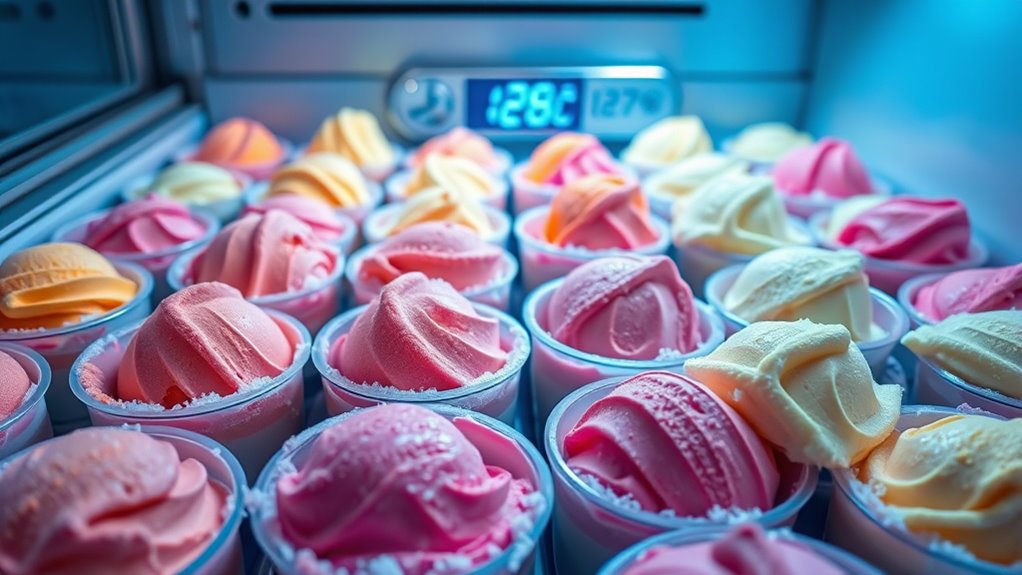
Have you ever wondered how proper storage temperatures can keep your food fresh and safe? When it comes to ice cream, maintaining the right temperature isn’t just about preventing melting; it’s about preserving flavor and texture. If you want your favorite treat to taste just as delightful as when it was first made, understanding the ideal storage conditions is essential.
Ice cream is highly sensitive to temperature fluctuations. When stored at the correct temperature—typically around -20°F (-29°C)—it retains its rich flavor and smooth, creamy texture. Too warm, and it starts to melt slightly, causing the ice crystals to grow. This change not only affects the appearance but also diminishes the flavor intensity. You might notice a duller taste or a grainy texture, which makes every spoonful less enjoyable. Conversely, if stored at excessively cold temperatures, it can become overly hard, making it difficult to scoop and potentially damaging the delicate structure of the ice cream.
Maintaining a consistent temperature is key. Fluctuations, like moving the container from freezer to warmer environments repeatedly, can cause the ice cream to develop ice crystals and alter the texture. Proper storage prevents this, preserving that irresistibly smooth bite and ensuring the flavor stays vibrant. When ice cream is kept at the right temperature, the fat and sugar components remain evenly distributed, contributing to a balanced, creamy mouthfeel. This consistency enhances your overall experience and keeps each serving as delightful as the first.
Consistent freezing preserves ice cream’s smooth texture and vibrant flavor, ensuring every scoop is as delightful as the first.
To achieve ideal storage, make sure your freezer is set to the recommended temperature. Many household freezers are capable of reaching these levels, but it’s worth checking with a thermometer to be certain. Avoid overcrowding the freezer; proper air circulation helps maintain an even temperature throughout. Additionally, keep the ice cream container tightly sealed. Exposure to air can cause freezer burn, which compromises flavor and texture. Using airtight containers or wrapping the original packaging tightly helps lock in freshness and prevents the ice cream from absorbing other freezer odors.
In essence, storing ice cream at the proper temperature isn’t just about preventing melting; it’s about safeguarding its quality. When you pay attention to the details—correct temperature, consistent storage, and airtight sealing—you ensure every scoop delivers that perfect blend of flavor and texture you’re craving. Proper storage temperatures help you enjoy your favorite treat at its very best, making each indulgence satisfying and memorable. This also aligns with the importance of maintaining optimal storage temperatures for preserving food quality and safety.
Frequently Asked Questions
How Does Humidity Affect Ice Cream Storage Conditions?
Humidity affects ice cream storage by causing moisture buildup, which can lead to ice crystallization and freezer burn. You should focus on moisture control and condensation prevention by keeping the storage environment cool and dry. Make certain your freezer is well-sealed to prevent humidity from entering and causing these issues. Proper humidity management helps maintain ice cream’s texture and flavor, keeping it fresh and delicious for longer.
Can Fluctuating Temperatures Harm Ice Cream Quality?
Imagine your ice cream as a delicate dance partner; sudden moves can throw off their rhythm. Fluctuating temperatures harm ice cream quality by causing ice crystals to form and melt repeatedly, leading to freezer burn. Temperature stability is essential, as even brief changes can compromise texture and flavor. Keep your freezer at a consistent temperature to preserve that smooth, creamy goodness and avoid that undesirable icy crunch.
What Are the Best Storage Practices for Homemade Ice Cream?
You should store your homemade ice cream in airtight storage containers to prevent freezer burn and preserve freshness. Keep the freezer at a consistent temperature, ideally around -20°C, and use a thermometer to monitor it regularly. Label your containers with the date to track freshness, and avoid frequent temperature fluctuations by minimizing door openings. Proper storage ensures your ice cream stays creamy and delicious for longer.
How Long Can Ice Cream Safely Stay at Improper Temperatures?
If your ice cream experiences temperature abuse, it’s unsafe to eat after just a few hours, especially if left at room temperature. For example, leaving it out overnight risks bacterial growth and spoilage. Generally, storage duration at improper temperatures shouldn’t exceed 2 hours, but even shorter if it’s warm. To keep it safe, always maintain proper storage temperatures and avoid extended periods of temperature abuse.
Do Different Ice Cream Flavors Require Specific Storage Temperatures?
Different ice cream flavors generally don’t require specific storage temperatures, but maintaining a consistent temperature is crucial for flavor preservation and texture stability. You should keep all flavors at the ideal freezer temperature, around -20°C (-4°F), to prevent ice crystal formation and flavor loss. Proper storage ensures your ice cream remains smooth, creamy, and flavorful, no matter the variety, so you get the best experience with each scoop.
Conclusion
By keeping your ice cream at the right temperature, you’re not just preserving its flavor — you’re safeguarding a moment of delight. Think of your freezer as a guardian, quietly ensuring every scoop remains perfect and inviting. Don’t let improper storage turn that creamy bliss into a distant memory. Remember, the right temp is the key to happiness in every bite — because when it comes to ice cream, temperature truly is everything.