
Pasteurization plays a crucial role in making your ice cream base both safe and smooth. By heating the milk or cream to around 161°F for about 15 seconds, harmful bacteria are destroyed while flavor and texture are preserved. This process prevents spoilage, reduces health risks, and creates a consistent, creamy product. If you want to discover more about how pasteurization guarantees your ice cream is both delicious and safe, keep exploring the details behind this essential step.

Get baking supplies delivered free — and shop member deals
- Fast, free delivery on millions of items
- Access to Prime Big Deal Days deals on October 6–7
- Prime Video, Amazon Music and more included
Key Takeaways
- Pasteurization heats dairy ingredients to kill harmful bacteria, ensuring the ice cream base is safe for consumption.
- The process involves rapid heating to around 161°F for 15 seconds, then quick cooling to preserve quality.
- It helps maintain the creamy texture and rich flavor by preventing spoilage and off-flavors caused by bacteria.
- Adhering to industry standards guarantees consistent safety, extending shelf life and ensuring product quality.
- Pasteurization works with sanitation and cold chain management to produce smooth, safe, and enjoyable ice cream.

Pasteurization plays an essential role in guaranteeing ice cream is safe to eat by effectively killing harmful bacteria in dairy ingredients. When you enjoy a scoop of your favorite frozen dessert, you’re indirectly benefiting from this pivotal process that safeguards your health. Without pasteurization, the risk of consuming pathogenic microorganisms like Salmonella or Listeria would be much higher, making frozen dessert safety a noteworthy concern. Dairy processing techniques like pasteurization are designed specifically to eliminate these threats while preserving the quality of the ingredients. This step is indispensable in producing a smooth, creamy base that’s both delicious and safe.
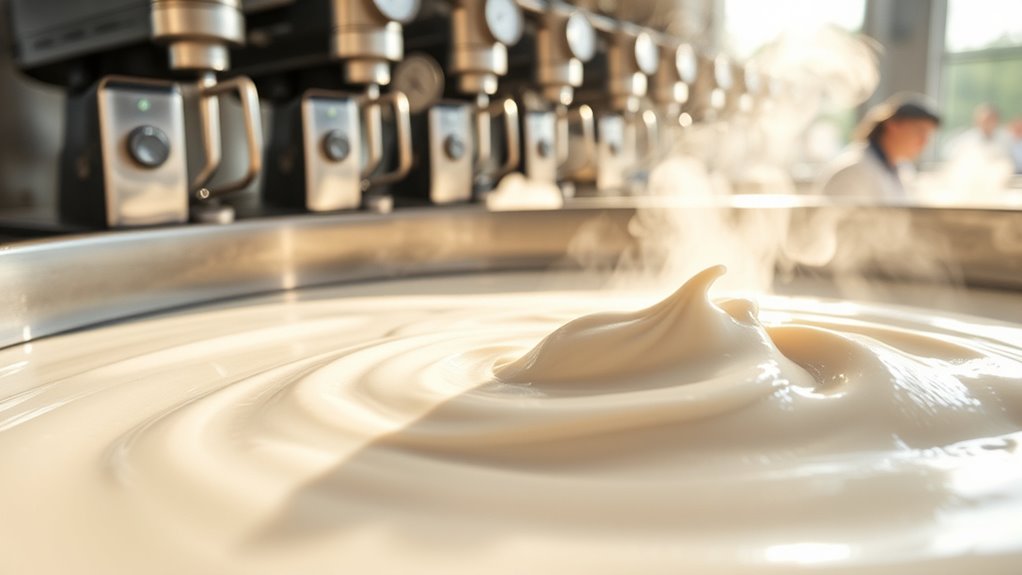
During dairy processing, raw milk or cream is heated to a specific temperature—usually around 161°F (72°C) for 15 seconds—then rapidly cooled. This controlled heat treatment destroys bacteria and enzymes that could otherwise spoil the product or cause illness. The beauty of pasteurization is that it strikes a balance: it effectively reduces microbial contamination without appreciably altering the flavor or texture of the dairy. As a result, your ice cream base remains rich and smooth, ready for the next stages of freezing and flavoring.
You might not realize it, but the integrity of dairy processing techniques directly impacts the overall frozen dessert safety. By adhering to strict pasteurization standards, manufacturers ensure that the dairy ingredients are safe from harmful microbes. This process also extends the shelf life of the product, giving you confidence that what you’re eating isn’t just tasty but also hygienic. The consistent application of these techniques across the industry means you can enjoy your ice cream without worry, knowing that safety measures, like pasteurization, are in place to protect you.
Furthermore, pasteurization is a foundation for other quality controls in ice cream production. It helps maintain the desired texture, preventing spoilage and off-flavors that bacteria could cause. When combined with proper sanitation, equipment sterilization, and cold chain management, pasteurization creates a complete safety net. This ensures that every batch of ice cream you indulge in is not only smooth and flavorful but also free from harmful contaminants. Additionally, understanding the science behind microbial safety can help consumers appreciate the importance of these processes.
In essence, pasteurization is the backbone of frozen dessert safety. It’s an essential dairy processing technique that guarantees your ice cream base is safe to consume while preserving its creamy consistency. Thanks to this step, you can savor your favorite frozen treat with peace of mind, knowing that rigorous safety standards are in place to protect your health.
ice cream base pasteurization equipment
As an affiliate, we earn on qualifying purchases.
As an affiliate, we earn on qualifying purchases.
Frequently Asked Questions
Can Pasteurization Eliminate All Bacteria and Viruses in Ice Cream?
You might wonder if pasteurization can eliminate all bacteria and viruses in ice cream. While it effectively causes bacterial elimination and virus inactivation, it doesn’t guarantee complete sterilization. Some resistant bacteria or viruses might survive if conditions aren’t perfect. However, pasteurization substantially reduces health risks, making your ice cream safer to enjoy. So, it’s an essential step, but not a foolproof way to remove every microorganism.
Does Pasteurization Affect the Nutritional Value of the Ice Cream Base?
Pasteurization does have some nutritional impact, mainly reducing heat-sensitive vitamins like B and C. However, it’s designed to preserve flavor and safety, so your ice cream still tastes great. While some nutrients may decrease slightly, the overall nutritional value remains high. You get a safe, smooth, and flavorful ice cream base that balances both nutrition and taste without significant compromise.
Are There Alternative Methods to Pasteurization for Ice Cream Safety?
Imagine your ice cream’s safety hanging by a thread—that’s how vital alternative methods are! While pasteurization is the gold standard, techniques like high-pressure processing or UV treatment can also guarantee ice cream safety. These methods are mighty enough to destroy harmful bacteria without compromising flavor or texture. So, yes, there are powerful alternatives, giving you peace of mind without sacrificing the creamy goodness you love.
How Long Does the Pasteurization Process Typically Take?
You typically need about 30 minutes for pasteurization, depending on your equipment standards and the temperature control you maintain. The process involves heating the ice cream base to a specific temperature, usually around 160°F (71°C), to eliminate harmful bacteria. Ensuring your equipment meets safety standards is vital for consistent results. Properly timed and controlled pasteurization guarantees a safe, smooth ice cream with ideal texture and flavor.
Is Home Pasteurization of Ice Cream Bases Effective and Safe?
Think of home pasteurization as taming a wild horse—you need control and proper tools. It can be effective if you follow strict home safety protocols and guarantee your equipment is thoroughly clean. Heating your ice cream base to the right temperature kills harmful bacteria, making it safe to eat. Just be mindful of precise temperature control and sanitation to prevent contamination and ensure your homemade ice cream is both safe and delicious.
Conclusion
So, don’t skip pasteurization when making ice cream. It might seem like an extra step, but it’s your best defense against harmful bacteria and guarantees a smooth, safe treat every time. Some worry it dulls flavor or texture, but with proper techniques, you’ll enjoy rich, creamy ice cream without compromise. Trust the process—pasteurization protects you and elevates your homemade ice cream to a delicious, safe perfection you can savor confidently.
Fall Picks
fall essentials
As an affiliate, we earn on qualifying purchases.