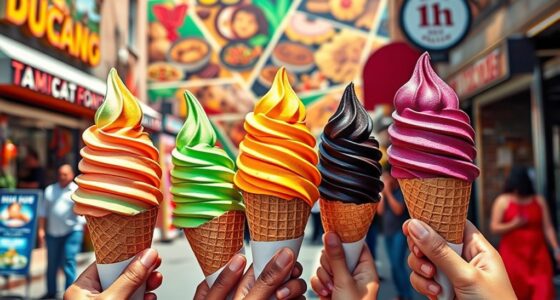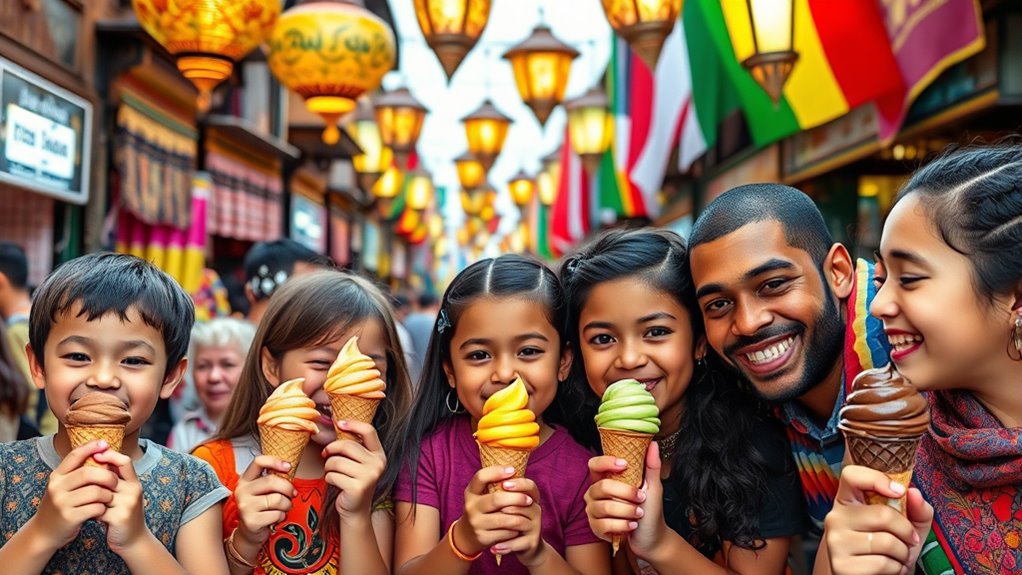

Around the world, each culture enjoys ice cream in unique ways that reflect their traditions and flavors. In Italy, gelato celebrates craft, community, and rich textures, while Japan offers colorful, innovative flavors during seasonal festivals. India’s vibrant kulfi and celebrations show its cultural importance, and street vendors bring ice cream into social life worldwide. From ceremonial festivals to everyday treats, exploring these differences reveals how ice cream unites and showcases local heritage. Keep exploring to discover more about these delicious cultural stories.
Key Takeaways
- Different cultures incorporate traditional ingredients, like matcha in Japan or kulfi in India, into their unique ice cream flavors.
- Festivals and community events often feature local ice cream styles, emphasizing heritage and social bonding.
- Italian gelato emphasizes artisanal craftsmanship, dense texture, and small-scale production rooted in centuries-old traditions.
- Vibrant presentation and colorful displays are common in Japanese festivals, blending modern innovation with cultural aesthetics.
- Ice cream serves as a symbol of celebration, joy, and cultural identity across diverse societies worldwide.
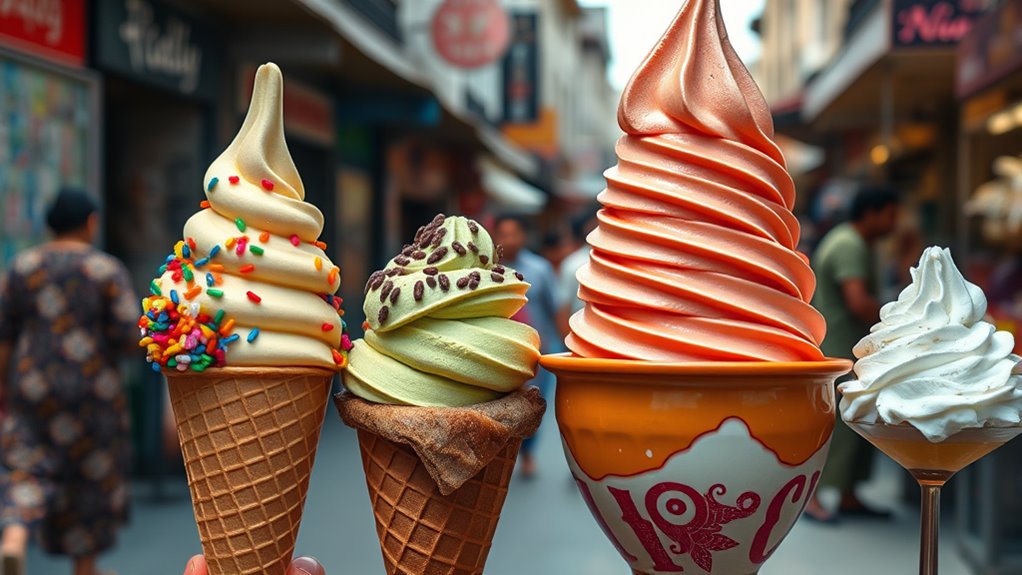
Embark on a flavorful journey with “Around the World in 8 Scoops,” where each scoop takes you to a different corner of the globe. As you explore, you’ll discover that ice cream isn’t just a treat—it’s a reflection of cultural traditions, celebrations, and history. In Italy, gelato traditions run deep, dating back centuries. You might imagine locals gathered at small gelaterias, savoring creamy, artfully crafted flavors that emphasize freshness and quality. Unlike typical ice cream, gelato has a lower fat content and is churned slowly, giving it a dense, smooth texture that melts in your mouth. During Italian ice cream festivals, the streets fill with colorful carts and bustling crowds, all enthusiastic to sample new flavors and celebrate their beloved frozen dessert. These festivals aren’t just about tasting; they’re about community, heritage, and the artistry behind each scoop. You can see artisans expertly crafting gelato, using age-old recipes passed down through generations, showcasing Italy’s passion for this sweet tradition.
Traveling to Japan, you find that ice cream takes on a different cultural flavor. Here, you might indulge in unique flavors like matcha, black sesame, or sweet potato, reflecting local ingredients and tastes. Ice cream festivals in Japan are lively, often coinciding with seasonal celebrations such as cherry blossom festivals, where vendors line the streets offering colorful cones and cups. These events highlight a fusion of modern innovation and traditional values, with vendors presenting inventive flavors inspired by local cuisine. The Japanese approach to ice cream emphasizes not just taste but visual appeal, with beautifully decorated cones and creative presentations that turn eating ice cream into an art form.
In Japan, ice cream blends tradition and innovation with flavors like matcha and beautiful, artistic presentations.
Heading to India, you’ll discover that ice cream is often intertwined with religious festivals and community gatherings. Kulfi, a dense and creamy frozen dessert, shares space with more contemporary ice cream flavors at local markets. During celebrations like Diwali, ice cream stalls pop up everywhere, offering cooling treats to beat the heat and add joy to the festivities. These festivals serve as social hubs where families and friends come together, strengthening bonds over shared desserts. The vibrant colors and diverse flavors reflect India’s rich cultural tapestry, making ice cream a universal symbol of happiness and celebration.
Each culture’s approach to ice cream reveals its history, values, and creativity. From Italy’s gelato traditions and festivals to Japan’s seasonal innovation and India’s festive kulfi, you see that this frozen delight unites people worldwide. It’s not just about satisfying a sweet tooth but about celebrating life’s moments, big or small, with a scoop of something special.
As an affiliate, we earn on qualifying purchases.
Frequently Asked Questions
What Are the Traditional Ice Cream Flavors in Each Culture?
You might wonder about traditional ice cream flavors across cultures. Regional flavor variations often reflect local ingredients and historical origins of ice cream, like Italy’s rich gelato with pistachio or France’s silky lavender. In Japan, green tea flavored ice cream is popular, while Mexico’s traditional flavors include spicy chili chocolate. Exploring these flavors reveals how history and culture shape each region’s unique take on ice cream, making each taste an adventure.
How Is Ice Cream Traditionally Served in Different Countries?
You’ll notice that in different countries, ice cream is served in unique ways reflecting their cultural presentation styles. In Italy, you might use a waffle cone, while in Japan, serve it in a delicate porcelain cup. In India, traditional serving utensils like brass bowls often hold the scoop. These styles enhance the experience, making each serving a reflection of local customs and traditions, creating a memorable cultural connection.
Are There Unique Ingredients Used in International Ice Cream Recipes?
Ever wondered what makes international ice cream truly unique? You’ll discover exotic flavor combinations like matcha, saffron, or black sesame, reflecting regional tastes. Many countries also incorporate regional dairy products, such as buffalo milk in Italy or yak milk in Tibet, adding distinctive richness. These ingredients create diverse textures and flavors, making each culture’s ice cream experience special and memorable. Wouldn’t you love to try them all?
What Are the Cultural Significances of Ice Cream Festivals Worldwide?
You’ll find that ice cream festivals hold deep cultural significance worldwide. These events showcase unique ice cream rituals and festival traditions, celebrating community and seasonal changes. By participating, you embrace local customs, savor regional flavors, and connect with cultural heritage. These festivities often mark important holidays or harvests, making ice cream a symbol of joy, unity, and tradition in various cultures around the globe.
How Have Global Trends Influenced Local Ice Cream Flavors?
You see how global trends have shaped local ice cream flavors by encouraging fusion desserts that blend cultural tastes. Seasonal variations also influence these flavors, inspiring innovations like pumpkin-spiced or tropical fruit options. This blending creates unique treats that appeal worldwide, making your ice cream experience more exciting and diverse. As you enjoy these flavors, you’re experiencing a delicious reflection of how global influences inspire local culinary creativity.
Conclusion
As you savor each scoop, remember they’re more than just flavors—they’re windows into cultures’ hearts. Each spoonful symbolizes shared stories, traditions, and connections across the globe. Just like an ice cream cone melting into the sun, these customs remind us that unity melts boundaries and creates a sweeter world. So, next time you indulge, think of it as a tiny act of global harmony, one delicious scoop at a time.