
To avoid spots that are too loud or too quiet, position your outdoor speakers at ear level, ideally 4 to 6 feet high, and angle them toward seating areas. Use multiple speakers evenly spaced around your space for consistent coverage. Keep in mind environmental factors like trees or walls that can reflect or absorb sound. Testing and adjusting the setup helps create balanced sound across your entire yard—discover more tips to perfect your outdoor soundscape.
Key Takeaways
- Space speakers evenly around the area to ensure uniform sound distribution.
- Mount speakers at consistent ear level, ideally 4-6 feet high, to balance volume across the space.
- Test sound at different locations and adjust speaker angles to eliminate hot spots and dead zones.
- Avoid placing speakers near reflective surfaces like walls or fences to prevent sound distortion.
- Use multiple smaller speakers instead of a few large ones for balanced coverage and consistent volume.
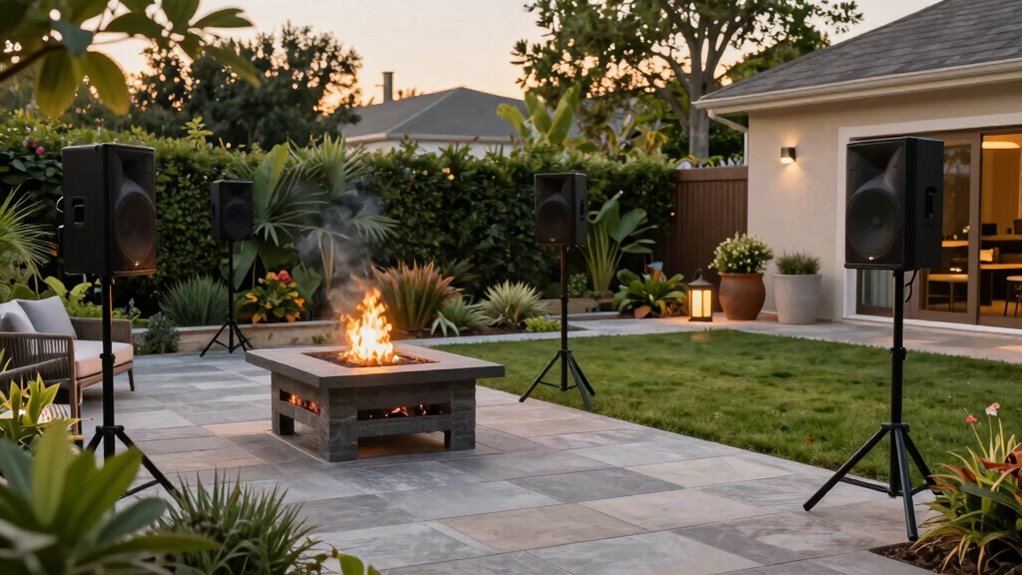
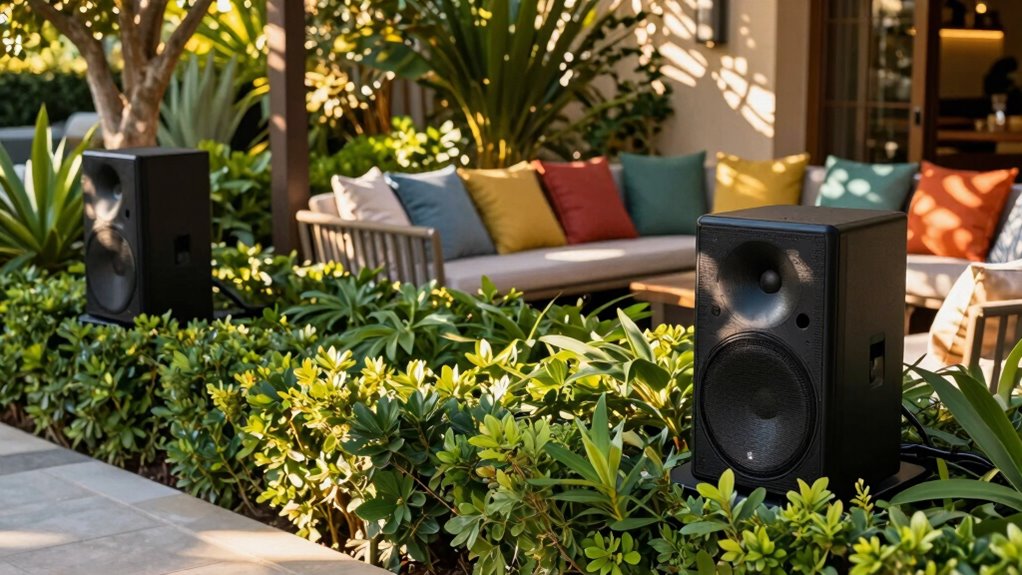
Choosing the right outdoor speaker placement is essential to guarantee your music sounds great and your setup is both functional and unobtrusive. One of the most critical factors to consider is speaker height. You want your speakers positioned at an ideal level that ensures even sound distribution across your outdoor space. Placing speakers too low can lead to sound being absorbed by the ground or obstacles, resulting in muffled audio. Conversely, mounting them too high can cause sound waves to dissipate too quickly, reducing volume and clarity. Aim to position your speakers at ear level when you’re seated or standing naturally in your outdoor area. Typically, this means mounting them around 4 to 6 feet above the ground, depending on the space and furniture layout. This height helps create a balanced soundscape where music feels immersive without overpowering or being drowned out.
Position outdoor speakers at ear level, around 4 to 6 feet high, for balanced, immersive sound.
Another key aspect is understanding the different speaker types and how they influence placement. Outdoor speakers come in various styles, such as satellite, landscape, or all-weather models. Each type has unique characteristics that affect where you should install them. For instance, satellite speakers are usually smaller and designed for direct sound projection; mounting them higher can help maximize sound coverage. Landscape speakers, often larger and designed to blend into your yard, are typically placed closer to the ground or integrated into garden beds to create a natural ambiance. Knowing your speaker type guides your placement choices, ensuring you get the most out of your equipment without unnecessary sound gaps or overlaps.
Positioning your speakers correctly also involves considering the shape and size of your outdoor area. For larger spaces, you might need multiple speakers spaced evenly to avoid “hot spots” where the sound is too loud or “dead zones” that lack audio altogether. For smaller patios or decks, a pair of well-placed speakers at the right height can deliver balanced sound throughout the area. Always test your setup by playing music at different volumes and walking around to listen for inconsistencies. Adjust the speakers’ height and angle as needed to fill the space evenly without creating harsh sound reflections or echoes.
Keep in mind that environmental factors, such as trees, walls, or fences, can influence how sound travels. Positioning speakers slightly away from reflective surfaces helps prevent sound distortion and ensures clarity. If you’re unsure about the best height or type for your space, consult the manufacturer’s guidelines or seek advice from audio professionals. Proper placement isn’t just about volume; it’s about creating an inviting, evenly balanced sound environment that enhances your outdoor experience.
Frequently Asked Questions
How Do I Prevent Outdoor Speakers From Disturbing Neighbors?
To prevent outdoor speakers from disturbing neighbors, you should consider privacy concerns and legal considerations. Keep volume levels moderate and direct speakers away from neighbors’ properties. Use outdoor speaker enclosures to control sound dispersion, and set timers to avoid late-night noise. Communicate openly with neighbors about your plans, and familiarize yourself with local noise ordinances to guarantee you’re compliant. This approach helps maintain good relations while enjoying your outdoor sound system.
What Is the Best Height for Outdoor Speaker Placement?
Did you know that placing outdoor speakers at a height of 6 to 8 feet optimizes sound dispersion? You should position your speakers at this height to make certain of even sound distribution, avoiding overly loud or quiet spots. By mounting them at ear level or slightly above, you help the sound spread naturally across your space, creating a balanced listening experience without disturbing neighbors or losing audio clarity.
How Can I Protect Outdoor Speakers From Weather Damage?
To safeguard your outdoor speakers from weather damage, use weatherproofing tips like applying sealants and choosing speakers with built-in weather resistance. Consider speaker enclosure options such as waterproof housings or enclosures made from durable, weatherproof materials. Regularly check for any damage or wear, and guarantee connections are sealed. This proactive approach helps your speakers withstand rain, sun, and snow, extending their lifespan and maintaining ideal sound quality.
What Types of Outdoor Speakers Are Best for Large Areas?
Imagine your outdoor space as a symphony, and the best large-area speakers are the conductors guiding the sound. You need wireless connectivity to guarantee seamless, clutter-free music across vast zones. Opt for durable, weather-resistant models built to withstand rain, wind, and sun. These speakers will fill large areas with rich, clear sound, creating an immersive experience that stays consistent, no matter how big your outdoor stage gets.
How Do I Improve Sound Uniformity Across Different Zones?
You can improve sound uniformity across zones by calibrating your speakers carefully. Use speaker calibration tools to balance volume levels and guarantee even sound distribution. Implement sound zoning to control each area’s audio independently, avoiding loud spots or quiet zones. Adjust speaker placement based on calibration results, keeping speakers evenly spaced and directed toward listener areas. Regularly check and tweak settings to maintain consistent sound quality throughout your outdoor space.
Conclusion
Think of your outdoor speakers like a symphony conductor’s baton—guiding sound smoothly across your space. By carefully placing your speakers, you’ll avoid spots that are deafeningly loud or painfully quiet. Remember to test and adjust the positioning until the sound feels balanced, just like a well-tuned instrument. When you get it right, your outdoor space becomes a seamless soundscape where music flows effortlessly, making every moment outside as enjoyable as a perfectly executed melody.