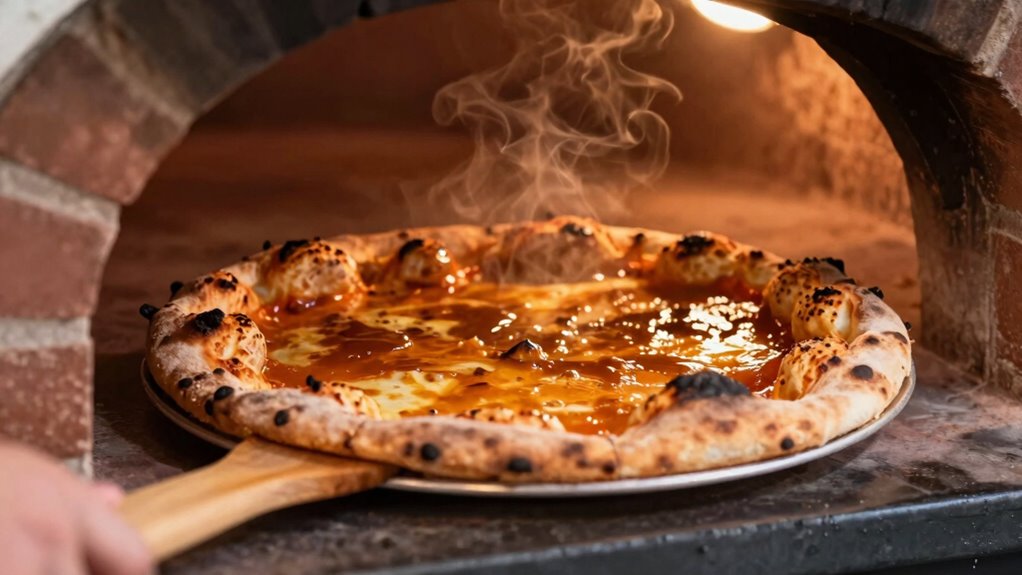

To prevent burnt sugar on dessert pizza in a pizza oven, monitor your oven’s temperature carefully—aim for around 375-400°F—and keep a close eye on baking time, starting check after 8-10 minutes. Lower the heat if sugar darkens too quickly, and consider pre-cooking or adding glaze near the end. Patience is key. Keep these tips in mind, and you’ll master the timing trick for perfect caramelization without burning. If you continue, you’ll discover more ways to perfect your dessert pizza.
Key Takeaways
- Start checking the pizza after 8-10 minutes to monitor caramelization progress closely.
- Use a thermometer to keep oven temperature between 375-400°F for controlled caramelization.
- Apply a light sugar glaze near the end of baking to enhance caramelization without burning.
- Pre-cook or partially cook sugary toppings to reduce raw sugar exposure during baking.
- Remove the pizza promptly once edges turn light golden and toppings bubble gently to prevent burnt sugar.
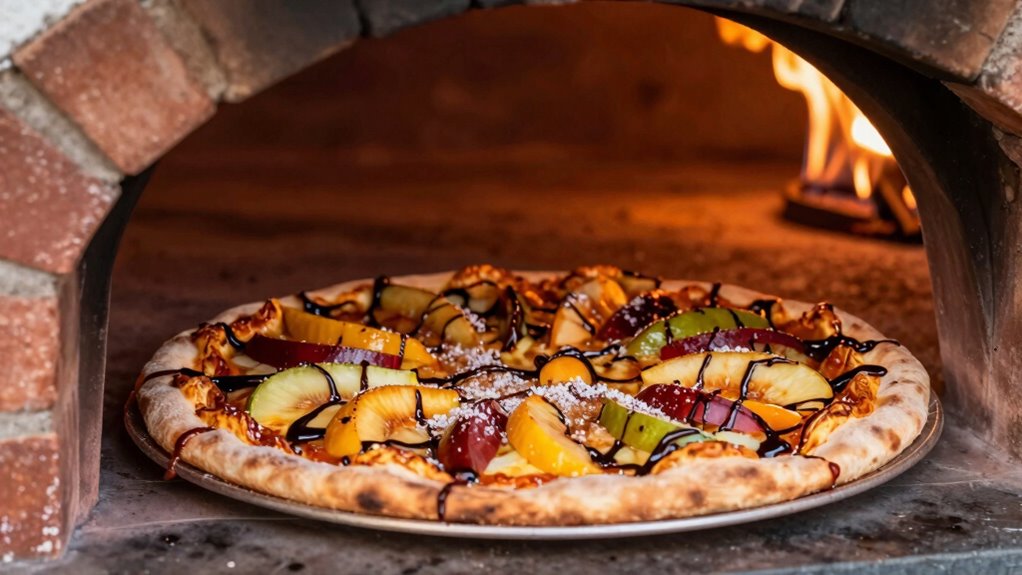
If you’ve ever enjoyed traditional pizza, you’ll love experimenting with dessert pizza in a pizza oven. It’s a fun way to elevate your baking skills and delight your taste buds with sweet, crispy treats. The key to perfect dessert pizza lies in understanding sugar caramelization and mastering oven temperature control. When sugar heats up, it undergoes caramelization, transforming into a rich, golden-brown syrup that adds flavor and color. But if you don’t keep a close eye on the oven, that same process can quickly turn into burnt sugar, resulting in a bitter taste and a ruined crust.
Controlling the oven temperature is essential for avoiding burnt sugar. Most pizza ovens can reach high temperatures, often over 700°F, which is perfect for traditional pizzas but tricky for desserts. To prevent caramelization from happening too quickly, you need to adjust the heat and monitor it carefully. Generally, setting your oven to a moderate temperature, around 375-400°F, allows the sugar to caramelize slowly and evenly. This prevents the sugar from burning before the crust and toppings are properly cooked. Using an infrared thermometer can help you keep the oven at that ideal temperature, giving you more precision and control.
Controlling oven temperature prevents burnt sugar, ensuring even caramelization and perfectly cooked dessert pizza.
Timing is equally important when baking dessert pizza. When you spread your sweet toppings—think fruit preserves, chocolate, or caramel—on the crust, you want to give the sugar enough time to caramelize without overcooking. Typically, you should start checking the pizza after about 8 to 10 minutes of baking. Keep an eye on the edges of the crust; they should turn a light golden-brown, and the toppings should be bubbling gently. If you notice the sugar darkening too quickly or the crust browning excessively, it’s a sign to lower the heat or remove the pizza sooner.
Another trick is to pre-cook or partially cook certain ingredients, like fruit slices or caramel layers, before placing them on the dough. This reduces the amount of sugar that needs to caramelize during baking, giving you more control. Additionally, applying a light layer of sugar or glaze toward the end of baking can help you achieve that perfect caramelized finish without risking burnt sugar. Remember, patience and vigilance are your best tools here—by carefully managing oven temperature and timing, you’ll create a beautifully caramelized dessert pizza that’s sweet, crispy, and perfectly cooked every time. Proper oven temperature control is a crucial factor that can make or break your dessert creation, especially when working with delicate caramelized sugars.
Frequently Asked Questions
Can I Use a Regular Pizza Oven for Dessert Pizza?
Yes, you can use a regular pizza oven for dessert pizza. Just make certain oven safety by monitoring the temperature closely to prevent burning the sugar or toppings. Use ingredient substitutions if needed, like swapping out chocolate chips for fruit or marshmallows. Keep an eye on the baking time, especially since dessert pizzas can burn faster than regular ones. With careful timing and safety, your dessert pizza will turn out delicious!
What Temperature Is Ideal for Baking Dessert Pizza?
A warm oven is like a gentle breeze, perfect for your dessert pizza. Aim for around 375°F to 400°F, ensuring sugar caramelization without burning. This temperature helps develop a crisp crust texture while preventing the sugar from turning bitter. Keep an eye on your pizza, as oven variations exist, and adjust as needed. With patience, you’ll achieve that perfect balance between sweetness and crunch.
How Long Should I Preheat the Oven for Dessert Pizza?
You should preheat your oven for about 15-20 minutes to make certain it reaches the ideal temperature for baking dessert pizza. Proper preheat timing allows the oven temperature to stabilize, giving you a consistent baking environment. Aim for the recommended oven temperature, typically around 375-400°F, depending on your recipe. This ensures your dessert pizza bakes evenly without burning the sugar or crust, giving you a perfect, delicious result.
Are There Specific Toppings Best for Dessert Pizza?
Opt for fresh fruit toppings like berries, sliced apples, or peaches, and indulge in rich chocolate options such as melted chocolate, chocolate chips, or Nutella. These toppings complement each other beautifully, creating a delicious balance of sweetness and texture. You can also add a sprinkle of nuts or a dash of cinnamon to enhance flavor. Combining fruit, chocolate, and a little crunch makes your dessert pizza irresistibly tasty and visually appealing.
How Do I Store Leftover Dessert Pizza Properly?
To store leftover dessert pizza, you should use airtight containers or wrap it tightly with plastic wrap to prevent moisture loss. Keep it in the refrigerator and consume within 2-3 days for best freshness. When reheating, use an oven or toaster oven to revive its texture without burning the sugar. Avoid microwaving, as it can make the crust soggy and unevenly heated.
Conclusion
Now you know the secret to splendidly sweet dessert pizza perfection. By timing your toppings’ addition and tuning your oven’s temperature, you’ll tame the tricky sugar and thwart burning blunders. Trust this trick, take your time, and watch your dessert pizza turn out deliciously divine. Delight in the dance of timing, technique, and taste, and enjoy every bite of your beautifully baked, perfectly sweetened slice. With this tip, your dessert pizza will always be a delightful, delectable masterpiece.