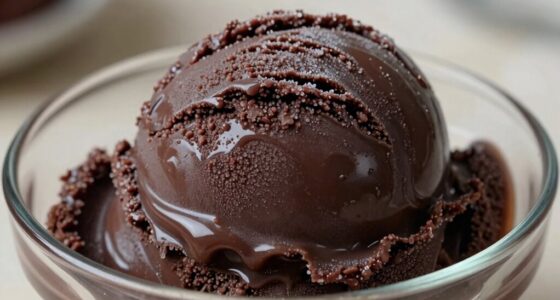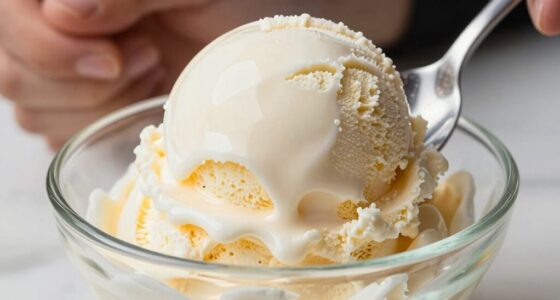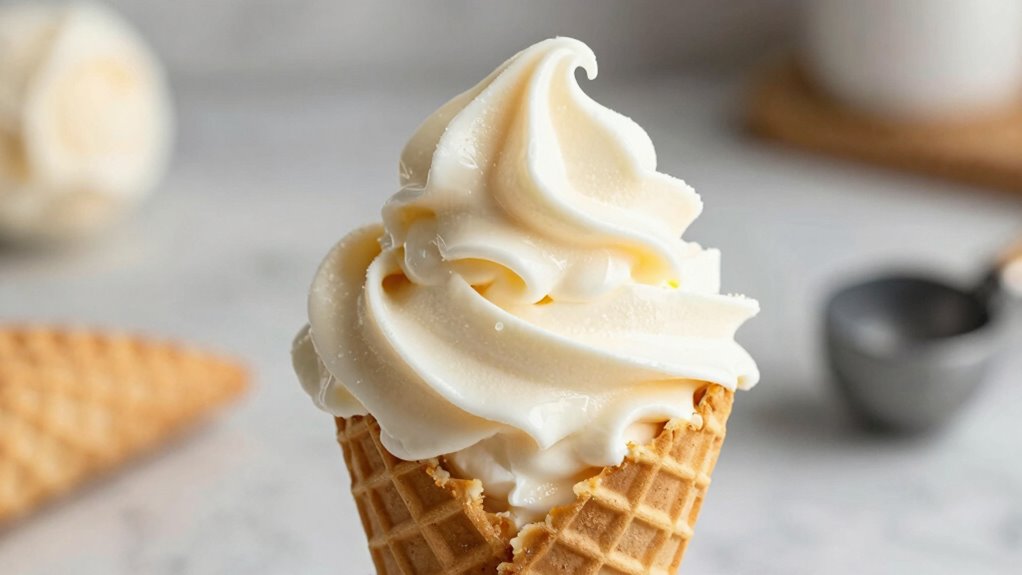
Adding more cream won’t soften your ice cream because the issue is usually how it’s frozen and stored. When ice cream gets too hard, large ice crystals form because of improper freezing or temperature fluctuations. Instead of adding cream, focus on proper storage, letting it sit at room temperature, or softening techniques like warming briefly. Keep these tips in mind, and you’ll discover simple ways to enjoy softer, creamier ice cream every time.
Key Takeaways
- Increasing cream content often results in denser, harder ice cream, not a softer texture.
- Proper storage conditions and gradual softening methods are more effective than adding more cream.
- Rapid freezing or temperature fluctuations cause large ice crystals, making ice cream hard and icy.
- Letting ice cream sit at room temperature or gently warming it softens the texture without altering ingredients.
- Avoid quick fixes like adding cream; focus on proper storage and softening techniques for better results.
Why Does Ice Cream Get So Hard in the Freezer?
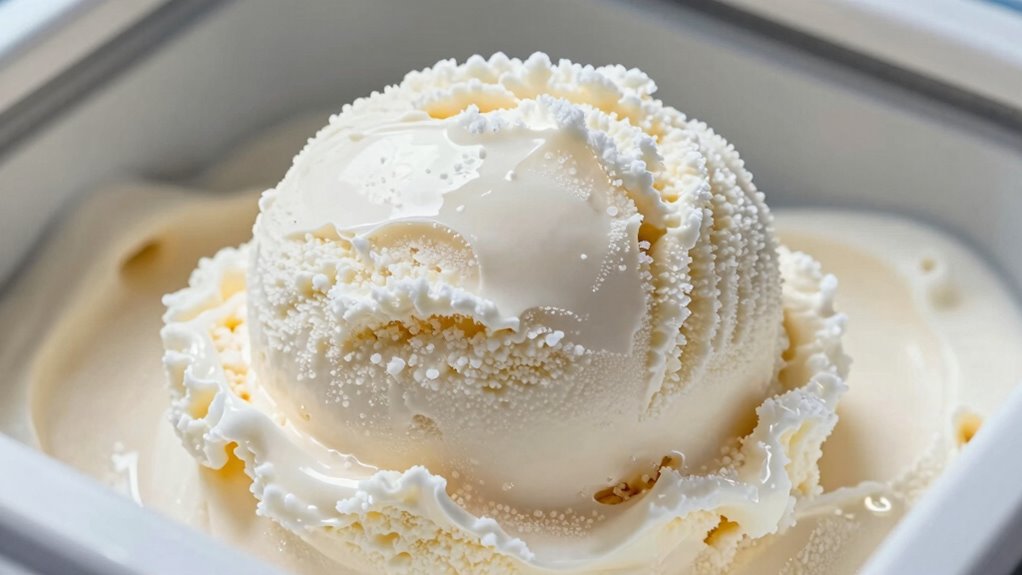
Have you ever wondered why ice cream becomes so hard after spending time in the freezer? The main reason is how you store it. Proper ice cream storage involves maintaining the right freezer temperature, ideally around 0°F (-18°C). When the freezer is too cold, ice crystals form larger, making the ice cream extremely firm. Fluctuations in freezer temperature can also cause ice cream to become icy and hard. If your freezer is not set correctly or if you frequently open it, the temperature may rise and fall, affecting texture. Keeping your freezer at a consistent, cold temperature prevents large ice crystals and helps maintain the ideal softness for scooping. Proper storage is key to enjoying smooth, creamy ice cream every time. Additionally, understanding freezer temperature control can help you fine-tune your settings for optimal ice cream quality, and preventing temperature fluctuations is essential for maintaining texture. To further enhance your ice cream experiences, consider checking that your freezer’s air circulation is unobstructed to avoid cold spots that cause uneven freezing and temperature consistency, which ensures uniform freezing throughout. Regularly monitoring and adjusting your freezer’s settings can also minimize temperature instability and improve overall ice cream texture.
Common Mistakes That Make Your Ice Cream Even Harder
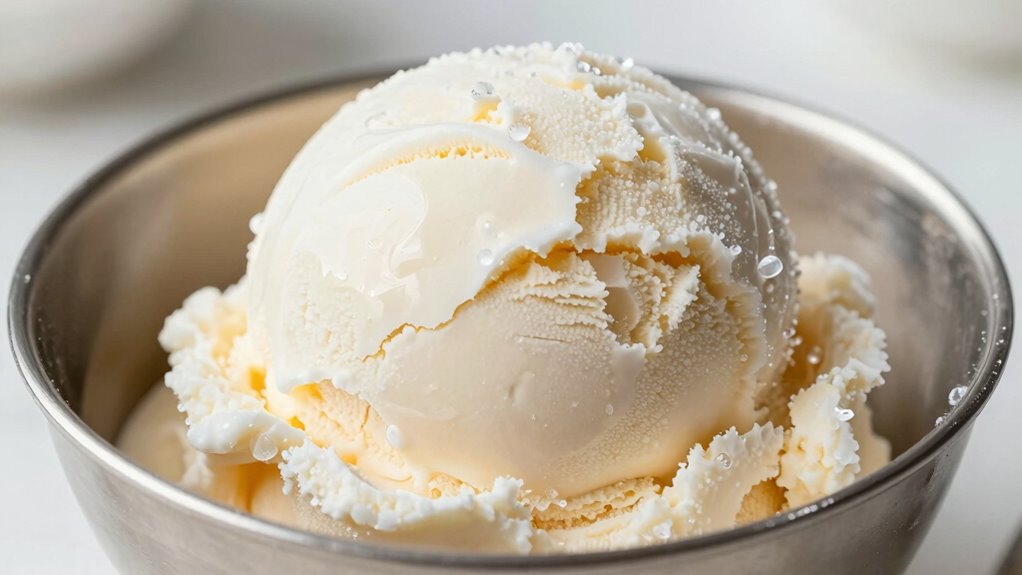
One common mistake that makes your ice cream even harder is frequently opening the freezer door. Each time you do, warm air enters, causing uneven melting and refreezing. This disrupts the smooth flavor fusion, leading to icy pockets that feel harder and less creamy. Additionally, ignoring proper storage methods can intensify texture contrast, making some parts rock solid while others remain softer. Avoid stacking ice cream containers tightly, as this prevents proper air circulation. Also, resist the urge to repeatedly scoop and return the container, which introduces air and temperature fluctuations. These mistakes hinder the development of a balanced, creamy texture, resulting in ice cream that’s difficult to scoop and less enjoyable to eat. Proper storage techniques help maintain the ideal soft yet firm consistency you crave. Understanding the importance of proper storage can help preserve the quality and texture of your ice cream over time. Proper air circulation within the freezer is essential to prevent ice crystal formation and maintain optimal texture. Ensuring adequate freezer temperature is also crucial, as fluctuations can cause ice crystals to form and affect creaminess.
What Really Causes Ice Cream’s Hard Texture
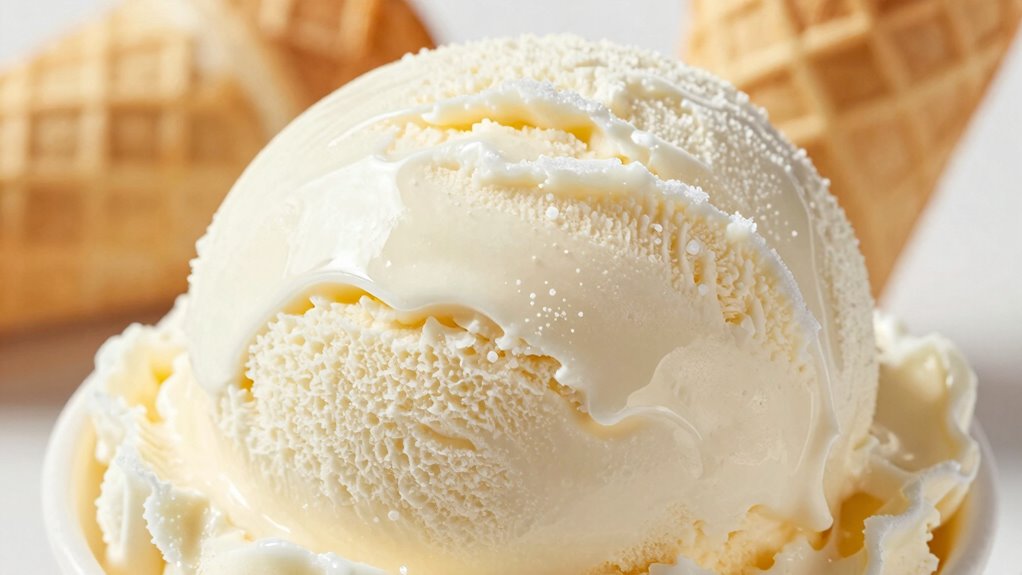
Your ice cream’s hard texture mostly comes down to how it’s frozen and the size of the ice crystals that form. If it’s too cold or freezes too quickly, these crystals grow larger and make the ice cream tougher. Additionally, low air incorporation can leave it feeling dense and hard rather than smooth. Proper storage techniques are crucial, as improper handling can also contribute to an overly hard consistency, which is why understanding freezing methods is essential for achieving the ideal texture. Being mindful of air incorporation during production can significantly improve its creaminess and overall mouthfeel. Controlling freezing rate can help prevent the formation of large ice crystals and improve texture.
Freezing Temperature Effects
Freezing ice cream at very low temperatures causes its structure to become excessively rigid, resulting in a hard and icy texture. When your freezer runs too cold or experiences temperature fluctuations, it can cause uneven freezing, making the ice cream harder. Repeated cycles of freezing and thawing lead to freezer burn, which alters texture and reduces creaminess. Maintaining a consistent temperature prevents large ice crystal formation that contributes to hardness. If your freezer isn’t properly calibrated, the ice cream may become too firm quickly. Additionally, opening the freezer frequently exposes ice cream to warmer air, causing temperature swings that impact texture. Keeping your freezer at a stable, ideal temperature is key to maintaining a smooth, scoopable ice cream. Proper storage techniques can also help preserve the desired texture and prevent ice crystal growth. Understanding freezing point is essential for optimizing storage conditions and ensuring the best ice cream quality. For best results, avoid temperature fluctuations and store ice cream in an airtight container. Using thermometer tools can help monitor and maintain the correct freezer temperature for optimal ice cream texture. Implementing consistent freezing practices further helps in keeping ice crystals small and the texture creamy.
Ice Crystal Formation
Ice crystal formation is the main reason ice cream becomes hard and icy. When you store ice cream too long or at improper temperatures, ice crystal growth occurs, creating larger, gritty crystals that ruin texture. These crystals form as water molecules move and refreeze, leading to a rough, icy bite. Poor storage practices, like frequent opening of the freezer or inconsistent temperatures, can accelerate this process. Freezer burn also plays a role by dehydrating ice cream and promoting larger ice crystals, which intensify the icy texture. To prevent this, keep your ice cream well-covered and stored at consistent, cold temperatures. Proper handling limits ice crystal growth, keeps the ice cream smooth, and preserves that creamy texture you crave. Recognizing the ideal storage conditions and understanding the science behind ice crystal formation can help you enjoy creamier, more enjoyable ice cream every time. Maintaining a stable freezer temperature is crucial, as fluctuations can lead to increased crystal growth and affect quality. Additionally, minimizing air exposure by sealing containers tightly can help prevent unwanted moisture transfer that contributes to larger crystals. Consistent temperature maintenance also reduces the risk of refreezing cycles, which can cause further crystal development.
Air Incorporation Levels
One of the key factors that contribute to ice cream’s hard texture is the amount of air incorporated during the churning process. Too little air results in dense, hard ice cream, while more air creates a lighter, scoopable texture. Air flow during freezing influences how much air is whipped into the mixture. The container material also plays a role; metal containers tend to promote faster freezing and less air retention, leading to denser ice cream. Conversely, plastic containers can trap more air, making the ice cream softer and easier to scoop. To control air incorporation, consider the following:
- Use appropriate churning speed to balance air and texture
- Select container material based on desired ice cream consistency
- Avoid overfilling containers to prevent excessive air entrapment
- Maintain consistent air flow during freezing for uniform results
- Understanding air incorporation techniques can help achieve the perfect scoopability. Additionally, adjusting freezing techniques can influence how much air is incorporated and how the final texture turns out.
Why Adding More Cream Usually Won’t Soften Your Ice Cream

Adding more cream to your ice cream mixture might seem like a good way to soften it, but in reality, it usually doesn’t work. While increasing the cream content may seem like it would make the texture creamier and softer, it often leads to denser ice cream rather than a softer one. Proper ice cream storage is key; freezing it too hard can cause the texture to firm up beyond what extra cream can fix. Ingredient variations also matter—adding more cream changes fat levels and can impact how the ice cream freezes. Instead of adding more cream, focus on controlling storage conditions or adjusting other ingredients like stabilizers or sweeteners, which influence texture without risking unwanted density or iciness.
Easy Ways to Soften Ice Cream Without Ruining Its Texture
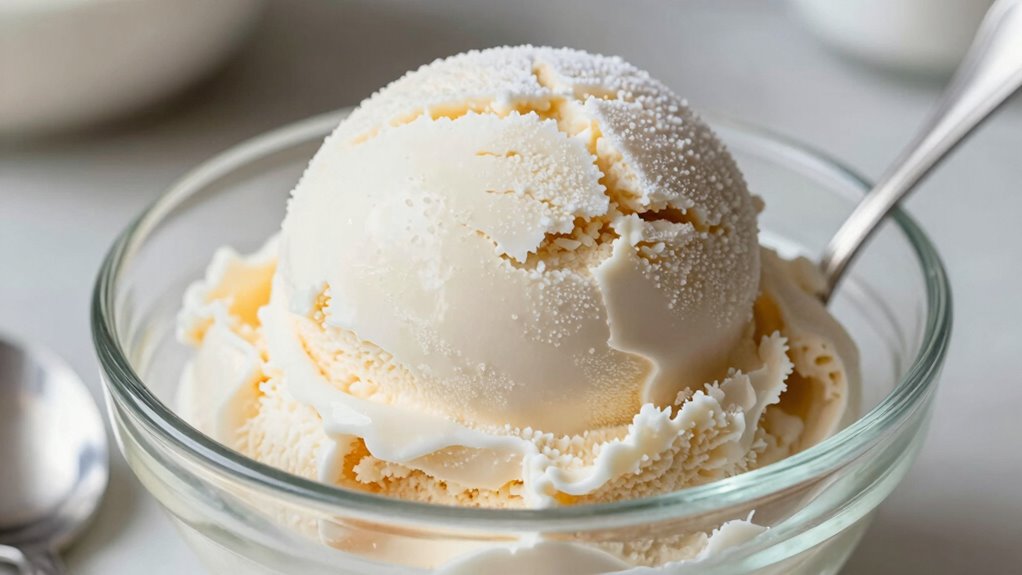
When you want to soften ice cream quickly without ruining its smooth texture, there are simple methods that work better than waiting for it to melt or risking freezer burn. One effective way is to let it sit at room temperature for a few minutes, checking frequently. Alternatively, you can microwave it in short bursts—around 10 seconds—stirring in between to prevent melting unevenly. You might also try placing individual scoops in a warm water bath for a few seconds to loosen them. To enhance your experience, consider flavor combinations and serving suggestions, like pairing softened ice cream with fresh fruit or drizzle toppings. These quick techniques preserve texture while making your ice cream easier to serve and enjoy at the perfect temperature.
How to Store Ice Cream Properly to Keep It Softer
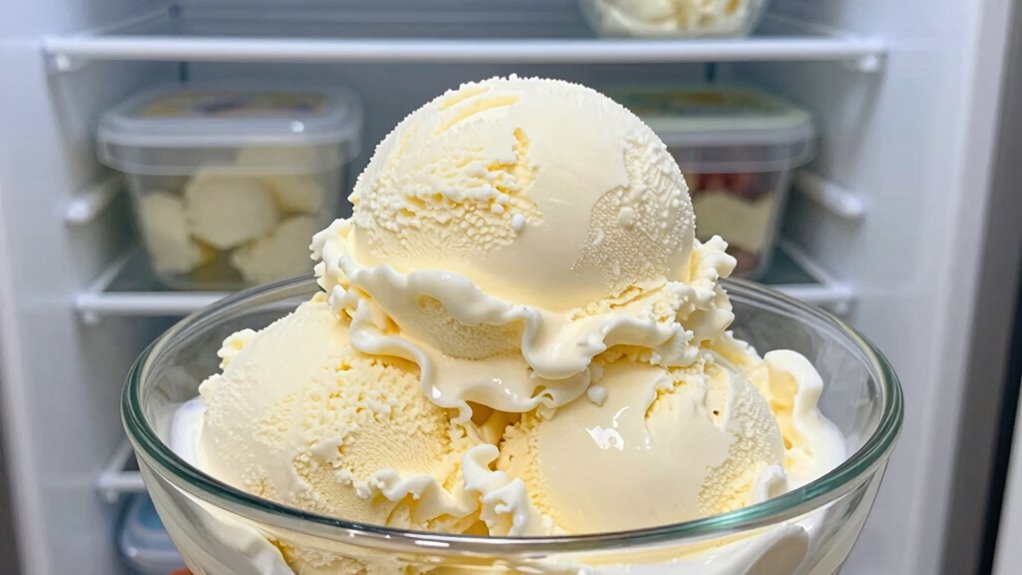
Properly storing ice cream is key to maintaining its softness and scoopability over time. Use airtight storage containers to prevent freezer burn and avoid fluctuations in temperature that cause ice crystals. Opt for containers that are just the right size—too much air can make ice cream harder. Consider how flavor combinations might influence storage; strong scents from other foods can seep in and affect taste, so keep ice cream away from odorous items. If you plan to enjoy it over several weeks, wrap the container with plastic wrap before sealing to add extra protection. Consistent freezing at a steady temperature also helps keep ice cream soft. Proper storage ensures your favorite flavor combinations stay delicious and scoopable whenever you’re ready to indulge.
Quick Tricks to Softening Ice Cream When You’re in a Hurry

If you’re in a rush and need to soften ice cream quickly, there are simple tricks to speed up the process. One effective method is to microwave it in short bursts of 10-15 seconds, checking frequently to avoid melting. You can also dip the container briefly in warm water, then let it sit for a minute. Stirring the ice cream helps break up the hardness and promotes even softening. For serving suggestions and flavor combinations, consider pairing softer ice cream with warm toppings like fudge or caramel, which enhances textures and flavors. To make your quick fix more flavorful, try mixing in chopped nuts or fruit before serving. These tricks let you enjoy your favorite flavor combinations without waiting for long softening times.
Myths About Softening Ice Cream: What’s True and What’s Not
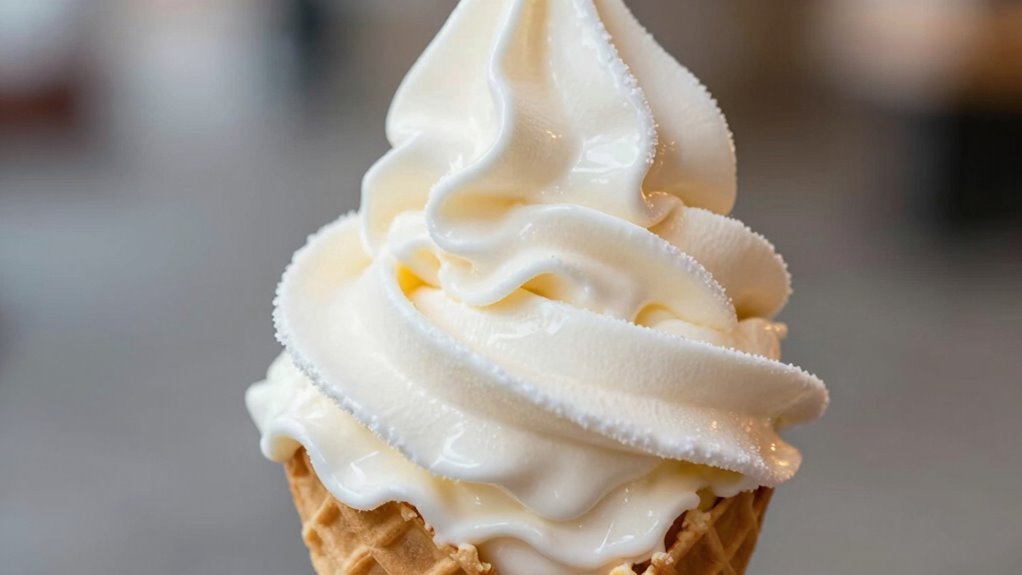
Many believe that changing the freezer temperature or adding cream can soften ice cream quickly, but that’s not true. Freezing temperatures do matter, and how long you wait affects softness, not extra ingredients. Knowing these facts helps you avoid common myths and get the perfect scoop every time.
Freezing Temperatures Matter
Contrary to popular belief, freezing temperatures don’t always make ice cream softer. In fact, overly cold freezer settings can cause the ice crystals to become larger, making your ice cream harder and icier. Proper temperature control is key; ideally, your freezer should stay around 0°F (-18°C). If it’s much colder, the texture suffers, and softening becomes difficult. Keep in mind:
- Fluctuating freezer temperatures cause ice crystals to grow, affecting texture.
- Setting your freezer too low can lead to a harder product.
- Consistent temperature control prevents unwanted ice crystal growth.
- Avoid frequent door openings, which can cause temperature spikes.
Adjusting your freezer settings to maintain a stable, ideal temperature helps keep your ice cream at the perfect consistency without relying on more cream.
Softening Time Varies
While maintaining the right freezer temperature helps guarantee your ice cream isn’t too hard, softening times once it’s out can still vary widely. Several factors influence how quickly it softens, including container size, ambient temperature, and how long it’s been out of the freezer. Larger containers take longer to soften evenly, affecting the texture contrast you experience with each spoonful. If you want ideal flavor enhancement, giving your ice cream a few minutes at room temperature allows it to soften just enough without losing its structure. Rushing the process often results in uneven softness, which can compromise the desired texture contrast. Remember, softening time isn’t fixed; it depends on multiple variables, so patience ensures the best flavor and texture experience.
Adding Cream Doesn’t Help
Adding cream to your ice cream won’t speed up the softening process, despite common myths suggesting otherwise. Many believe that pouring in whipped cream or adding milk can make ice cream softer quickly, but that’s not true. These additions don’t alter the ice cream’s internal structure or melting point appreciably. Instead, they can create a mess or alter the flavor unexpectedly. Milk addition or whipped cream won’t help you get softer ice cream faster; they only dilute the flavor or change the texture temporarily. If you want softer ice cream, it’s better to wait a bit or let it sit at room temperature. Relying on extra cream or milk won’t solve the problem and may lead to unintended consequences.
- They don’t change the melting rate appreciably
- Can alter flavor and texture negatively
- Won’t reduce freezing time effectively
- May cause mess or uneven softening
Final Tips for Perfectly Soft Ice Cream Every Time
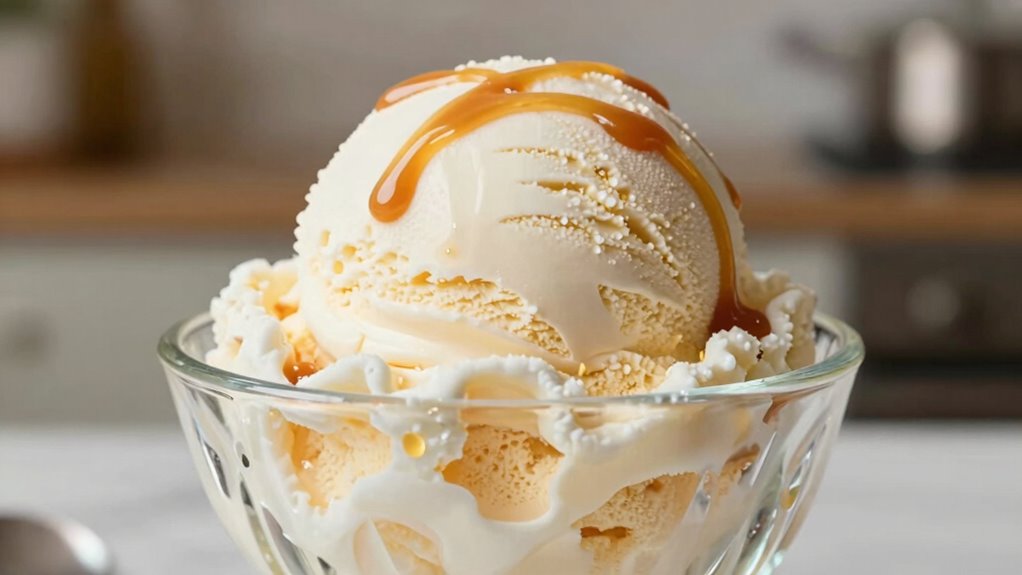
Achieving perfectly soft ice cream every time mostly comes down to a few simple final tips. First, avoid overfreezing your ice cream, as a longer ice cream shelf life can lead to hardness. Store it properly in airtight containers to prevent freezer burn and flavor loss. When serving, let the ice cream sit at room temperature for a few minutes to soften naturally—this preserves flavor and texture better than adding warm liquids. Use a sharp, heated scoop to make clean, easy servings without excessive force. Lastly, keep your freezer at the right temperature—around 0°F (−18°C)—to maintain ideal softness and flavor preservation. Following these tips ensures your ice cream stays delightfully creamy and easy to scoop every time.
Frequently Asked Questions
Can Adding Alcohol Help Keep Ice Cream Softer?
Adding alcohol can help keep ice cream softer because alcohol’s effect lowers the freezing point, making it less hard. It’s a common softening technique, especially for homemade recipes. Just be cautious with the amount—too much alcohol can prevent the ice cream from freezing properly. Use small quantities like a tablespoon or two for a noticeable softening effect without compromising texture. This trick works well for maintaining a scoopable, creamy consistency.
Does the Type of Container Affect Ice Cream’s Texture?
Yes, the container material and lid insulation affect ice cream’s texture. Choose a container made of glass or thick plastic, which helps prevent temperature fluctuations. Make certain the lid insulates well to keep cold in and warm out. Proper insulation slows melting and refreezing, maintaining a creamy texture. Avoid thin, poorly insulated containers, as they cause ice crystals to form, making your ice cream harder and less enjoyable to scoop.
Is Homemade Ice Cream Harder Than Store-Bought Varieties?
Homemade ice cream often has a firmer texture than store-bought because of differences in texture consistency and ingredients. When you make it at home, the lack of commercial stabilizers and emulsifiers can make it harder, but you can improve flavor enhancement by adding ingredients like alcohol or sugar, which lower freezing point and keep it softer longer. Adjusting your recipe and storage method helps you achieve a creamy, easily scoopable consistency.
How Does Sugar Content Influence Ice Cream Hardness?
Higher sugar content reduces ice cream hardness by lowering sugar crystallization, making it softer and easier to scoop. When you add more sugar, it disrupts the formation of large ice crystals, leading to a smoother texture. Additionally, increased sweetness levels can enhance flavor, but be careful not to overdo it, as too much sugar might make your ice cream overly sweet and prevent proper freezing.
Can Adding Stabilizers Prevent Ice Cream From Freezing Too Hard?
Adding stabilizers can help prevent ice cream from freezing too hard, especially if you’re using dairy alternatives or flavor enhancers. Stabilizers like guar gum or carrageenan improve texture and reduce ice crystal formation, making your ice cream smoother and easier to scoop. They work well with plant-based milks and flavor boosters, ensuring your treat stays creamy without becoming rock-hard. Just follow recommended amounts to avoid altering taste or texture.
Conclusion
Remember, softening your ice cream isn’t about adding more cream—it’s about understanding its true nature. Think of your freezer as a chilly artist’s studio, where patience and proper storage craft the perfect scoop. With these simple tips, you’ll turn a block of ice into a creamy masterpiece every time. So next time it’s too hard, don’t rush to fix it with more cream—trust the process, and enjoy your ice cream at its best.