
Frozen custard is a rich, smooth dessert that’s denser than regular ice cream. Egg yolks play a vital role by acting as natural emulsifiers, blending fats, liquids, and sugars for a creamy, cohesive texture. They also add depth and a luxurious flavor that sets frozen custard apart. The slower churning process reduces air, making each bite thick and indulgent. If you’re curious about how this all comes together, there’s more to explore below.
Key Takeaways
- Frozen custard is a dense, smooth dessert with a richer, velvety texture than traditional ice cream.
- Egg yolks serve as natural emulsifiers, blending fats, liquids, and sugars for a cohesive mixture.
- The inclusion of egg yolks enhances flavor depth and imparts a luxurious, creamy mouthfeel.
- Slower churning reduces air incorporation, resulting in a thicker, more substantial treat.
- Egg yolks are essential for achieving the characteristic richness and smoothness of frozen custard.

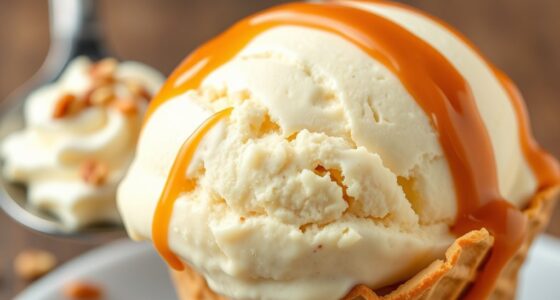
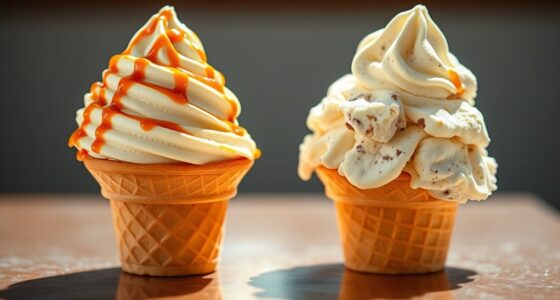
Have you ever wondered what makes frozen custard different from regular ice cream? The answer lies largely in its unique texture and the ingredients used. When you compare frozen custard to traditional ice cream, the most noticeable difference is its creaminess. It tends to be denser and smoother, offering a richer mouthfeel. This texture comparison comes down to how it’s made and the ingredients involved. While ice cream typically contains a higher proportion of air, known as overrun, frozen custard is churned at a slower pace, resulting in less air incorporated. That means every spoonful feels thicker and more substantial, almost like a frozen dessert with the consistency of a soft, velvety custard rather than the fluffiness of ordinary ice cream.
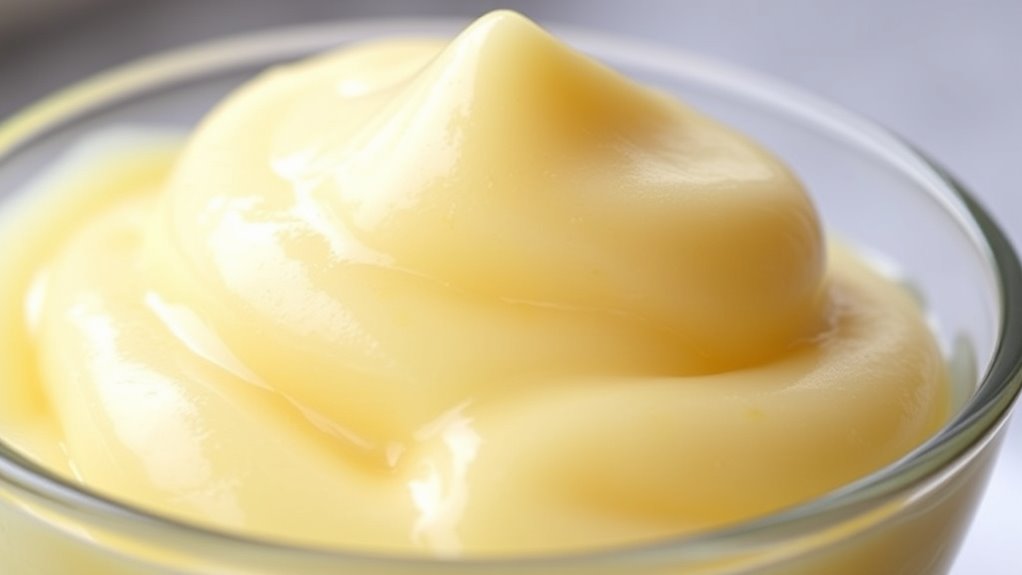
One of the key ingredient differences that set frozen custard apart is the inclusion of egg yolks. Not all ice creams contain eggs, but frozen custard usually relies on them to achieve its characteristic richness. Egg yolks act as a natural emulsifier, helping to blend fats, liquids, and sugars into a smooth, cohesive mixture. This not only enhances the flavor but also contributes to the dense texture. When you taste frozen custard, you’re experiencing the result of these added yolks, which give it a silkier, more luxurious feel compared to the lighter, airier texture of regular ice cream. The presence of egg yolks also influences the flavor profile, imparting a subtle richness that elevates the overall taste experience.
The ingredient differences extend beyond eggs. Frozen custard generally contains a higher fat content, thanks to the cream and egg yolks, which contributes to its velvety texture. In contrast, ice cream may use more milk or skim milk to keep costs down, resulting in a lighter product. This difference in ingredients directly affects the mouthfeel and flavor intensity, making frozen custard feel more indulgent and satisfying. Additionally, the use of essential oils in flavoring can enhance the richness and aroma of frozen custard, adding another layer of sensory delight. The combination of these ingredient choices and the slower churning process ensures that frozen custard remains dense, smooth, and intensely flavorful, serving as a delightful treat that stands apart from typical ice cream.
Frequently Asked Questions
How Does Frozen Custard Differ From Regular Ice Cream?
Frozen custard differs from regular ice cream mainly in texture and ingredients. You’ll notice a creamier, denser texture comparison because of the higher egg yolk content, which adds richness and smoothness. The key ingredient differences are that frozen custard includes egg yolks, while ice cream typically doesn’t. This results in a more velvety consistency and a richer flavor, making frozen custard a luxurious treat you’ll enjoy even more.
Can Frozen Custard Be Made at Home Without Special Equipment?
You can make frozen custard at home using simple homemade recipes without special kitchen equipment. All you need is a sturdy mixing bowl, a whisk, and a freezer-safe container. Whisk together your ingredients, including egg yolks for that rich texture, then pour into the container. Every 30-60 minutes, stir to prevent ice crystals, and within a few hours, you’ll have delicious frozen custard ready to enjoy.
What Are the Health Benefits of Eating Frozen Custard?
Eating frozen custard is like giving your body a tasty boost. It offers nutritional advantages, including protein and calcium, that support your health. Plus, the egg yolks in custard provide immune support and essential nutrients. While it’s a delicious treat, enjoy it in moderation to maximize benefits without overindulging, helping you stay energized and healthy.
Is Frozen Custard Suitable for People With Egg Allergies?
If you have an egg allergy, frozen custard might not be suitable due to allergen concerns. It typically contains egg yolks, which can trigger allergic reactions. Always check ingredient labels or ask at the shop to verify it’s free of eggs. Even small traces could cause issues, so it’s safest to avoid frozen custard if you’re allergic to eggs or unsure about its ingredients.
How Long Does Frozen Custard Stay Fresh in the Freezer?
Think of your frozen custard like a delicate snowflake—best enjoyed fresh. Typically, you can store it for about 1 to 2 months in your freezer, which is its ideal storage duration. After that, its texture and flavor may start to fade. To maximize freezer life, keep it tightly sealed. For the best experience, consume it within this window, as prolonged storage can compromise quality.
Conclusion
Now that you know the role of egg yolks, imagine yourself savoring a scoop of rich, velvety frozen custard. The creamy texture melts gently on your tongue, leaving a smooth, indulgent sweetness behind. With every spoonful, you taste the perfect blend of silky custard and the subtle warmth of eggs. It’s more than just dessert—it’s a cool, luscious experience that captures the essence of homemade comfort in every bite.