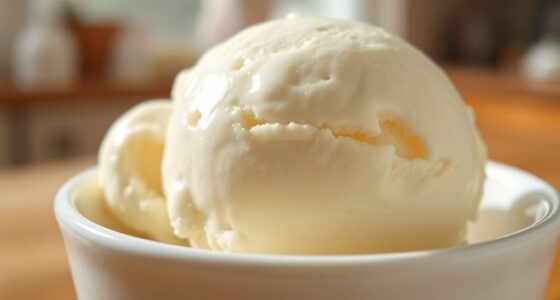
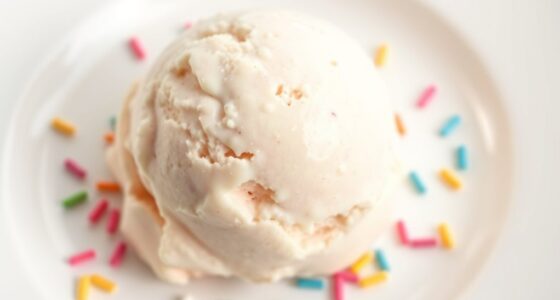
If your ice cream turns foamy, it’s likely due to too much air, or overrun, being incorporated during churning. Excessive air creates unstable bubbles, leading to an airy, bumpy texture and foamy appearance. Poor control of churning speed, temperature, or ingredient ratios can cause this problem. To fix or prevent it, you need to understand and manage overrun carefully. Keep going, and you’ll uncover more tips to keep your ice cream smooth and appealing.
Key Takeaways
- Excessive overrun introduces too many tiny bubbles, leading to foaminess and unstable texture.
- High churning speeds and improper freezing temperatures increase air incorporation, causing foamy ice cream.
- Low-fat formulations trap more air, resulting in larger bubbles and a foamy appearance.
- Poor foam stability causes bubbles to merge or burst, creating a bubbly, uneven surface.
- Over-processing or uncontrolled mixing during production can lead to overrun exceeding desired levels, causing foaminess.
What Is Overrun in Ice Cream and Why Is It Important?

Have you ever wondered why some ice creams feel light and airy while others are dense and creamy? That difference largely depends on overrun, which is the amount of air whipped into the mixture during freezing. Proper overrun enhances ice cream stability, helping it maintain its texture and preventing ice crystals from forming too large. When the overrun is just right, it also boosts flavor perception, making each spoonful taste richer and more balanced. Too little air results in a dense, heavy product, while too much can cause a foamy, unstable ice cream. Achieving the ideal overrun requires precise mixing techniques to ensure the right amount of air is incorporated without compromising the product’s structure. Understanding overrun helps you achieve the perfect balance, ensuring your ice cream is both enjoyable to eat and visually appealing. It’s a key factor in creating high-quality, flavorful ice cream. Controlling overrun is essential for achieving the desired texture and consistency in your homemade or commercial ice cream, especially when aiming for a light and fluffy result. Properly managing overrun not only improves the ice cream’s appearance but also enhances its overall mouthfeel, making each serving more satisfying.
How Overrun Changes Ice Cream’s Texture and Look

When overrun increases, it makes ice cream lighter and airier, changing how it feels when you scoop and eat it. You’ll notice a foam-like appearance on the surface, giving it a soft, fluffy look. This transformation affects both the texture you experience and the visual appeal of the ice cream. Additionally, excessive overrun can impact the stability and shelf life of the product, especially if it contains vetted wave and wind components that influence its structure. Understanding air incorporation is crucial for manufacturers to maintain quality and consistency over time. Proper control of overrun also helps prevent texture deterioration, ensuring the ice cream retains its intended mouthfeel.
Texture Transformation Dynamics
Overrun, the amount of air incorporated into ice cream during churning, plays a crucial role in transforming its texture and appearance. When you control air incorporation, you influence how light and fluffy the final product feels. Gelatin stabilization helps maintain this structure by trapping air bubbles, preventing them from collapsing over time. As overrun increases, the ice cream becomes softer and more aerated, giving it a creamy, mousse-like texture. Too much air, however, can cause the ice cream to turn foamy or over-processed, losing its density. The balance between air incorporation and stabilization techniques like gelatin ensures that the ice cream retains its smoothness and visual appeal, providing a desirable mouthfeel and consistent look.
Visual Foam Effects
As overrun increases, the ice cream’s appearance shifts noticeably, creating a distinct visual foam effect. Higher overrun introduces more air bubbles, which enhance the foam stability and give the ice cream a light, airy look. These visual foam effects make the dessert look fluffy and inviting, but they also signal how much air is incorporated. If foam stability isn’t maintained, the foam can collapse or become uneven, resulting in an inconsistent appearance. You’ll notice that well-aerated ice cream displays tiny, uniform bubbles that contribute to a smooth, creamy surface with a soft, foamy texture. Conversely, poor foam stability causes large, irregular bubbles that distort the visual appeal. Understanding how overrun influences these visual foam effects helps you control both look and texture in your ice cream. Additionally, the psychological effects of a visually appealing, foamy ice cream can influence consumer perception and enjoyment. Maintaining proper foam stability is essential for achieving a consistent and attractive presentation. Properly managing air incorporation during production can prevent unwanted foam collapse and improve overall quality. Being aware of production techniques can further help in achieving the desired visual and textural qualities. Moreover, consistent quality control can help ensure that the foam remains stable throughout the shelf life of the product.
Why Does My Ice Cream Get Too Foamy? Common Causes

One common reason your ice cream becomes too foamy is that too much air has been incorporated during the churning process. This air bubble formation increases overrun, leading to a lighter, frothier texture. If the overrun is excessive, the ice cream traps more air than intended, creating a foamy consistency. Additionally, fat content effects play a role; lower fat levels can cause the mixture to hold more air, resulting in increased foaminess. High-fat ice creams tend to resist excessive air incorporation because the fat coats the air bubbles, stabilizing them and reducing foam formation. To avoid overly foamy ice cream, ensure your churning process isn’t too aggressive and consider adjusting the fat content to balance air incorporation and cream stability. Proper understanding of overrun and fat effects can help you achieve the perfect texture. Furthermore, choosing the right churning speed can influence air incorporation and prevent unwanted foaminess. Controlling mixing techniques can also help minimize excess air from entering the ice cream, which is crucial for controlling foaminess and achieving a smooth, creamy consistency. Paying attention to the freezing temperature during churning can also impact how much air is incorporated, helping to prevent excess foam.
How to Measure and Control Overrun During Production

To guarantee consistent ice cream quality, you need to accurately measure overrun during production. Using precise techniques, you can monitor how much air is incorporated and make necessary adjustments. Fine-tuning your mixing and freezing processes helps control overrun effectively. Implementing analytics cookies can also provide insights into production efficiency and help identify areas for improvement. Additionally, understanding the personality traits of your team can improve communication and coordination during the production process. Incorporating project management support can streamline the workflow and ensure timely adjustments to production parameters. Recognizing the importance of quality control ensures that each batch meets the desired standards and reduces the risk of overrun issues. Consistent staff training on production standards further enhances control and minimizes errors during manufacturing.
Precise Overrun Measurement Techniques
Measuring overrun accurately is essential for producing consistent ice cream quality. Precise techniques help you monitor how much air is incorporated, which affects ice crystal formation and flavor absorption. To guarantee accuracy, consider these methods:
- Use graduated cylinders or volumetric containers to measure the volume of ice cream before and after freezing.
- Weigh samples to compare their mass against known volumes, calculating overrun as a percentage.
- Employ specialized overrun meters designed for quick, reliable readings during production.
- Regularly calibrate measurement tools to maintain precision and avoid discrepancies that could lead to foamy textures.
- Understanding the overrun’s impact on texture and flavor helps optimize the production process for better quality.
Adjusting Mixing and Freezing
Controlling overrun during mixing and freezing requires real-time measurement and adjustments to guarantee the desired air incorporation. To do this effectively, monitor your mixing speed closely—slower speeds can produce less overrun, while faster speeds introduce more air. Adjust the mixing speed to achieve consistent aeration without over-inflating the product. During freezing, carefully regulate the freezing temperature; a colder environment promotes rapid freezing, reducing the chance of excessive overrun and foam formation. Regularly check the overrun levels as you go, making small tweaks to the mixing speed or temperature if necessary. Precise control ensures your ice cream maintains the right texture and prevents foaminess caused by improper overrun. Always aim for steady, consistent adjustments based on real-time measurements.
Signs Your Ice Cream Is Foamy or Bubbly

If your ice cream starts to develop a foamy or bubbly surface, it’s a clear sign that something’s off with the overrun process. You may notice a light, airy texture that seems too filled with bubbles, affecting the dairy quality and flavor enhancement. This foamy appearance indicates excessive air incorporation, which can compromise the smoothness and richness of your ice cream.
Here are some signs to watch for:
- Unusually large or persistent bubbles on the surface
- An overly frothy or bubbly mouthfeel
- A spongy or unstable texture when scooping
- A loss of creaminess, making it feel less decadent
Recognizing these signs helps you identify when overrun issues impact your ice cream’s quality.
Tips to Prevent Foamy Ice Cream and Keep It Smooth

To prevent foamy ice cream and maintain its smooth texture, focus on carefully controlling the amount of air introduced during churning. Too much air creates overrun, resulting in foaminess. To minimize this, choose a churning speed suited to your recipe, avoiding overly vigorous mixing. Pay attention to flavor pairing; rich or fruit-heavy flavors can influence overrun levels. Additionally, packaging considerations matter—store your ice cream in airtight containers to prevent air exposure that can cause foaming. Properly sealing your containers keeps excess air out, helping the ice cream stay dense and creamy. When selecting ingredients and packaging, aim for consistency and minimal air incorporation. These small adjustments can considerably improve texture, keeping your ice cream smooth and enjoyable.
What to Do If Your Ice Cream Turns Foamy?

When your ice cream turns foamy, it’s a sign that too much air has been incorporated during churning. To fix this, start by letting it sit at room temperature for a few minutes, allowing some foam to settle. Gently fold in flavor pairing ingredients like chocolate chips or fruit to enhance taste and reduce foaminess. You can also re-churn the mixture briefly to redistribute air evenly, preventing excessive foaming. Once ready, consider serving suggestions such as scooping the ice cream into bowls or cones with toppings that complement its texture. For a smoother finish, briefly re-freeze to firm up. Remember, reducing overrun improves texture, so this quick fix helps maintain quality without sacrificing flavor.
Frequently Asked Questions
Can Certain Flavors Cause Ice Cream to Become More Foamy?
Yes, certain flavors can cause your ice cream to become more foamy. Flavor interactions and ingredient variations, like high sugar or dairy content, can affect the texture and overrun. Some ingredients may trap air more easily, leading to increased foaminess. So, when choosing flavors, consider how specific ingredients might influence the ice cream’s consistency, especially if you’re aiming for a smooth, less foamy result.
Does Storage Temperature Affect Ice Cream’s Overrun and Foaming?
Yes, storage temperature markedly affects ice cream’s overrun and foaming. If you keep it too warm, it approaches the freezing point, causing increased melting and air loss, which leads to foaming issues. Conversely, very cold temperatures can cause uneven freezing. Additionally, storage humidity plays a role; high humidity can cause ice crystals to form on the surface, impacting overrun and leading to excessive foaming when you scoop.
Are Some Ice Cream Machines More Prone to Overrun Issues?
You might think all ice cream machines are equally prone to overrun issues, but ironically, those poorly maintained or with lower ingredient quality often cause more foaming problems. Neglecting machine maintenance and using subpar ingredients make it harder to control overrun, resulting in a foamier, less desirable product. So, if you want smooth, consistent ice cream, invest in good equipment and quality ingredients—your machine’s performance depends on it.
How Does Overrun Influence Ice Cream’s Nutritional Content?
Overrun affects your ice cream’s nutritional impact by diluting its ingredients, which can lower calorie content per serving. When more air is whipped in, the ice cream becomes lighter and less dense, meaning you get fewer nutrients and calories in each scoop. So, higher overrun results in a fluffier texture but can reduce the overall nutritional value, making it important to contemplate if you’re watching your calorie intake.
Can Ingredients Like Stabilizers Prevent Foaming in Ice Cream?
Stabilizers can effectively prevent foaming in ice cream by controlling ingredient interactions and maintaining texture. Imagine a smooth, creamy swirl that resists foam, like a calm lake instead of a choppy pond. These additives work by stabilizing air bubbles and preventing excessive overrun, ensuring your ice cream stays dense and uniform. When used correctly, stabilizers enhance consistency, reduce foaming, and give you that perfect scoop every time.
Conclusion
Understanding overrun helps you make better ice cream. Did you know that perfect overrun levels range from 20% to 50%, depending on the texture you want? When overrun goes wrong, your ice cream can turn foamy and bubbly, ruining its smoothness. By controlling and measuring overrun carefully, you keep your ice cream appealing and delicious. So, stay vigilant during production—you’ll enjoy consistently creamy results that your customers will love.