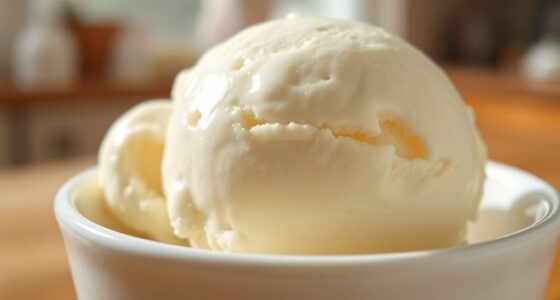
When you freeze strawberry pieces, large ice crystals form inside them, damaging the cell walls. This damage makes the fruit tougher, rubbery, and icy in texture. The size of the ice crystals depends on how quickly you freeze them; slower freezing creates larger crystals, worsening the effect. To keep strawberries tender and flavorful, proper preparation and rapid freezing are essential. If you want to find out how to prevent this, there’s more you need to know.

Get baking supplies delivered free — and shop member deals
- Fast, free delivery on millions of items
- Access to Prime Big Deal Days deals on October 6–7
- Prime Video, Amazon Music and more included
Key Takeaways
- Large ice crystals from slow freezing damage cell walls, resulting in a tougher, icy texture.
- Whole or large strawberry pieces expand more water upon freezing, increasing ice crystal size.
- Rapid freezing creates smaller ice crystals, helping maintain a tender and smooth texture.
- Cell rupture from ice damage causes juice loss, leading to a dull, icy mouthfeel.
- Proper preparation, like chopping strawberries into small, uniform pieces, reduces texture deterioration.

Frozen desserts often feature strawberry pieces because they add vibrant color, fresh flavor, and a pleasing texture that enhances the overall experience. However, you might notice that these strawberry chunks sometimes turn tough and icy once frozen. Understanding why this happens can help you improve your homemade or store-bought treats. When strawberries are added to frozen desserts, their texture undergoes significant changes during the freezing process. The water inside the strawberries expands as it freezes, forming large ice crystals that can damage the fruit’s cellular structure. This damage results in the fruit becoming firmer and sometimes rubbery when frozen, which contributes to that tough, icy texture you dislike.
Furthermore, the texture changes are influenced by how the strawberries are prepared before freezing. If you add whole or large pieces directly into the dessert mixture, the larger size means the water inside has more room to expand, leading to more pronounced ice crystal formation. Smaller, chopped strawberries tend to freeze more evenly, reducing the severity of texture changes. But no matter the size, the key factor is the freezing rate. Quick freezing helps produce smaller ice crystals, which preserve the fruit’s original texture better. Slow freezing, on the other hand, allows larger ice crystals to form, resulting in a more icy and less pleasant mouthfeel.
Smaller, evenly cut strawberries freeze more quickly, preserving their tender texture and flavor.
Beyond texture, flavor preservation is also a concern. When strawberries freeze slowly or are subjected to temperature fluctuations, they can lose their bright, fresh flavor. The ice crystals can rupture cell walls, causing the fruit to release its juices and diminish its natural sweetness and aroma. As a result, the strawberries may taste dull or watery after freezing, which detracts from the overall flavor profile of your dessert. To avoid this, you can pre-treat strawberries with a sugar syrup or freeze them quickly after harvesting. These methods help maintain the fruit’s vibrant flavor and prevent it from becoming overly icy or bland. Additionally, proper freezing techniques can help minimize flavor loss and preserve the natural qualities of the strawberries.
In summary, understanding the freezing process and how it affects fruit texture is crucial for making better frozen desserts. In short, the key to preventing strawberry pieces from turning tough and icy lies in controlling how you prepare and freeze them. Smaller, uniformly cut pieces and rapid freezing are your best tools for minimizing texture changes and preserving the fruit’s flavor. When you pay attention to these details, you’ll enjoy fresher-tasting, more enjoyable frozen desserts where the strawberry pieces remain tender, flavorful, and visually appealing.
As an affiliate, we earn on qualifying purchases.
Frequently Asked Questions
Can Adding Sugar Prevent Strawberries From Becoming Icy?
Adding sugar to strawberries can help prevent them from becoming icy by reducing sugar crystallization during freezing. Sugar binds with water, lowering the freezing point and maintaining a softer texture. Plus, it enhances flavor, making your dessert tastier. Just be careful not to add too much, as excessive sugar can alter the overall sweetness. Incorporate sugar evenly before freezing for the best results, ensuring your strawberries stay fresh and flavorful.
Does Freezing Strawberries First Improve Texture?
Did you know that freezing strawberries first can help preserve their berry flavor and improve texture? When you freeze strawberries properly, the ice crystals form gradually, which minimizes cell damage. This process enhances texture preservation, making the berries less likely to turn tough and icy in your desserts. So, yes, pre-freezing strawberries can result in a better mouthfeel, maintaining their juiciness and flavor for a more enjoyable frozen treat.
How Does Strawberry Ripeness Affect Freezing Quality?
Ripeness greatly impacts freezing quality; overripe strawberries become mushy, reducing berry firmness when frozen. When you use underripe or perfectly ripe berries, they maintain better texture because their firmness helps prevent ice crystal formation, which causes toughness. Ripeness impact is key—ripe strawberries have a sweeter flavor and better texture, but if overly ripe, they can turn mushy after freezing. For ideal results, choose berries that are firm yet ripe.
Are There Specific Storage Containers for Better Results?
You might think any container works, but the right storage solutions can make a difference. Opt for airtight, freezer-safe containers like glass or high-quality plastic with tight seals. These container types prevent air exposure and moisture, which cause ice crystals and toughness. Using the proper storage method keeps strawberry pieces fresh, preserves texture, and minimizes the icy, tough outcome, ensuring your frozen treats remain delicious and inviting.
Can Pre-Treatments Reduce Toughness in Frozen Strawberries?
Yes, pre-treatments like dipping strawberries in sugar or a sugar syrup can help reduce toughness and improve texture modification. These treatments create a barrier that minimizes ice crystal formation, preserving flavor retention and keeping the fruit tender. You can also try blanching or using a fruit stabilizer to maintain moisture and softness. Proper pre-treatment guarantees your frozen strawberries stay delicious, juicy, and less icy in your desserts.
Conclusion
Next time you enjoy a frozen dessert with strawberry pieces, remember that their texture changes because of ice crystal formation, which can turn them tough and icy. Notably, strawberries contain over 90% water, making them prone to this transformation. To keep your treats creamy and enjoyable, consider adding strawberries later in the freezing process or using pre-frozen berries. This way, you guarantee every bite stays juicy and smooth, avoiding that undesirable icy crunch.
Evergreen bestsellers Picks
bestsellers
As an affiliate, we earn on qualifying purchases.