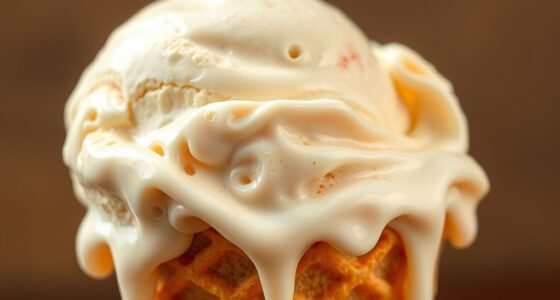
Stabilizers and emulsifiers serve different roles in food; stabilizers prevent separation and maintain texture, while emulsifiers help blend oil and water for a smooth consistency. Mixing these up can lead to confusion about food quality or safety. Recognizing their differences is key for choosing better products and understanding labels. If you keep exploring, you’ll discover how these ingredients impact your food and how to use them effectively in your kitchen.
Key Takeaways
- Stabilizers prevent ingredient separation and maintain texture, while emulsifiers enable oil and water to blend smoothly.
- Stabilizers support consistency and shelf life by thickening and preventing crystallization; emulsifiers improve ingredient mixing and stability.
- Stabilizers form a network to hold ingredients together; emulsifiers reduce surface tension to create stable oil-water mixtures.
- Natural stabilizers include gelatin and pectin; common emulsifiers are lecithin and mono- and diglycerides.
- Using stabilizers and emulsifiers properly enhances food quality, but they serve distinct functions and should not be confused.
What Are Stabilizers and Emulsifiers in Food Science?
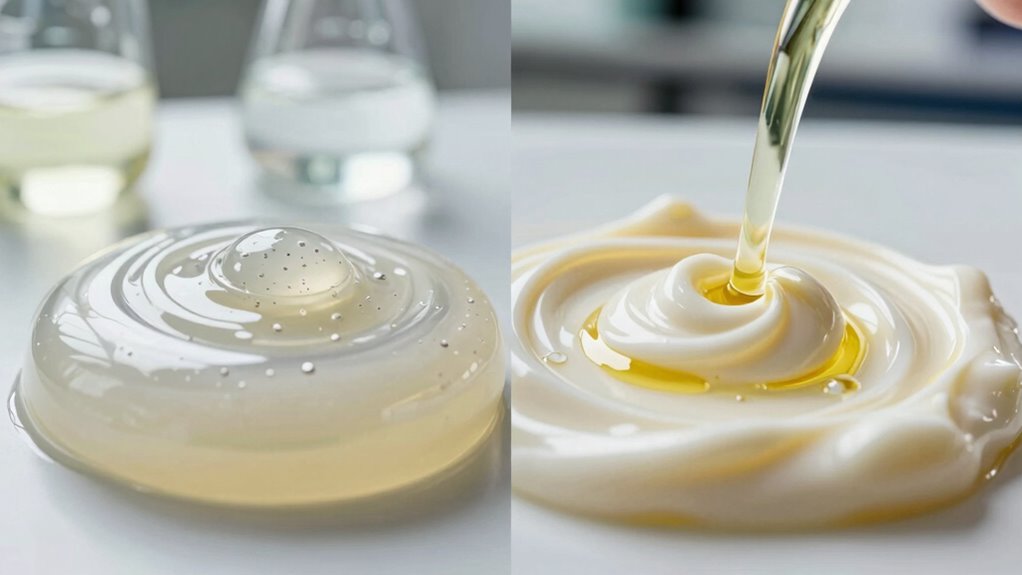
Stabilizers and emulsifiers are special ingredients used in food to improve texture and maintain consistency. Types of stabilizers include gelatin, pectin, and guar gum, which help thicken and prevent separation. Common emulsifiers are lecithin, mono- and diglycerides, and polysorbates, which help blend fat and water-based ingredients. Stabilizers work by creating a network that holds ingredients together, ensuring products stay uniform over time. Meanwhile, emulsifiers reduce the surface tension between oil and water, allowing them to mix smoothly. Both play essential roles in processed foods, from dairy to baked goods. Understanding these ingredients helps you recognize how they contribute to the texture and stability of your favorite foods, making sure they stay fresh and appealing.
How Do Stabilizers Keep Food Fresh and Maintain Texture?
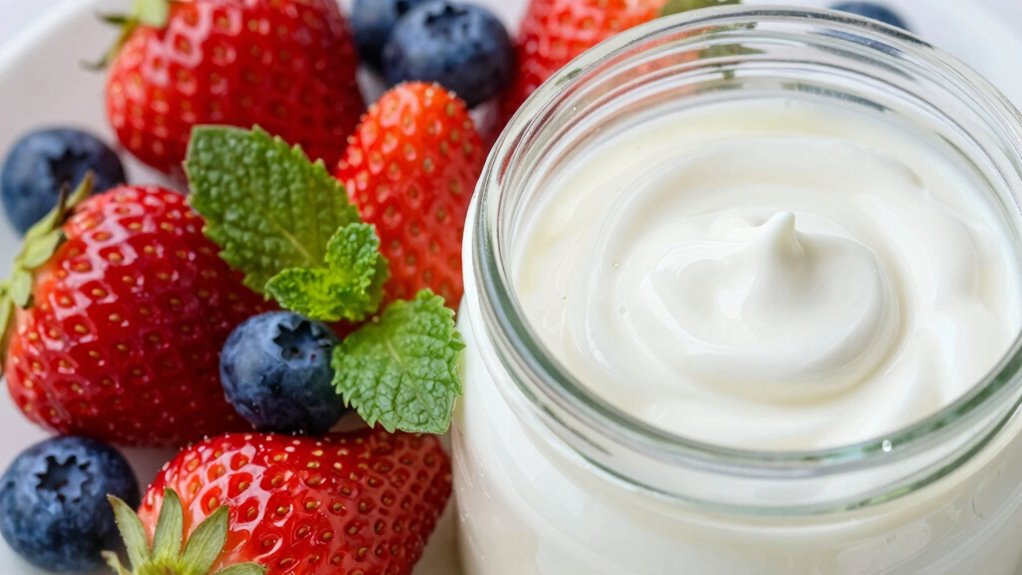
Stabilizers help prevent ingredients from separating, so your food stays consistent and appealing. They also extend shelf life, keeping products fresh longer. By maintaining texture, stabilizers guarantee your favorite foods stay just the way you like them. Additionally, food additive functions can enhance how stabilizers are integrated into food products, making them more effective and user-friendly. A better understanding of stabilizer mechanisms can help manufacturers optimize their formulations for improved stability and quality. Furthermore, understanding European food safety standards ensures that stabilizers used in food production meet strict safety requirements, promoting consumer confidence.
Prevents Ingredient Separation
When ingredients in food products are combined, they naturally tend to separate over time, which can affect texture and freshness. Stabilizers act as essential agents that prevent this separation, keeping everything evenly mixed. They work by forming a network that holds ingredients together, ensuring consistent texture and appearance. This process helps maintain the food’s freshness without relying solely on natural preservatives, which slow spoilage, or flavor enhancers that improve taste. By stopping ingredient separation, stabilizers help your food stay appealing and uniform longer. Ingredient stability is a key factor in preserving food quality over time. Additionally, stabilizers contribute to product consistency, ensuring each batch maintains the same high standards. They are also crucial in preventing spoilage, which extends the shelf life of various food items. The ability of stabilizers to maintain texture is particularly important in products like dairy and sauces, where texture directly influences consumer perception. Ultimately, stabilizers keep your food fresh and well-textured, making sure each bite is just as good as the first.
Extends Shelf Life
By preventing ingredient separation, stabilizers also help extend the shelf life of food products. They improve food preservation by maintaining ingredient stability over time, which slows down spoilage and spoilage-related changes. When stabilizers keep ingredients uniformly dispersed, the product remains fresh longer, reducing waste and ensuring consistent quality. This stability is especially important in processed foods like dairy, sauces, and baked goods, where ingredient separation can lead to texture and flavor deterioration. Understanding ingredient stability is crucial for effective food formulation. By enhancing ingredient stability, stabilizers ensure that food retains its desired characteristics throughout its shelf life. Proper use of stabilizers can also influence the formulation process, helping manufacturers develop products with longer shelf lives and consistent textures. The viscosity of food products can also be maintained more effectively with stabilizers, which is vital for texture and mouthfeel. This is especially beneficial for product consistency, as it ensures uniform quality across batches. Additionally, stabilizers contribute to maintaining product safety by inhibiting microbial growth that could otherwise compromise food quality. This not only benefits manufacturers by reducing product loss but also gives consumers confidence in the freshness and quality of the food they purchase. Ultimately, stabilizers play a crucial role in extending shelf life and preserving food’s prime condition.
Maintains Texture Consistency
Stabilizers play a vital role in maintaining the texture and consistency of food products over time. They guarantee texture preservation by preventing unwanted changes like separation, crystallization, or graininess. When you include stabilizers, you’re helping to keep ingredients uniformly dispersed, which maintains the overall mouthfeel and appearance. These additives support ingredient stability, so products stay smooth and consistent from the first bite to the last. Without stabilizers, foods like dairy, sauces, and baked goods could become lumpy or watery, compromising quality. By reinforcing the structure, stabilizers help your favorite foods retain their original texture, making them more appealing and enjoyable throughout their shelf life. Additionally, stabilizers can act as texture modifiers, enhancing the sensory experience of various foods. Their ability to improve product shelf stability ensures that foods remain fresh and appealing for longer periods. This precise control over texture ensures your food remains fresh and consistent every time you open the package. Proper use of stabilizers also helps prevent texture deterioration, which can occur during storage or handling, further extending the product’s quality.
How Do Emulsifiers Help Mix Oil and Water?

Emulsifiers work by reducing the surface tension between oil and water, making it easier for them to blend. They create stable mixtures that don’t separate over time, ensuring your food stays consistent. Plus, they improve ingredient compatibility, helping different components work together smoothly. Essential oils are often used in natural formulations to enhance blending and stability. Additionally, the use of emulsifiers can influence the texture and mouthfeel of food products, making them more appealing to consumers. The choice of emulsifier can also affect the shelf life of a product by preventing separation and spoilage. Understanding emulsion stability is crucial for developing high-quality, long-lasting products. Recognizing the role of ingredient interactions can further optimize product formulation and consistency.
Reduces Surface Tension
When oil and water are combined, they naturally resist mixing because their molecules prefer to stay apart, creating a high surface tension at their boundary. Emulsifiers help overcome this barrier by reducing surface tension, making it easier for the two liquids to blend. By positioning themselves at the interface, they lower the energy needed to disperse oil into water or vice versa. This reduction in surface tension is essential for maintaining ingredient stability in mixtures, preventing separation over time. Without this action, the liquids would quickly separate, compromising the consistency and effectiveness of your product. Emulsifiers act as the key agents that enable a uniform, stable mixture by controlling the forces at the boundary of oil and water. Additionally, understanding smart home automation can inspire innovative ways to monitor and control processes like mixing in industrial or culinary settings. Proper formulation of emulsions relies heavily on the molecular interactions between ingredients to ensure long-lasting stability, which can be optimized through precise control of mixing conditions and process parameters.
Forms Stable Mixtures
By positioning themselves at the oil-water interface, emulsifiers create a physical barrier that prevents the two liquids from separating. This action is vital for forming stable mixtures, especially in food products. As a food additive, emulsifiers facilitate ingredient interactions that would otherwise be incompatible. They help disperse oil droplets evenly within water, reducing separation over time.
- Create tiny oil droplets suspended in water
- Maintain uniform texture and consistency
- Prevent phase separation in dressings and sauces
- Improve shelf life by stabilizing the mixture
These functions highlight emulsifiers’ role in guaranteeing ingredients stay mixed, enhancing product quality. Their ability to form lasting emulsions makes them essential in many recipes and processed foods. By doing so, they guarantee the mixture remains stable during storage and use.
Enhances Ingredient Compatibility
Because emulsifiers form stable barriers at the oil-water interface, they enable these two incompatible liquids to work together more effectively. This improves ingredient compatibility, making it easier to combine diverse elements in your recipes or products. By facilitating better integration, emulsifiers help create harmonious food pairings, where flavors meld seamlessly. They also offer sensory enhancement, providing a smoother texture and more uniform appearance that appeals to your senses. When emulsifiers are used properly, they prevent separation and guarantee ingredients stay mixed longer, which is especially important in dressings, sauces, and beverages. Overall, emulsifiers play a crucial role in optimizing ingredient compatibility, leading to more consistent, appealing, and delicious results.
What Are the Key Differences Between Stabilizers and Emulsifiers?

Stabilizers and emulsifiers play distinct roles in food formulation, though they are sometimes confused. Understanding the food additive differences helps you see how each ingredient functions. Stabilizers primarily prevent separation, thickening, or crystallization, providing structure and consistency. Emulsifiers, on the other hand, facilitate the mixing of oil and water, creating stable emulsions.
Here are the key differences:
- Stabilizers enhance texture and prevent ingredient separation.
- Emulsifiers enable liquids that don’t normally mix to stay combined.
- Stabilizers often act as thickeners or gelling agents.
- Emulsifiers reduce surface tension between immiscible liquids.
Knowing these ingredient functions helps you choose the right additive for your food product, avoiding common mix-ups.
Which Foods Usually Contain Stabilizers?
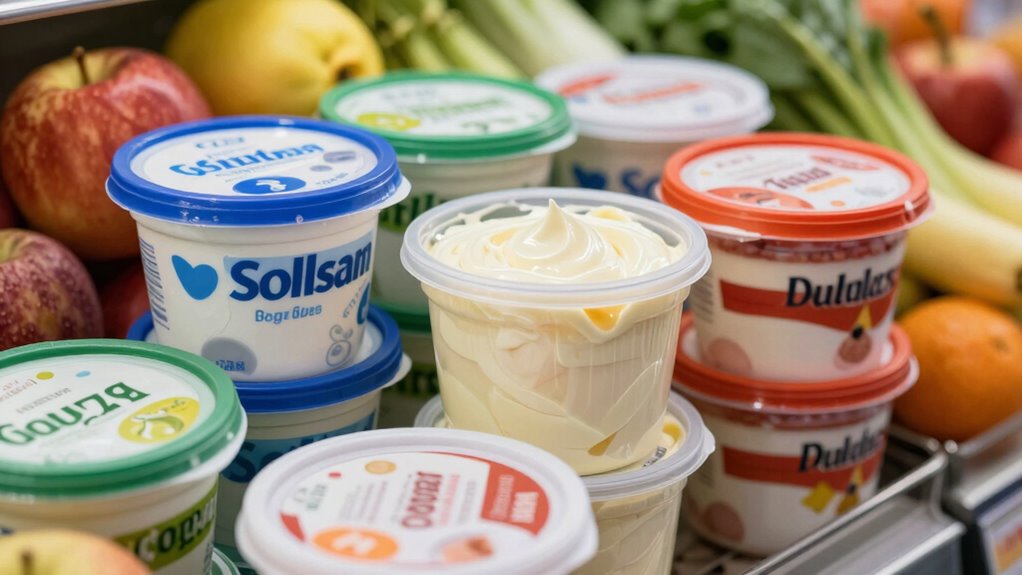
Many processed foods rely on stabilizers to maintain their quality and consistency. You’ll often find stabilizers in dairy products like yogurt and cheese, where they prevent separation and improve texture. Baked goods such as bread and cakes also contain stabilizers to retain moisture and structure. In beverages like fruit juices and soft drinks, stabilizers help suspend particles and prevent sedimentation. Some stabilizers come from natural sources, like gelatin or pectin, which are derived from animals or plants and used in culinary applications like jams or jellies. Additionally, processed meats and spreads often include stabilizers to enhance shelf life and appearance. Recognizing these common foods can help you understand how stabilizers play a vital role in everyday products and why they’re added during manufacturing.
Where Do You Find Emulsifiers in Food Products?
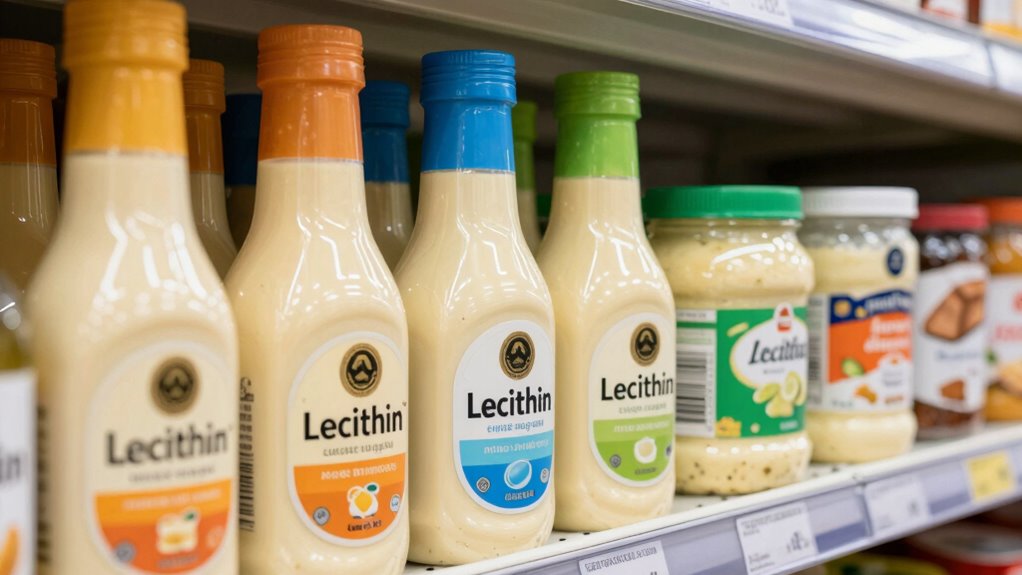
Have you ever noticed emulsifiers in foods like salad dressings, ice cream, or margarine? They’re common food additives that help mix ingredients that normally don’t combine well, ensuring a smooth, uniform texture. You’ll find emulsifiers in:
- Processed cheese and spreads
- Bakery products like cakes and pastries
- Dairy desserts and frozen treats
- Non-dairy milk substitutes
These ingredients are used for food additive safety, preventing separation and improving shelf life. Whether they’re natural, like lecithin from soy or egg yolk, or artificial, like polysorbates, it’s important to understand what’s inside your food. Knowing where emulsifiers hide helps you make informed choices about the foods you consume, especially when considering natural vs artificial options.
How Can You Identify Stabilizers and Emulsifiers on Food Labels?

When examining food labels, identifying stabilizers and emulsifiers becomes straightforward once you know what to look for. During label reading, focus on the ingredient list, which provides clear clues. Stabilizers often appear as ingredients like guar gum, xanthan gum, or pectin, while emulsifiers may be listed as lecithin, mono- and diglycerides, or polysorbates. Pay attention to unfamiliar terms, as manufacturers are required to list all additives. Knowing these common names helps you quickly distinguish stabilizers from emulsifiers. Remember, ingredient identification is key to understanding what’s in your food, so take your time reading labels carefully. This practice empowers you to make informed choices and avoid unintended consumption of additives you want to limit.
Tips for Using Stabilizers and Emulsifiers Effectively in Cooking
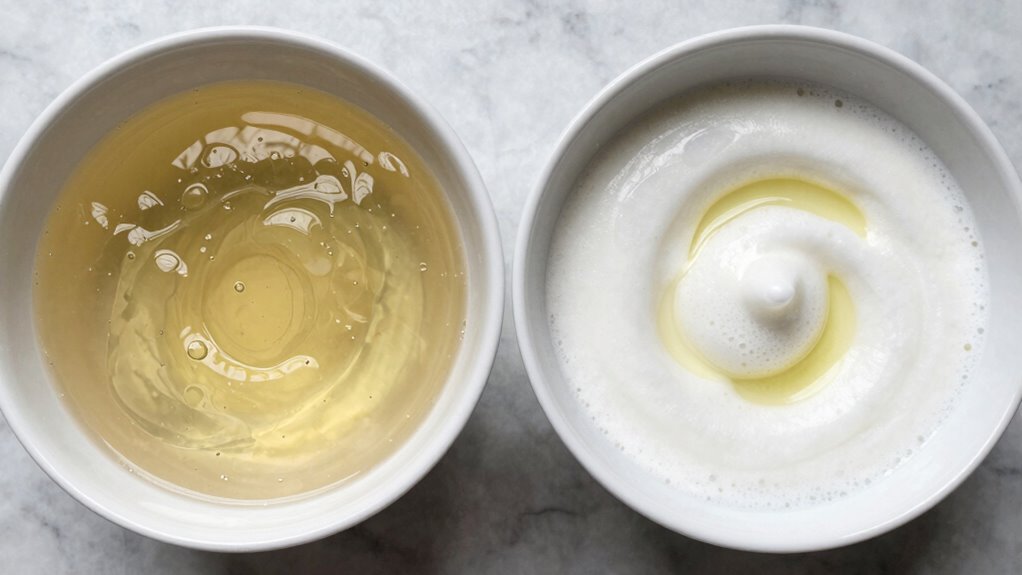
To use stabilizers and emulsifiers effectively in your cooking, it’s important to understand their specific functions and how to incorporate them properly. Start small—add a pinch or small amount, then adjust as needed to avoid over-thickening or unwanted textures. Experiment with creative pairings by combining different stabilizers and emulsifiers to enhance texture and stability. Use emulsifiers to blend oil and water-based ingredients for smooth dressings or sauces, and stabilizers to maintain consistency in gels or whipped desserts. Keep flavor combinations in mind; some stabilizers can subtly influence taste. For best results, pay attention to temperature and mixing techniques.
- Mix slowly and thoroughly to prevent separation
- Use warm liquids for better dissolution
- Combine with complementary ingredients for unique flavor profiles
- Test small batches before scaling up
Why Understanding Stabilizers and Emulsifiers Matters for Food Quality
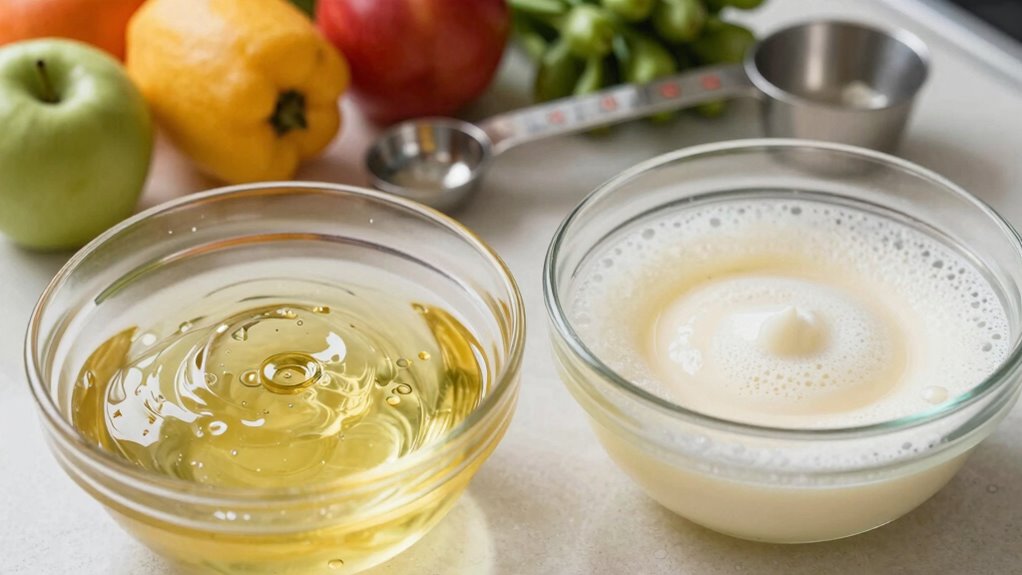
Understanding stabilizers and emulsifiers is essential because they directly impact the texture, appearance, and stability of your food. When you know how these additives work, you can make better choices about food additive safety and guarantee your products meet regulatory standards. Proper use of stabilizers keeps ingredients uniformly mixed, preventing separation, while emulsifiers help blend oil and water, creating smooth textures. Without this understanding, you risk compromising food quality or exposing yourself to products with questionable safety. By recognizing the roles of these ingredients, you can select products that are both safe and high quality. Staying informed about regulatory standards also helps you avoid potential legal or health issues, ensuring your food remains appealing, consistent, and safe for consumption.
Frequently Asked Questions
Are Stabilizers and Emulsifiers Natural or Synthetic Ingredients?
Stabilizers and emulsifiers can be both natural and synthetic ingredients. Natural sources include plant extracts, eggs, and milk, which are minimally processed. Synthetic production involves chemical processes to create these additives in labs. You’ll find natural options in organic foods, while processed foods often use synthetic stabilizers and emulsifiers to improve texture and shelf life. So, it depends on the product and labeling, but both types are common.
Can Stabilizers and Emulsifiers Cause Allergies or Health Issues?
Stabilizers and emulsifiers can cause allergy symptoms or health concerns in some people, especially those with sensitivities to certain additives. You might experience reactions like skin irritation, respiratory issues, or digestive discomfort. While many are considered safe when used within regulated limits, it’s wise to check ingredient labels and avoid those linked to your allergies. If you notice any adverse effects, consult a healthcare professional for proper guidance.
What Are Common Substitutes for Stabilizers and Emulsifiers?
You can replace stabilizers and emulsifiers with natural alternatives and homemade solutions. For example, use gelatin or agar-agar as thickening agents, and egg yolks or mustard as natural emulsifiers. Adding chia seeds soaked in water creates a gel-like consistency for stabilization. These options are simple, safe, and often more wholesome, making your recipes healthier without sacrificing texture or stability.
How Do Stabilizers and Emulsifiers Impact Food Shelf Life?
Stabilizers and emulsifiers enhance food preservation by extending shelf life and maintaining product consistency. They prevent separation, spoilage, and spoilage-causing microbial growth, keeping foods fresher longer. By stabilizing ingredients, they reduce the need for artificial preservatives, making your products more appealing and reliable. Ultimately, they play an essential role in ensuring your food stays safe, stable, and consistent throughout its shelf life.
Are There Regulations Governing the Use of Stabilizers and Emulsifiers?
Sure, there are regulations governing stabilizers and emulsifiers. You’re protected by strict regulatory standards that guarantee these additives are safe for your consumption. Labeling requirements make it clear which stabilizers and emulsifiers are in your food, so you can make informed choices. No sneaky ingredients here—just rules designed to keep your snacks trustworthy. So, rest assured, food safety authorities keep a watchful eye on those trendy stabilizer and emulsifier trends.
Conclusion
Now that you know the difference between stabilizers and emulsifiers, you can make smarter choices in the kitchen. Think of them as the unsung heroes behind your favorite foods—working silently to keep textures perfect and flavors blended. Remember, understanding their roles isn’t just about labels; it’s about controlling quality and avoiding confusion. Because in the world of food, clarity isn’t just clarity—it’s the secret ingredient to better eating.