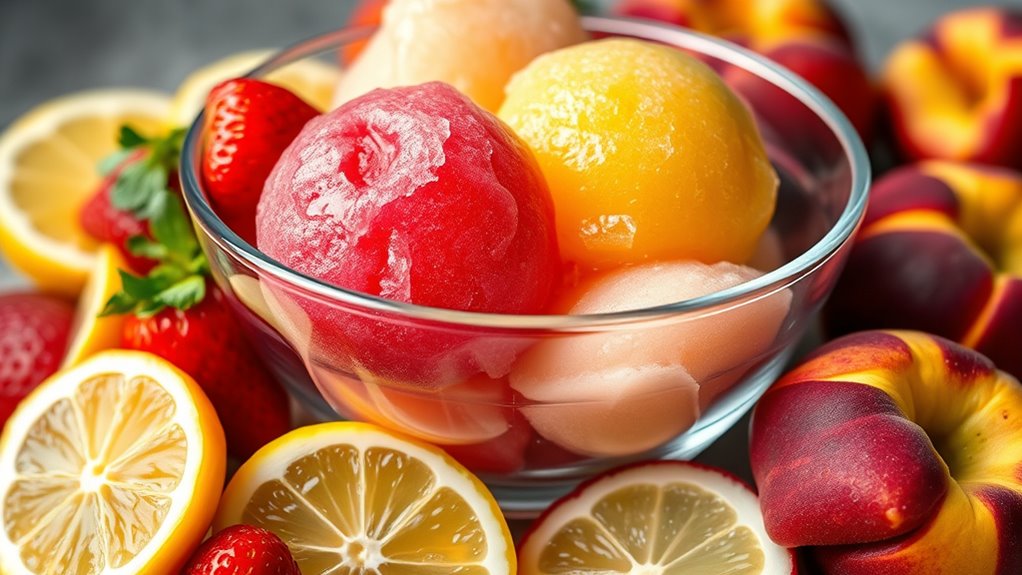

When formulating sorbets and sherbets, you’ll notice ingredients differ mainly in dairy content; sorbets focus on fruit and sugar with little to no dairy, highlighting pure fruit flavors. Sherbets include a small amount of dairy or egg whites, creating a creamier texture and mellowing the fruit taste. Balancing sweetness is essential for both, but especially in sherbets. To master both, understand these ingredient differences and keep exploring the nuances that enhance your creations.

Get baking supplies delivered free with Prime
- Fast, free delivery on millions of items
- Prime Video, Amazon Music and more included
- Member-only deals all year
Key Takeaways
- Sorbets focus primarily on fruit and sugar, with little or no dairy, emphasizing fruit purity and natural flavor.
- Sherbets include a small amount of dairy or egg whites, creating a creamier texture and mellowing fruit flavors.
- The presence of dairy in sherbets can influence sweetness perception and requires balancing sugar accordingly.
- Ingredient quality and freshness are critical in both to preserve vibrant, authentic fruit flavors.
- Adjusting sugar levels is essential in both, with tart fruits needing more sweetness and naturally sweet fruits requiring less.

Creating perfect sorbets and sherbets begins with understanding their unique textures and flavor profiles. When you craft these frozen treats, focusing on fruit purity is vital. Using high-quality, fresh fruit ensures that the natural flavors shine through and that each spoonful delivers vibrant, true-to-fruit taste. The purity of the fruit directly influences the overall quality, so choose ripe, flavorful produce and avoid additives or artificial flavorings. This commitment to fruit purity helps you achieve a clean, crisp flavor profile that distinguishes a well-made sorbet or sherbet from a mediocre one.
Focus on high-quality, fresh fruit to ensure vibrant, true-to-fruit flavors in your sorbets and sherbets.
Balancing sweetness is another essential aspect in formulation. You want your frozen dessert to be sweet enough to satisfy palates but not so sugary that it masks the fruit’s natural essence. Achieving this balance often involves tasting and adjusting the sugar levels during preparation. Keep in mind that fruit varies in sweetness, so you should tailor the amount of added sugar accordingly. For example, tart fruits like lemon or raspberry may require a bit more sweetness, while naturally sweet fruits like mango or peach might need less. Using a simple syrup or honey can help you control the sweetness uniformly, ensuring a smooth, consistent texture and flavor.
In making sorbets, the emphasis is primarily on fruit and sugar, with little to no dairy involved. This makes the fruit purity even more vital because there are fewer ingredients to mask any imperfections. The goal is to highlight the fruit’s natural character, so you should emphasize the quality of your ingredients and the precision of your sweetening. For sherbets, which traditionally include a small amount of dairy or egg whites, you still want to preserve the fruit’s purity, but the added dairy can mellow the flavor and create a slightly creamier texture. Adjusting sweetness in sherbets involves not only sugar but also balancing the dairy’s richness, which can sometimes enhance or diminish the perceived sweetness.
Understanding how fruit purity and sweetness balancing work hand-in-hand allows you to craft frozen desserts that are both uplifting and true to their ingredients. Whether you prefer a bright, citrusy sorbet or a creamy, fruity sherbet, paying close attention to these foundational elements ensures your end result will delight the palate and stand out for its clarity, flavor, and texture. Additionally, employing vertical storage solutions and multi-functional furniture can help keep your workspace organized, making the process of formulation more efficient and enjoyable.
high-quality fruit for sorbet making
As an affiliate, we earn on qualifying purchases.
As an affiliate, we earn on qualifying purchases.
Frequently Asked Questions
Can I Substitute Honey for Sugar in Sorbet Recipes?
Yes, you can substitute honey for sugar in sorbet recipes. Honey adds sweetness and a unique flavor, but it’s a liquid, so you’ll need to adjust the other liquid ingredients to maintain the right texture. When using honey, consider its sweetness level and reduce other sweeteners accordingly. Honey is a great sugar alternative, offering natural sweetness and a richer taste, making your sorbet both delicious and smooth.
What Is the Best Thickening Agent for Sherbets?
Think of thickening agents as the backbone of your sherbet. For best results, try natural stabilizers like pectin or gelatin, which help achieve that smooth, scoopable texture. Thickening alternatives such as cornstarch or agar-agar also work well, adding structure without overpowering flavor. You’ll want to select based on dietary needs and flavor compatibility, but these options guarantee your sherbet stays perfectly creamy and stable with every scoop.
How Do Alcohol Levels Affect Sorbet Texture?
Alcohol impacts sorbet texture by acting as a natural softener, making it smoother and easier to scoop. Higher alcohol levels lead to more significant texture modification, preventing the sorbet from becoming overly hard or icy. To achieve the desired consistency, you should carefully control alcohol content, balancing flavor with texture. Keep in mind that too much alcohol can make your sorbet too soft, so moderation is key for ideal results.
Are There Vegan Alternatives to Traditional Dairy Ingredients?
Think of your sorbet as a canvas; you can easily swap out dairy for vibrant plant-based milks or rich coconut cream. These vegan alternatives mimic the creaminess and texture of traditional ingredients, letting you craft luscious, dairy-free treats. By experimenting with almond, soy, or oat milks, and adding coconut cream, you guarantee your sorbets stay smooth and indulgent without any animal products—deliciously cruelty-free and dairy-free.
How Long Should Sorbets and Sherbets Be Frozen for Optimal Texture?
You should freeze sorbets and sherbets for about 4 to 6 hours, or until they reach a firm, scoopable texture. To guarantee ideal texture preservation, check them every couple of hours after the initial freeze. Stirring occasionally during freezing helps prevent ice crystals, resulting in a smoother consistency. For best results, serve slightly softened for easier scooping and better flavor release.
Conclusion
Understanding the differences in ingredients helps you craft perfect sorbets and sherbets. Did you know that sorbets are typically made without dairy, making them lower in fat, while sherbets contain a small amount of dairy or milk? This subtle distinction influences texture and flavor. By mastering these variations, you can elevate your frozen treats and impress guests with your knowledge. So, next time you make a dessert, remember these ingredient secrets to create the ideal icy delight.
Halloween Picks
halloween
As an affiliate, we earn on qualifying purchases.