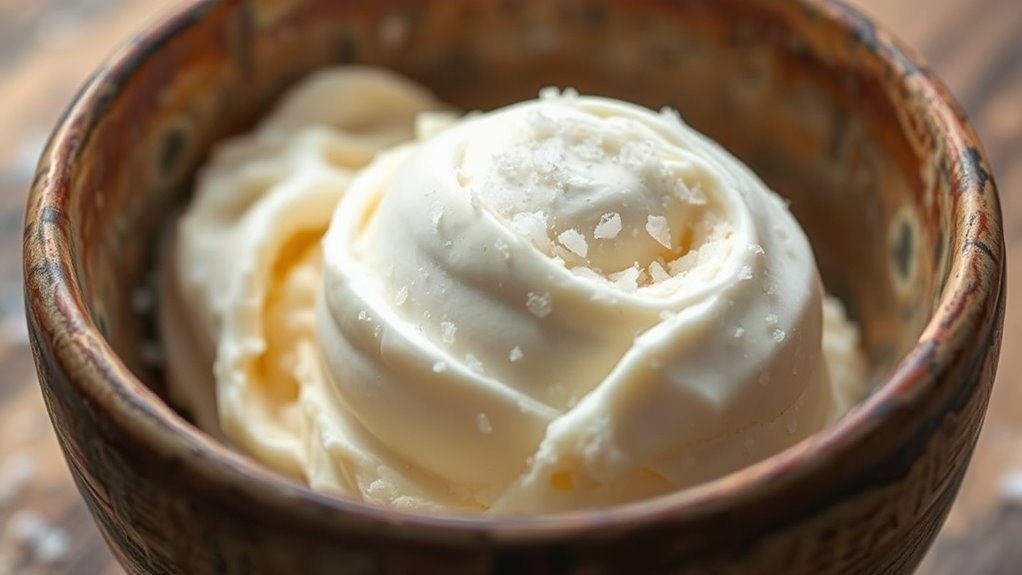

When you add salt to ice cream, it acts as a flavor enhancer by amplifying the natural sweetness and richness of the ingredients. Salt also balances flavors and reveals hidden nuances, making your ice cream taste more complex. The cold temperature combined with salt heightens your sensory experience, creating a richer, more vibrant flavor. Keep exploring how salt transforms your favorite treats and unearths even deeper flavor layers.
Key Takeaways
- Salt acts as a flavor enhancer, amplifying sweetness and richness in ice cream.
- It suppresses bitterness and reveals deeper, hidden flavor layers.
- The cold temperature combined with salt heightens sensory perception and flavor complexity.
- Sprinkling or mixing salt into ice cream creates a more vibrant, balanced taste.
- Understanding salt’s role unlocks new flavor possibilities and enhances the dessert experience.

Have you ever wondered why adding a touch of salt to ice cream can make it taste even better? It’s a surprising trick that has been used in culinary techniques for ages, elevating the flavor profile in ways you might not expect. When you sprinkle a little salt onto your ice cream, you’re not just adding seasoning; you’re revealing a deeper flavor experience. Salt acts as a flavor enhancer, amplifying the natural sweetness and richness of the ingredients. It works by balancing out the flavors, cutting through the creaminess and making the overall taste more vibrant and well-rounded. This simple addition can transform a basic scoop into a more complex, satisfying dessert.
Using salt in this way is a classic culinary technique that taps into how our taste buds perceive flavors. Salt doesn’t just add a salty note; it enhances sweetness by suppressing bitterness and dulling sourness, which allows the sweeter elements to shine through. When combined with ice cream, salt’s effect becomes even more apparent. The cold temperature of the ice cream combined with salt creates a subtle contrast that heightens the sensory experience. This is why salted ice cream often tastes richer and more intense than its unsalted counterpart. The salt helps to bring out hidden layers of flavor in the ingredients, revealing nuances that might otherwise go unnoticed.
Incorporating salt into your ice cream experience isn’t limited to just sprinkling it on top. Some chefs even incorporate salt directly into the mixture, creating salted ice cream flavors that are both savory and sweet. This technique showcases how salt can be used creatively to enhance flavor profiles, making each bite more complex. Whether you’re making your own ice cream at home or ordering from a specialty shop, understanding this culinary technique can help you appreciate the subtle magic behind salted ice cream. It’s not just about adding salt for the sake of it; it’s about using salt intentionally to unlock the full potential of your dessert.
Frequently Asked Questions
Does Adding Salt to Ice Cream Affect Its Texture?
Adding salt to ice cream can affect its texture by promoting better texture enhancement and flavor depth. When you mix salt with ice, it lowers the freezing point, allowing the mixture to get colder and helping your ice cream freeze faster. This results in a smoother, creamier texture. Plus, the salt enhances flavor depth, making your ice cream taste richer and more balanced. So, try adding a pinch for improved texture and flavor.
Can Salt Improve the Shelf Life of Ice Cream?
Adding salt to ice cream doesn’t directly improve its shelf life, but it offers preservation benefits by lowering the temperature during storage, which slows microbial growth. This can help keep your ice cream fresh longer. However, for ideal shelf life, focus on proper packaging and storage conditions. While salt helps with freezing and texture, it’s not a primary method for extending ice cream’s freshness.
Is Salted Ice Cream Suitable for People on Low-Sodium Diets?
You should steer clear of salted ice cream if you’re on a low-sodium diet, as even a pinch of salt can tip the balance against your dietary restrictions. While some low-sodium alternatives exist, they might not deliver the same flavor punch. Think of it like a delicate dance—adding salt enhances flavor, but if your body needs restraint, it’s best to skip the salty serenade for a safer, healthier treat.
How Does Salt Influence the Melting Point of Ice Cream?
Salt lowers the melting point of ice cream, causing it to melt faster when you enjoy it. This quick melting releases flavors more effectively, enhancing your overall tasting experience. When salt is added, it interacts with the ice, making it easier for the ice cream to shift from solid to liquid. As a result, you get a richer flavor and a creamier texture, making each bite more enjoyable.
Are There Traditional Cultures Known for Salted Ice Cream Recipes?
Yes, you’ll find traditional cultures that enjoy salted ice cream recipes, especially in regions with rich culinary traditions. For example, Middle Eastern and Mediterranean cultures incorporate salted flavors into their desserts, blending regional flavors to create unique experiences. These traditions highlight how salt enhances sweetness and adds depth to flavors, making salted ice cream a cherished treat. Exploring these cultural variations can give you a deeper appreciation of how regional flavors influence dessert recipes.
Conclusion
As you savor salted ice cream, remember that salt isn’t just a seasoning—it’s a key to revealing hidden depths of flavor. Like a gentle tide revealing secret treasures beneath the surface, salt awakens sweetness and enhances every note. Embrace this delicate dance of contrast, letting each spoonful be a reminder that sometimes, the smallest pinch can transform the ordinary into something extraordinary—a symphony of flavor waiting to be discovered in every bite.