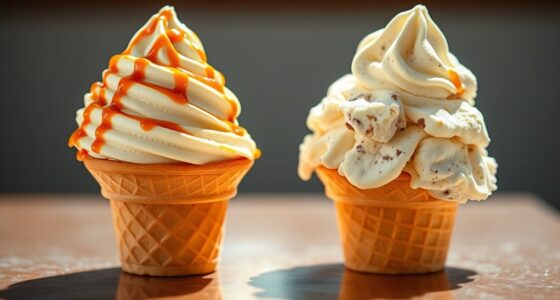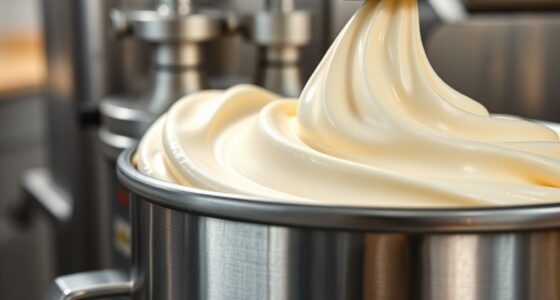
Fat plays a essential role in making ice cream creamy and enjoyable. It contributes to a smooth texture, melts nicely on your tongue, and provides a rich flavor that enhances the overall experience. The fat forms tiny crystals during freezing, which help keep the ice cream velvety and prevent it from becoming grainy. If you want to discover exactly how fat interacts with other ingredients, keep exploring this fascinating topic.
Key Takeaways
- Fat contributes to the creamy texture and smooth mouthfeel of ice cream.
- It creates a melting sensation and coats the palate, enhancing overall creaminess.
- Tiny fat crystals formed during freezing ensure a stable, velvety texture.
- Higher fat content results in richer, more indulgent ice cream experiences.
- Proper fat crystallization prevents ice crystal growth, maintaining creaminess during storage.
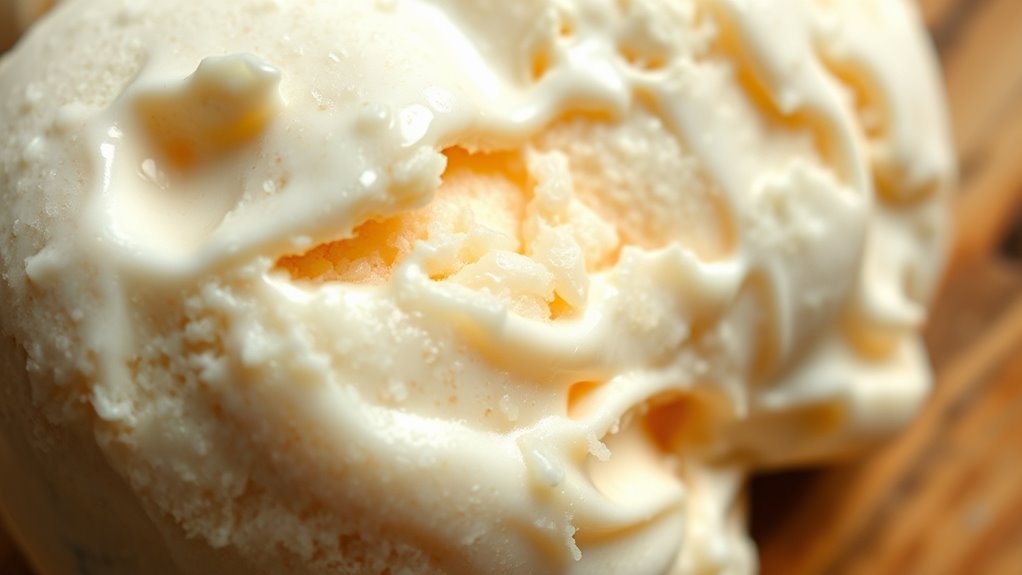
Fat plays an essential role in making ice cream creamy and smooth, as it directly influences the texture and mouthfeel. The dairy fat content in ice cream is a key factor in achieving that desirable richness you experience with every scoop. When you analyze different ice cream varieties, you’ll notice that those with higher dairy fat levels tend to be creamier and more indulgent. This fat isn’t just about flavor; it’s about creating a specific sensation that melts smoothly on your tongue. The fat globules, primarily composed of milk fat, help coat your palate, giving the ice cream its luscious, velvety texture.
A critical process involved in this creamy texture is fat crystallization. As the ice cream cools and freezes, the fat molecules begin to crystallize, forming tiny fat crystals that influence the overall structure. Proper fat crystallization ensures that the ice cream remains smooth and not grainy. When fat crystals form uniformly, they help prevent the formation of large ice crystals, which can make the ice cream feel icy or gritty. Instead, these tiny crystals contribute to a consistent, creamy mouthfeel. The balance of fat crystallization is delicate; too much or too little can compromise the texture. Manufacturers carefully control freezing rates and fat content to optimize the size and distribution of fat crystals, ensuring the final product is both smooth and stable.
You might notice that premium ice creams tend to have a higher dairy fat content because they rely on this fat to deliver a rich, satisfying experience. The fat also interacts with other ingredients like emulsifiers, stabilizers, and sugars, which work together to enhance creaminess. When you enjoy a scoop, what you’re really experiencing is a complex interplay of fat globules and crystals that create that luxurious, melt-in-your-mouth sensation. The process of fat crystallization is indispensable because it influences not just texture but also how the ice cream preserves its quality over time. Properly crystallized fat helps prevent ice crystal growth during storage, which can otherwise lead to a gritty or icy taste.
Frequently Asked Questions
How Does Fat Influence Ice Cream Melting Speed?
They say, “A little fat goes a long way,” and that’s true for melting speed. Fat influences ice cream by lowering the melting point and delaying fat crystallization, which helps it stay solid longer. When fat is evenly distributed, it slows melting by creating a barrier. So, your ice cream melts more slowly because the fat helps maintain its structure, making each scoop last longer.
Can Non-Dairy Fats Replicate Traditional Ice Cream Creaminess?
Yes, plant-based fats can replicate traditional ice cream creaminess. By using fat replacement options like coconut oil or nut butters, you can achieve a rich, smooth texture similar to dairy. These plant-based fats mimic the mouthfeel and structural properties of dairy fat, allowing you to enjoy delicious, dairy-free ice cream without sacrificing creaminess. Just guarantee the fats are well integrated for the best results.
What Types of Fat Are Healthiest for Ice Cream?
Sure, you’re choosing the “healthiest” fats for your ice cream, but don’t be fooled—plant-based oils like avocado or coconut seem healthy, yet they can be just as indulgent. Opt for healthy fats such as nuts, seeds, or olive oil, which add good nutrients without excessive calories. Ironically, what’s “healthy” in small doses can still tempt you to indulge, so enjoy your guilt-free treat wisely.
How Does Fat Content Affect Ice Cream Flavor Intensity?
Higher fat content enhances flavor intensity because fat improves flavor enhancement and fat solubility, allowing more flavor compounds to be absorbed and released during tasting. When you choose ice cream with more fat, you’ll notice a richer, more pronounced flavor experience. Fat acts as a carrier, intensifying the taste and aroma, making every spoonful more satisfying. So, increasing fat levels generally boosts flavor perception in your ice cream.
Is There an Optimal Fat Percentage for Ideal Creaminess?
Think of ice cream as a symphony where fat percentage hits the perfect note for ideal creaminess, usually around 10-15%. This range creates a smooth, luxurious texture that melts effortlessly on your tongue. Too little fat, and your ice cream feels like a frozen whisper; too much, and it becomes heavy and greasy. Stick to this sweet spot for that ideal, velvety creaminess you crave.
Conclusion
Now that you understand how fat creates that luscious, velvety texture, imagine each spoonful as a silky cloud drifting across your palate. Fat acts like the artist’s brush, painting every bite with richness and depth. Without it, ice cream would be a flat, dull landscape. So, next time you indulge, savor the creamy symphony fat provides, turning simple ingredients into a luxurious escape—an indulgence as smooth as silk and as comforting as a warm hug.