Just how long can ice cream last, and what storage secrets keep it fresher longer? Find out the science behind its shelf life.
Browsing Category
Ice Cream Science & Ingredients
150 posts
Why Some Ice Cream Feels Greasy in Your Mouth (Butterfat & Temperature)
Just understanding how butterfat and temperature affect ice cream’s texture can reveal why some feels greasy and how to enjoy it better.
Dippin’ Dots 101: How Do They Make Ice Cream Into Tiny Beads?
Many wonder how Dippin’ Dots transform ice cream into tiny beads, and the secret lies in an extraordinary freezing process that…
The Role of Pasteurization: How Your Ice Cream Base Is Made Safe and Smooth
Pasteurization plays a crucial role in making your ice cream base both…
What’S the Deal With “Frozen Dairy Dessert”? Understanding Ice Cream Labeling Laws
Many consumers wonder about “Frozen Dairy Dessert” labels—discover how labeling laws influence your choices and what they mean for traditional and dairy-free treats.
Alcohol and Ice Cream: How a Splash of Liquor Affects Freezing
Theories on how adding liquor to ice cream influences freezing reveal surprising effects that could transform your frozen treats forever.
A Guide to Ice Cream Ingredients: What Each Additive Does
Pour into this guide to discover how each ice cream ingredient influences texture and flavor, and learn what makes your favorite frozen treat truly special.
The Magic of Guar Gum and Xanthan: Why So Many Gums Are in Your Ice Cream
Keen to discover how guar gum and xanthan give your ice cream its smoothness and stability? Keep reading to uncover their secret role.
No-Churn Ice Cream: The Science of Making Ice Cream Without a Machine
Perfect your homemade ice cream by understanding the science behind no-churn methods, where controlling ice crystal formation ensures irresistibly smooth results—discover how inside.
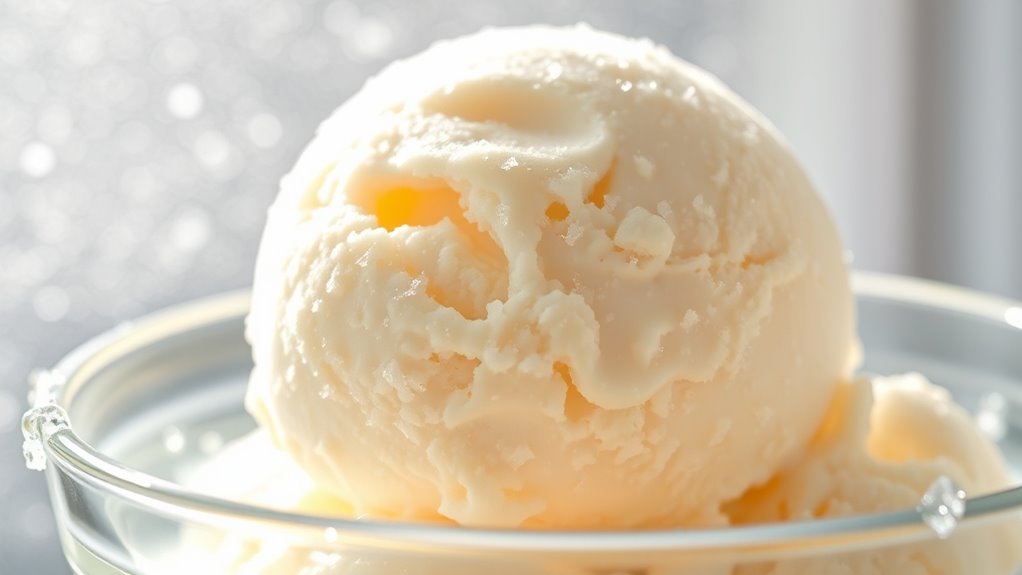
Heat Shock: Why Temperature Swings Ruin Ice Cream’s Texture
Heat shock causes ice crystals to grow and fats to break down, leading to texture ruin—discover how to prevent this icy disaster.