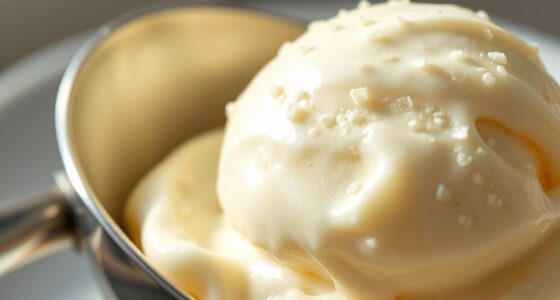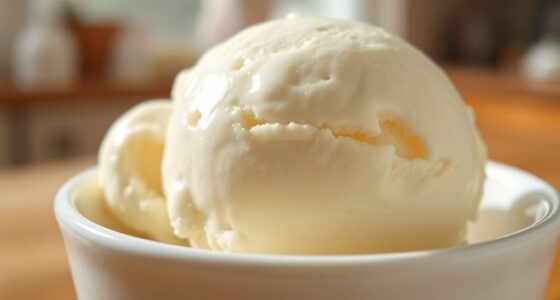
When making liquid nitrogen ice cream, the rapid freezing happens as the super cold liquid nitrogen (-196°C) swiftly contacts your mixture, causing near-instant solidification. This extreme cold prevents large ice crystals from forming, resulting in a smooth, velvety texture. The fast heat transfer preserves flavor and creates a clinical, frosty spectacle. To discover how physics turns this scientific process into a culinary art, keep exploring the fascinating science behind it.
Key Takeaways
- Liquid nitrogen’s extreme cold (-196°C) enables near-instant freezing by rapidly removing heat from the mixture.
- Fast heat transfer prevents large ice crystal formation, resulting in a smooth, creamy texture.
- Rapid freezing traps air and moisture, preserving delicate flavors and enhancing freshness.
- Tiny ice crystals formed through swift cooling improve mouthfeel and prevent icy textures.
- The process combines physics and culinary art, creating an engaging sensory experience through quick solidification.

Liquid nitrogen ice cream has become a popular way to enjoy a freshly made treat with a theatrical twist. When you witness the process, you see a cloud of vapor billowing around as the cold nitrogen interacts with the ingredients. This spectacle isn’t just for show; it’s rooted in fascinating physics that create a unique cryogenic texture you won’t find with traditional freezing methods. The secret lies in rapid solidification, which transforms the cream mixture into ice almost instantly. As the liquid nitrogen contacts the liquid base, it cools it down at an astonishing rate, locking in smoothness and air bubbles that give the ice cream its signature creamy consistency. The extreme cold of -196°C (-321°F) is essential for this rapid freezing process, enabling the tiny ice crystals to form instead of larger, coarse ones. This rapid freezing process is what gives liquid nitrogen ice cream its distinctive cryogenic texture. Because of the quick temperature drop, ice crystals don’t have time to grow large, unlike in conventional freezing. Instead, they remain tiny, resulting in a velvety mouthfeel. You’ll notice that the texture feels incredibly smooth, almost pudding-like, without the icy crunch that can sometimes occur with slower freezing techniques. The rapid solidification traps air and moisture within the mixture, creating a light, fluffy consistency that’s both satisfying and indulgent. This is why liquid nitrogen ice cream feels so different—each spoonful melts instantly, delivering a rich, luscious experience.
The physics behind this process hinges on how quickly heat is extracted from the mixture. When you pour liquid nitrogen over the ingredients, the extreme cold (-196°C or -321°F) causes the water in the cream to freeze almost instantly. This rapid heat transfer is essential because it prevents the formation of large ice crystals, which are typically responsible for a coarse or icy texture. Instead, the ice forms into tiny crystals, thanks to the swift cooling rate. The rapid solidification not only improves texture but also preserves delicate flavors and aromas, which might otherwise be lost during slower freezing. The result is a fresher, more vibrant taste with every scoop. Proper handling and storage are crucial to maintaining the quality and safety of liquid nitrogen ice cream, ensuring the experience remains both enjoyable and safe. In essence, liquid nitrogen ice cream combines science and art seamlessly. The cryogenic texture and rapid solidification process make it a standout treat, appealing to both the eye and palate. You get to enjoy a dessert that’s not only delicious but also a fascinating demonstration of physics in action. It’s this interplay of chemistry and culinary craft that makes liquid nitrogen ice cream a unique and memorable experience, turning an ordinary dessert into an extraordinary one.
Frequently Asked Questions
How Safe Is Liquid Nitrogen Ice Cream for Children?
Liquid nitrogen ice cream can be safe for children if prepared properly, but you should always consider pediatric safety. Verify the vendor uses food-grade nitrogen and follows strict safety protocols. Watch for allergen considerations, as some flavors may contain common allergens. Keep children at a safe distance from the liquid nitrogen until it fully vaporizes, and always supervise closely. When in doubt, consult with the vendor about safety measures.
Can Liquid Nitrogen Ice Cream Cause Frostbite?
Yes, liquid nitrogen ice cream can cause frostbite if you’re not careful. The extreme cold temperature can lead to thermal burns if the nitrogen comes into direct contact with your skin. That’s why safety precautions are essential—avoid touching the nitrogen directly and wait until the ice cream is properly prepared. Keeping a safe distance guarantees you enjoy the treat without risking frostbite or burns.
How Long Does the Freezing Process Take?
The freezing process for liquid nitrogen ice cream takes just about 30 seconds to 2 minutes, thanks to rapid solidification. You’ll notice the mixture turns into ice cream almost instantly, as the extreme cold causes quick freezing. This short freezing duration guarantees smooth, creamy texture without large ice crystals forming. Keep in mind, the rapid solidification process is what makes liquid nitrogen ice cream so unique and fun to make.
What Are the Environmental Impacts of Using Liquid Nitrogen?
Think of using liquid nitrogen like fueling a tiny spaceship—its environmental impact depends on how much nitrogen you consume. Since nitrogen makes up about 78% of our atmosphere, its consumption has minimal environmental harm, especially when produced sustainably. However, excessive use can contribute to resource waste. Overall, small-scale use in ice cream making has a low environmental footprint, making it a relatively eco-friendly choice when managed responsibly.
Is Liquid Nitrogen Ice Cream Suitable for People With Allergies?
If you have dairy or nut allergies, liquid nitrogen ice cream might not be suitable for you. Although it’s generally safe, cross-contamination can occur during preparation, risking allergic reactions. You should ask about ingredients and how it’s made. It’s best to avoid it if you’re unsure or if there’s a chance of exposure to allergens, ensuring your safety and preventing potential health issues.
Conclusion
Now that you know how liquid nitrogen cools and freezes so quickly, you can appreciate its role in making ice cream irresistibly smooth. Did you know that liquid nitrogen freezes products at temperatures as low as -196°C? That’s over 20 times colder than your freezer! This rapid freezing creates tiny ice crystals, resulting in a creamier texture. So next time you enjoy nitrogen ice cream, remember the fascinating physics behind its silky, delightful scoop.