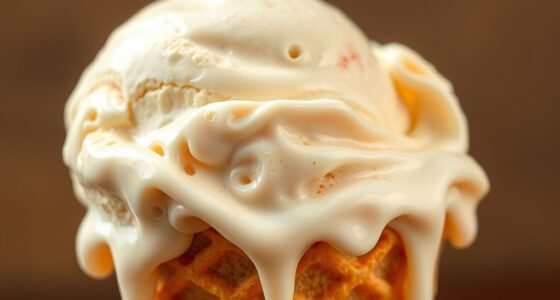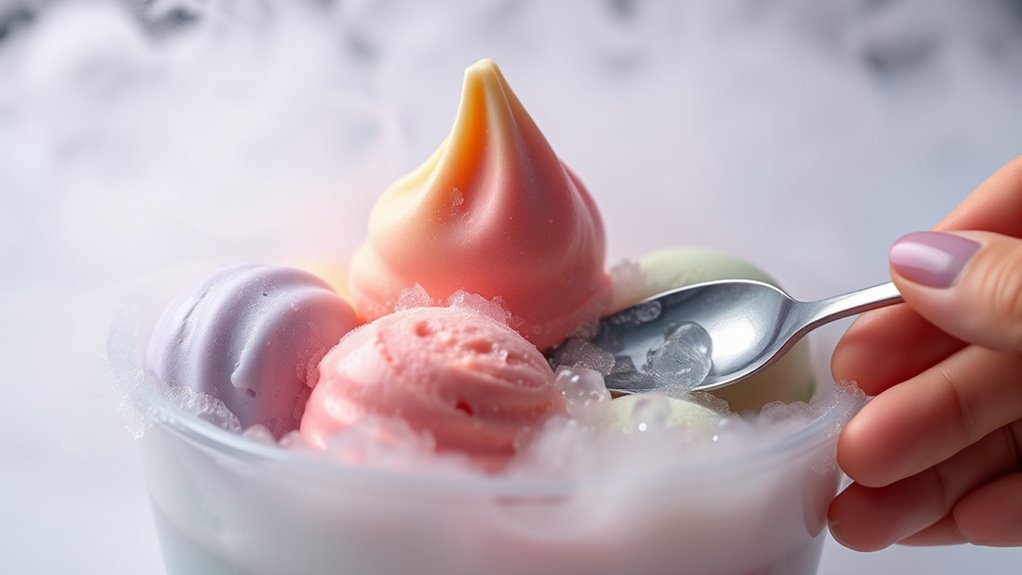

Liquid nitrogen ice cream is both a fun trend and a scientific marvel, combining entertainment with advanced culinary science. When prepared, it creates a dramatic fog-like effect and instantaneously cools ingredients, resulting in a smooth, velvety texture. This process showcases how science transforms a simple dessert into an interactive, visually stunning experience. If you’re curious about how this amazing technique works and what makes it so special, there’s much more to discover beyond the surface.
Key Takeaways
- Combines entertainment with scientific principles, making it both a fun trend and a demonstration of modern gastronomy.
- Uses rapid freezing with liquid nitrogen to create unique textures and visual fog effects, showcasing science in action.
- Enables flavor customization and infusion, highlighting scientific finesse in preserving and enhancing taste.
- Elevates traditional ice cream into an immersive, artistic experience through molecular gastronomy techniques.
- Appeals to both science enthusiasts and food lovers, bridging entertainment and scientific marvel in culinary innovation.
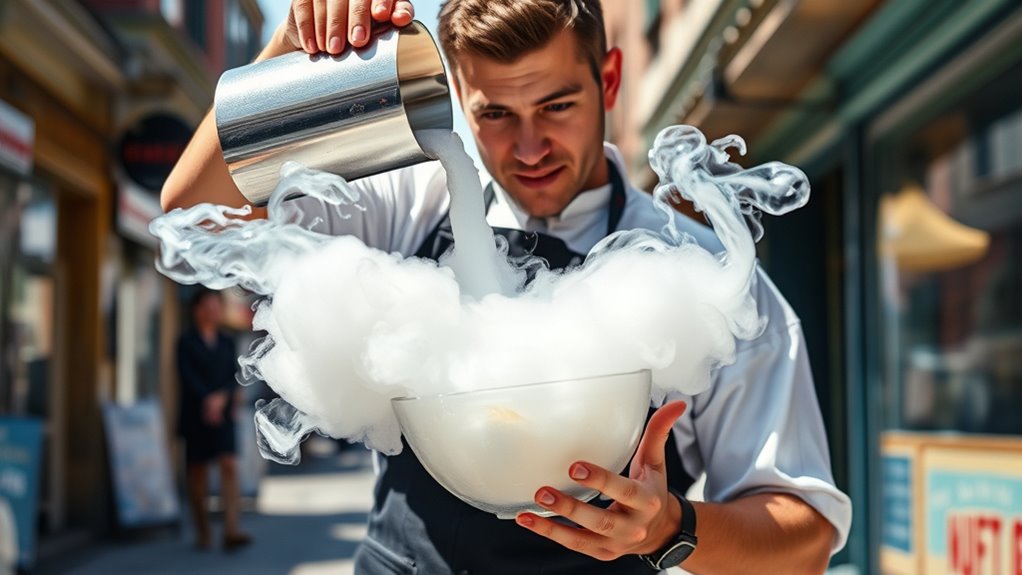
Have you ever wondered how ice cream can be made so quickly while creating a dramatic fog-like effect? That’s the magic of liquid nitrogen ice cream, a trending treat that’s both fun and scientifically fascinating. This method isn’t just about serving delicious frozen desserts; it’s a showcase of molecular gastronomy, where chefs push the boundaries of culinary innovation. By using liquid nitrogen, they transform simple ingredients into a cold, creamy delight within seconds, enthralling everyone watching.
When you see the fog swirling around the mixing bowl, it’s not just for show. This visual spectacle results from the rapid freezing process that liquid nitrogen facilitates. As it comes into contact with the cream or custard mixture, it instantly cools it down to sub-zero temperatures. This quick freezing prevents the formation of large ice crystals, giving the ice cream a smooth, velvety texture that’s hard to achieve with traditional methods. It’s this scientific precision that elevates liquid nitrogen ice cream from a novelty to a culinary marvel.
Using liquid nitrogen in ice cream making is a perfect example of how culinary innovation can merge science with art. Chefs and food scientists experiment with flavors, textures, and presentation, creating an interactive experience for diners. You become part of the spectacle, watching your ice cream being born right before your eyes. This process is not only about entertainment but also about understanding the science behind food. It’s a practical application of molecular gastronomy, where manipulating molecules and temperature results in unique textures and flavors.
Moreover, liquid nitrogen’s rapid freezing ability opens up new possibilities for flavor infusion. Since the process is so fast, ingredients like fruit purees, spices, or alcohol can be added just moments before serving, locking in vibrant flavors and aromas. This precision allows chefs to craft personalized, inventive desserts that delight the senses. You get to enjoy an ice cream that’s fresh, flavorful, and crafted with scientific finesse.
While some might see liquid nitrogen ice cream as a passing trend, it’s rooted in solid scientific principles and culinary innovation. It’s a perfect blend of entertainment and expertise, transforming a simple dessert into an immersive experience. Whether you’re a food lover or a science enthusiast, this method invites you to appreciate the artistry behind modern gastronomy. So, next time you indulge in this frozen wonder, remember that behind its creamy texture and theatrical fog lies a fascinating intersection of science and culinary creativity.
Frequently Asked Questions
Is Liquid Nitrogen Ice Cream Safe to Eat?
You might wonder if liquid nitrogen ice cream is safe to eat. It is, when prepared properly by professionals who follow strict food safety protocols. They guarantee ingredient purity and control nitrogen exposure, preventing any risk of burns or ingestion of unsafe amounts. As long as you get it from a reputable source, the nitrogen evaporates quickly and leaves behind a delicious, safe treat. Just avoid trying to make it yourself without proper knowledge.
How Long Does It Take to Make?
Imagine scooping velvety ice cream that’s whipped in just minutes, the cold fog swirling around you. It takes only about 5 to 10 minutes to make, blending instant texture comparison with flavor enhancement. You’ll notice how quickly the liquid nitrogen chills the mixture, creating a smooth, creamy consistency. This rapid process lets you enjoy fresh, flavorful ice cream in moments, making it as exciting to craft as it is to savor.
Can I Make It at Home?
You can definitely make liquid nitrogen ice cream at home with DIY methods, but it requires caution. You’ll need an appropriate container and safety gear, since liquid nitrogen is extremely cold. Ingredient substitutions, like regular milk or cream, work fine, but always follow safety guidelines. It’s a fun project that’s manageable with proper precautions, allowing you to enjoy a science-inspired treat safely and easily in your own kitchen.
What Are the Environmental Impacts?
You might wonder about the environmental concerns of using liquid nitrogen. While it’s generally safe and creates minimal waste, the production and transportation of nitrogen can impact sustainability. The energy used in generating liquid nitrogen influences its sustainability impact, especially if sourced from fossil fuels. To reduce environmental impacts, opt for local, sustainable sources when possible, and use nitrogen efficiently, supporting eco-friendly practices in your culinary adventures.
Does It Taste Different From Regular Ice Cream?
You might notice that liquid nitrogen ice cream offers a unique flavor enhancement, often making the taste richer and more intense. The texture differences are striking; it’s typically smoother and creamier, almost velvety. While the ingredients are similar to regular ice cream, the rapid freezing process creates these distinct qualities. Overall, it doesn’t taste drastically different but provides a fun, sensory experience that elevates the familiar flavors you love.
Conclusion
So, as you see, liquid nitrogen ice cream isn’t just a fleeting fad—it’s a fascinating fusion of fun and science. With its frosty flair and fiery flavor, it captures curiosity and creativity alike. Whether you’re craving cool comfort or a captivating culinary experience, this trend tantalizes taste buds and tickles the mind. Immerse yourself, discover, and delight in the daring dance of science and sweet sensation—because, after all, science makes sensations spectacular!