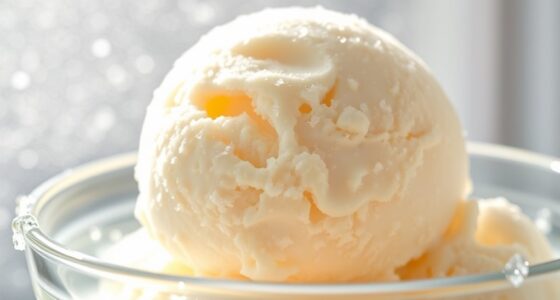
To make great gelato, focus on incorporating less air during churning to keep it dense and rich, while maintaining a balanced fat content (around 4-8%) so flavors remain vibrant and true to their character. Serve it slightly warmer, around 10-15°F, to enhance flavor release and smoothness. Mastering these elements results in a velvety, flavorful gelato with enhanced textures. Keep exploring these techniques to create the perfect frozen treat.
Key Takeaways
- Lower air (overrun) in gelato results in a denser, creamier texture with more intense flavors.
- Reduced fat content (4-8%) enhances flavor clarity and prevents muted tastes.
- Serving gelato at 10-15°F optimizes texture, aroma, and flavor release.
- Proper control of air, fat, and temperature ensures authentic, high-quality gelato.
- Adjusting these factors influences gelato’s richness, mouthfeel, and overall sensory experience.

Gelato science combines the art of traditional Italian craftsmanship with a deep understanding of food chemistry. When you aim for a denser, richer gelato, controlling air incorporation becomes essential. Unlike ice cream, which often contains a higher amount of air (overrun), gelato typically has lower air incorporation, resulting in a more compact and velvety texture. As you make gelato, you might notice that reducing the amount of air whipped into the mixture enhances its creaminess and intensity of flavor. Less air means you’re packing more flavor into each spoonful, making every bite feel more indulgent. This controlled air incorporation is achieved through careful churning, where you limit the amount of air whipped into the mixture, producing a denser product that’s truly satisfying. Additionally, proper churning speed and technique are crucial in maintaining this balance and achieving the desired texture.
Along with air incorporation, fat content plays a significant role in gelato’s texture and flavor profile. Unlike traditional ice creams that often have higher fat levels, gelato generally contains less fat—around 4-8%. This lower fat content allows the flavors to come through more sharply and makes the gelato feel lighter on your palate. When you adjust the fat content, you influence how the gelato melts and how the flavors disperse. Too much fat can make the texture overly creamy but can also mute the intensity of flavors, while too little might result in a less smooth mouthfeel. Striking the right balance guarantees your gelato feels rich but still fresh and vibrant.
Temperature also plays a critical role in serving and enjoying gelato at its best. Serving it at slightly warmer temperatures than ice cream—around 10-15°F—makes the texture softer and more aromatic. When you serve gelato too cold, it becomes firmer and dulls its flavors; too warm, and it risks melting too quickly. The ideal temperature enhances the gelato’s smoothness and flavor release, providing a more pleasurable experience. You’ll want to keep your gelato stored at suitable temperatures before serving, allowing it to soften just enough for that perfect scoop.
Understanding the science behind air incorporation, fat content, and temperature helps you create gelato that’s not only authentic but also tailored to your preferences. By controlling these factors, you can craft a product with a dense, flavorful profile and a satisfying mouthfeel. Controlling air directly impacts the texture and overall quality of your gelato, making it an essential aspect of the process. Whether you’re making gelato at home or working in a professional setting, paying attention to these details ensures you deliver a truly exceptional frozen treat every time.
Frequently Asked Questions
How Does Air Incorporation Affect Gelato Texture?
Air incorporation creates air bubble formation in gelato, which lightens its texture and enhances mouthfeel. When you add just the right amount of air, it results in a smoother, creamier feel that makes each spoonful more enjoyable. Too much air, however, can make it feel airy and less dense. By controlling air incorporation, you can tailor gelato’s texture to optimize mouthfeel and achieve that perfect, luscious consistency.
What Is the Ideal Serving Temperature for Gelato?
Think of the ideal serving temperature as the key to revealing gelato’s soul—around 10°F (-12°C)—where it reveals its true character. You should store gelato at slightly colder temperatures to preserve flavor and texture, then serve it just above freezing. This balance prevents melting and maintains its creamy consistency, allowing you to savor the richness fully. Proper temperature control guarantees your gelato remains a symphony of flavor and texture.
How Does Fat Content Influence Gelato Flavor?
Your gelato’s fat content directly affects its flavor. Higher fat levels increase fat intensity, which helps trap and release more flavor molecules. This results in a richer, more pronounced taste, while lower fat allows the flavors to stand out more clearly and feel lighter. By adjusting the fat content, you can control how intensely flavors are perceived and how they are released during each spoonful.
Why Is Low Air Volume Important in Gelato?
You want to understand why low air volume matters in gelato. By controlling air density, you guarantee the gelato has a denser texture, which enhances flavor retention. Less air means fewer air bubbles to dilute the taste, resulting in a richer, more intense flavor experience. This careful balance also improves the mouthfeel, making your gelato feel creamier and more authentic, perfect for savoring each delicious spoonful.
Can Gelato Be Stored at Home Without Losing Quality?
Yes, you can store gelato at home without losing much quality if you use proper preservation techniques. Keep it in an airtight container to prevent freezer burn and minimize air exposure. Store it at a consistent, cold temperature, ideally around -20°C. To serve, let it soften slightly for the best texture. By following these home storage tips, you can enjoy delicious gelato almost as fresh as when made.
Conclusion
By adjusting air content, fat levels, and serving temperature, you can truly master gelato’s unique texture and flavor. Did you know that gelato typically contains 25-30% less fat than ice cream, which lets its vibrant flavors shine through? Keep these science-backed tips in mind, and you’ll create gelato that’s irresistibly smooth, flavorful, and perfectly served every time. So, experiment and enjoy crafting your ideal gelato experience—science and taste are on your side!