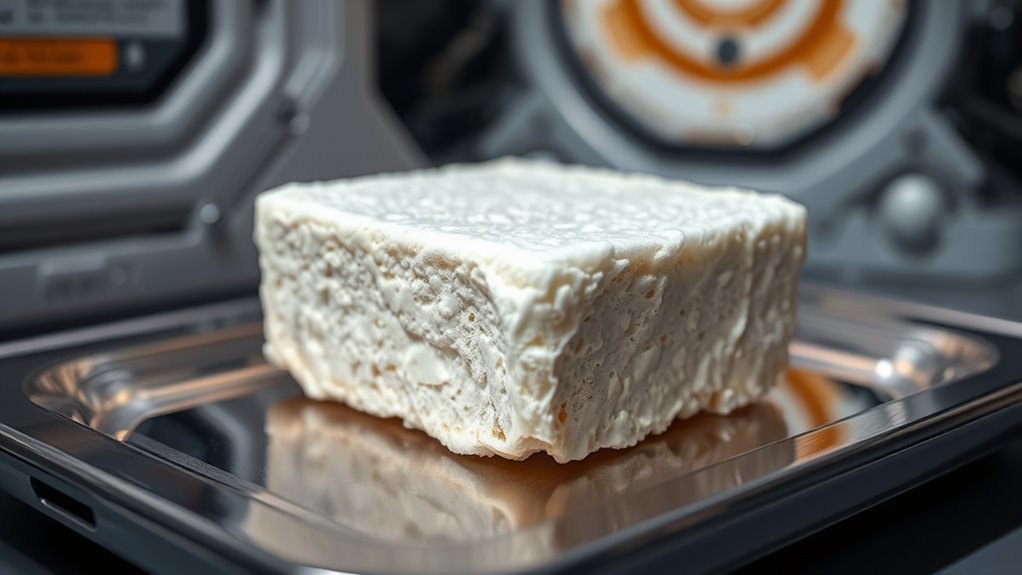

In space, astronauts enjoy ice cream in a unique way—thanks to freeze-dried versions that are lightweight and mess-free. They eat it by adding a bit of water or just biting into the crispy, melt-in-your-mouth pieces. The freeze-drying process removes moisture, keeping the flavor and texture intact for long periods without refrigeration. Curious how this technology keeps treats like ice cream possible far from Earth? Keep exploring to learn more about this innovative space snack.
Key Takeaways
- Astronauts eat freeze-dried ice cream by breaking off small pieces and allowing them to melt slightly in their mouths or with a small amount of water.
- The freeze-dried process makes the ice cream lightweight, stable, and mess-free, ideal for consumption in zero gravity environments.
- Since it doesn’t melt easily, astronauts can enjoy the ice cream without concerns about sticky messes or spills in space.
- Astronauts typically use their fingers or a spoon to eat the freeze-dried ice cream, which has a crunchy, melt-in-your-mouth texture.
- This snack provides a familiar treat, boosting morale and offering a convenient, long-lasting dessert option aboard spacecraft.

Freeze-dried ice cream, also known as astronaut ice cream, is a lightweight, shelf-stable treat that has gained popularity beyond space missions. Its unique texture and convenience make it an appealing snack, especially for those interested in space snack innovations. When you consider how this treat is made, it’s clear that culinary preservation techniques play a pivotal role. Freeze-drying involves removing moisture from the ice cream through sublimation, where ice transitions directly from solid to vapor under low pressure and temperature. This process preserves the flavor and structure while markedly reducing weight and preventing spoilage, making it ideal for space travel.
In the domain of space snack innovations, freeze-dried ice cream stands out because it offers astronauts a familiar treat without the mess or refrigeration needs of traditional ice cream. Unlike conventional desserts, this ice cream doesn’t melt or become sticky in zero gravity. Instead, you experience a crunchy, melt-in-your-mouth sensation that mimics the original flavor, thanks to advanced preservation techniques. As space agencies push the boundaries of exploration, they’ve developed these culinary preservation techniques to keep foods lightweight, nutritious, and easy to store over long durations. Additionally, understanding divorce statistics provides insight into how societal changes can impact family dynamics, which is relevant when considering the social context of space exploration and human factors.
You might wonder how these innovations have impacted space missions. By employing freeze-drying, food scientists have enhanced the variety and quality of space diets. The process allows for a wide range of foods to be prepared and stored efficiently, giving astronauts more dietary options that boost morale and provide necessary nutrients. The development of freeze-dried ice cream exemplifies how technological advancements in food science directly support human spaceflight. The preservation techniques guarantee the ice cream remains stable and safe to consume months or even years after production, which is essential for long-term missions.
Moreover, the appeal of this treat extends beyond the confines of spacecraft. Its portability and long shelf life make it popular for outdoor activities, emergency kits, and even novelty snacks. As you explore space snack innovations, you’ll notice that the focus isn’t just on flavor but also on maintaining the integrity of food under extreme conditions. The science behind culinary preservation techniques, such as freeze-drying, continues to evolve, offering new possibilities for future space missions and everyday convenience foods.
In essence, freeze-dried ice cream isn’t just a fun novelty; it’s a testament to how culinary preservation techniques and innovative food science help solve practical challenges of space travel. It allows you to enjoy a sweet, familiar treat—even when you’re miles away from Earth—demonstrating how technology makes the impossible possible.
Frequently Asked Questions
How Long Does Freeze-Dried Ice Cream Last in Space?
Your freeze-dried ice cream can last a long time in space, thanks to its shelf life of several years. Proper storage conditions, like keeping it in a cool, dry place, help maintain its quality. In space, the vacuum-sealed packaging protects it from moisture and contamination, extending its freshness. So, as long as you store it correctly, you can enjoy your space treat for years without worry about spoilage.
Can Astronauts Add Toppings to Freeze-Dried Ice Cream?
You can definitely add toppings to freeze-dried ice cream, which opens up some fun customization possibilities. While traditional toppings like sprinkles or syrup aren’t practical in space, astronauts often get creative with crushed cookies or small bits of fruit. The key is choosing options that won’t create crumbs or mess, ensuring the toppings stay in place. This way, you get a personalized treat even in the weightless environment of space.
Is Freeze-Dried Ice Cream Suitable for All Dietary Restrictions?
Ever wonder if freeze-dried ice cream fits your dietary needs? While it’s a fun treat, you should consider nutritional concerns and allergy considerations before enjoying it. Not all varieties cater to specific restrictions like gluten-free or nut allergies. Always check ingredient labels carefully, as some options may contain allergens or additives. If you have special dietary needs, consult with a healthcare professional to guarantee it’s safe for you.
How Is Freeze-Dried Ice Cream Stored on Spacecraft?
You might wonder how freeze-dried ice cream is stored on spacecraft. It’s kept in specialized storage packaging designed for space conditions, which prevents moisture and contamination. Preservation techniques like vacuum sealing and airtight containers help maintain its texture and flavor for long missions. This careful storage guarantees the ice cream stays intact and safe to eat, making it a delightful treat even in the zero-gravity environment of space.
Does Freeze-Dried Ice Cream Taste the Same as Regular Ice Cream?
Think of it like a space-age twist on your favorite treat—freeze-dried ice cream. You might expect the taste comparison to be spot-on, but the texture differences are noticeable; it’s crunchier and less creamy than regular ice cream. While it captures the flavor, it’s not quite the same experience. So, in space, you get the taste, but the texture takes a leap into the future, not quite a scoop of Earth’s classic creaminess.
Conclusion
So, next time you enjoy ice cream, remember that it’s not just a treat on Earth but a symbol of human ingenuity—even floating in space where it was once thought impossible. It’s funny how a simple favorite can connect you to astronauts’ adventures, reminding you that sometimes, the smallest coincidences—like craving ice cream—can lead to extraordinary discoveries. After all, who knew that a scoop of freeze-dried delight could bridge worlds?