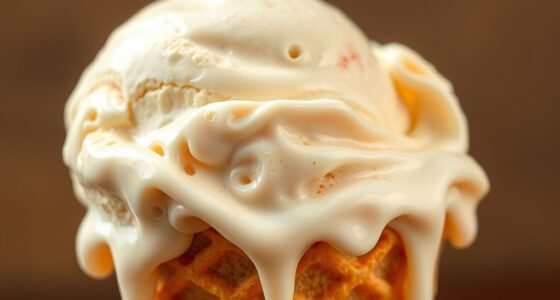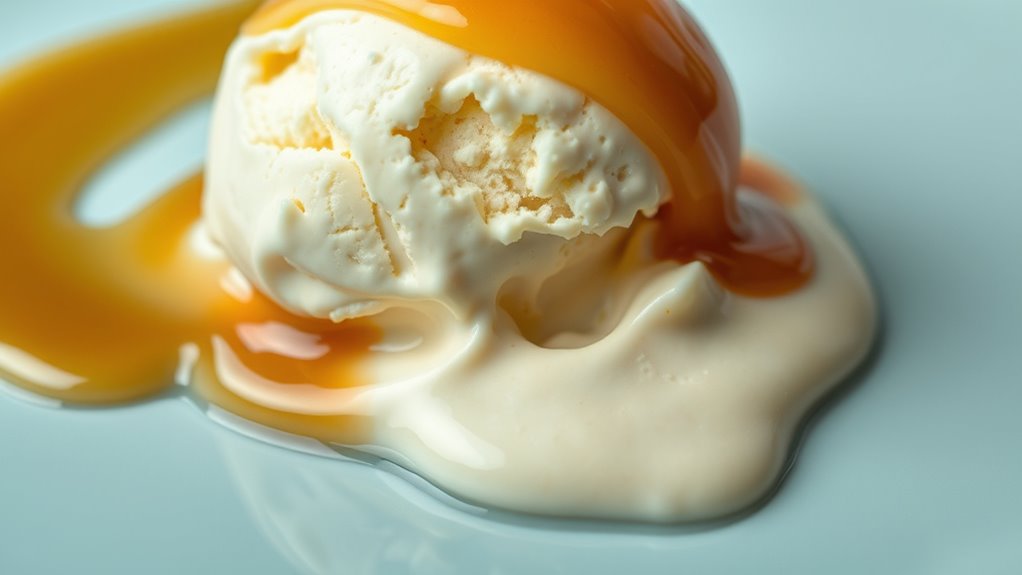

As ice cream warms, the fat melts, freeing up flavor compounds trapped in the cold. This melting process allows more fat-soluble molecules to dissolve and reach your taste buds and nose, making the flavor richer and more complex. When cold, fat stays solid, limiting flavor release and dulling taste. By understanding this, you’ll discover how temperature influences flavor sensations and why your favorite ice cream tastes even better as it softens. Continue to explore for more insights.
Key Takeaways
- Warmer temperatures melt ice cream fat, increasing its ability to dissolve and release flavor compounds.
- Melting fat enhances the mobility of flavor molecules, making taste sensations more vibrant.
- Cold ice cream restricts fat solubility, resulting in less flavor release and a flatter taste experience.
- Temperature elevation improves flavor perception by facilitating better transfer of aroma and taste compounds.
- Softening ice cream allows a fuller expression of its flavors due to improved fat and flavor molecule interactions.
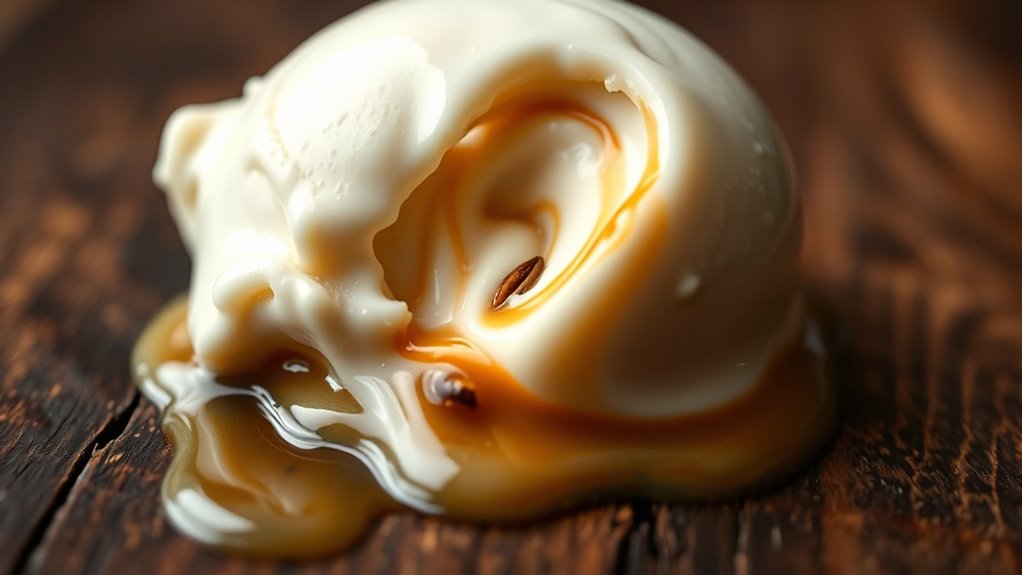
Fat plays a essential role in flavor release, acting as a carrier that helps deliver and enhance taste sensations. When you take a bite of ice cream, the fat in it interacts with your sensory perception, making the flavors more vivid and complex. This is because many of the compounds responsible for aroma and taste are fat soluble, meaning they dissolve readily in fat rather than water. As a result, fat helps carry these compounds to your olfactory receptors and taste buds, intensifying the overall flavor experience. Without enough fat, some of these flavor molecules wouldn’t reach your senses effectively, and the ice cream would taste flatter or less nuanced.
Fat acts as a carrier, enhancing and delivering flavor by dissolving fat-soluble compounds for a richer taste experience.
When you enjoy ice cream cold, the fat’s ability to release these flavor compounds is limited. Cold temperatures cause fat to solidify, restricting its capacity to act as a solvent for fat-soluble compounds. This means that your sensory perception is somewhat muted because fewer flavor molecules are released into the air or onto your taste receptors. That’s why cold ice cream often tastes less intense than when it’s warmer. As the temperature rises, the fat begins to melt, becoming more fluid and capable of solubilizing a greater amount of flavor compounds. This melting process releases more of these fat-soluble molecules, allowing your senses to pick up on a richer, more vibrant flavor profile.
Furthermore, the change in temperature influences how these compounds are perceived. At warmer temperatures, the increased mobility of fat molecules allows them to carry aromatic and flavor molecules more efficiently to your nose and tongue. This heightened transfer enhances the sensory perception, making the flavors seem more pronounced and complex. Conversely, when ice cream is frozen, the limited mobility of fat restricts this process, dulling the flavor experience. That’s why many people prefer their ice cream slightly softened—they get a better flavor release due to the increased melting of fat and the greater availability of fat-soluble compounds.
In addition, the texture of ice cream also influences how these flavor compounds are released and perceived.
In essence, fat’s role in flavor release isn’t just about richness or texture; it’s fundamental to how you perceive taste and aroma. The melting of fat at warmer temperatures unlocks a treasure trove of flavor molecules, bringing out the full spectrum of the ice cream’s taste. So, next time you enjoy a scoop, notice how the flavor changes as it warms up—thanks to fat’s unique ability to carry and release those crucial fat-soluble compounds that define the ice cream’s deliciousness.
Frequently Asked Questions
How Does Fat Content Influence Ice Cream Flavor Perception?
Fat content greatly influences your ice cream flavor perception by enhancing the release of fat-soluble flavors in your mouth. Higher fat levels improve mouthfeel, making the ice cream creamier and richer, which intensifies flavor experience. Fat acts as a carrier for these flavors, so when warm, you’ll notice a more pronounced taste and smoother texture. Fundamentally, more fat boosts flavor perception and mouthfeel influence, creating a more satisfying ice cream experience.
Can Temperature Changes Affect Ice Cream Texture and Creaminess?
Think of temperature as a conductor in your sensory symphony; it guides the texture alteration in your ice cream. When warm, ice cream melts slightly, making it feel less creamy and more liquid, altering your sensory experience. Conversely, colder temperatures keep it firm, preserving that luscious creaminess. So, yes, temperature changes directly influence ice cream’s texture, impacting how you perceive its richness and smoothness with every bite.
Why Does Ice Cream Taste Different After Melting?
When ice cream melts, its flavor changes because melting alters flavor diffusion, allowing different compounds to be released at varying rates. This impacts your sensory perception, making the taste seem more intense or different. As the ice cream shifts from solid to liquid, the way flavors disperse shifts, often highlighting sweeter or richer notes. So, melting modifies how your senses experience the flavor, giving you a noticeably different taste.
What Role Do Emulsifiers Play in Flavor Release?
Emulsifiers help by improving stability and enabling flavor encapsulation in ice cream. They create a uniform mixture, preventing separation, so your taste buds experience consistent flavor release. When ice cream warms, emulsifiers facilitate the controlled release of flavors, ensuring you still enjoy a rich, balanced taste. This process enhances the overall flavor experience, making sure that even as the ice cream melts, the flavors remain vibrant and well-rounded.
How Do Fat Globules Interact With Flavor Compounds During Storage?
During storage, fat globules engage in fat flavor interactions that influence flavor stability. As storage progresses, globule dissolution dynamics change, releasing flavor compounds gradually. You’ll notice that fats act as reservoirs, slowly releasing flavors over time, which impacts the overall taste when you eat the ice cream. This ongoing interaction determines how intensely flavors are perceived and how they evolve, especially when the ice cream warms up or melts.
Conclusion
So, next time you enjoy warm ice cream, remember that the flavor you experience is more than just taste—it’s science. The fat in ice cream holds onto flavors, releasing them differently as it warms, changing how you perceive each bite. It’s a reminder that even the simplest pleasures, like a scoop of ice cream, are deeply connected to complex chemistry. Sometimes, understanding what’s behind the flavor makes the experience all the more delightful.