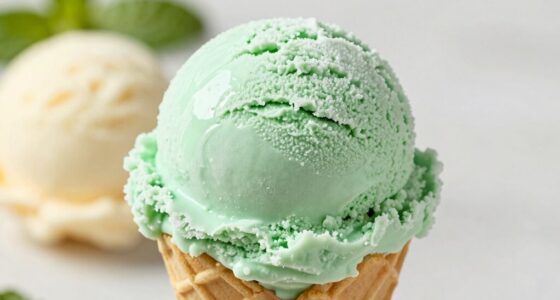
When you increase the churning speed, you create smaller ice crystals, resulting in a smoother, creamier texture. Slower speeds allow larger ice crystals to form, making your ice cream feel icy and grainy. Finding the right balance controls both ice crystal size and air incorporation, giving you a light, fluffy, and satisfying product. If you want to learn how adjusting speed affects every step of the process, keep exploring what influences ice cream quality.
Key Takeaways
- Higher churning speeds create smaller ice crystals, resulting in a smoother, creamier ice cream texture.
- Slower churning allows larger ice crystals to form, leading to a grittier or icy mouthfeel.
- Faster speeds incorporate more air (overrun), making ice cream lighter and fluffier.
- Maintaining optimal churning speed balances ice crystal size and air content for ideal texture.
- Excessively high speeds can cause over-aeration, while too slow speeds produce coarse, icy texture.
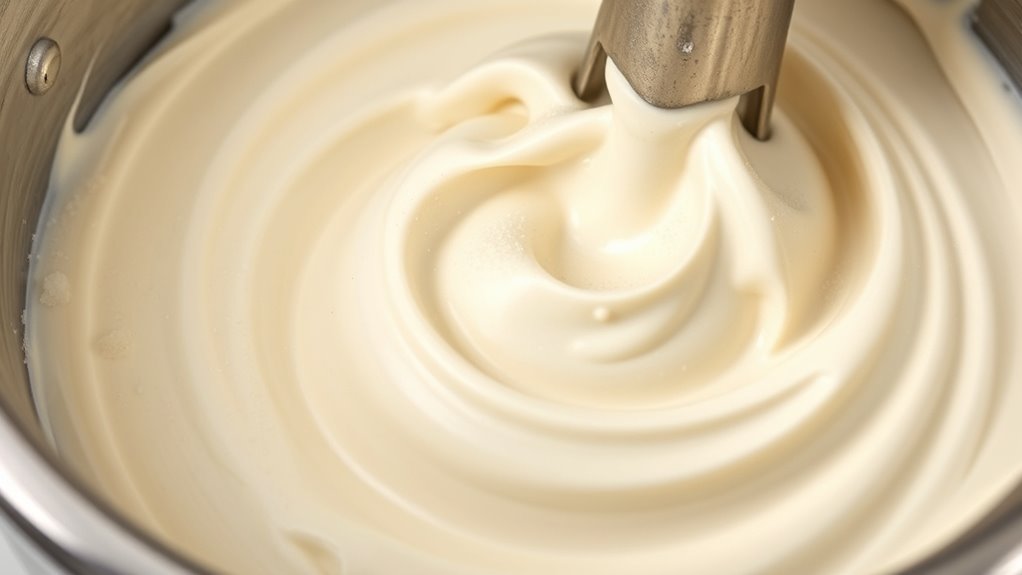
Have you ever wondered how churning speed affects the texture of your ice cream? The answer lies in the stirring dynamics that unfold during the freezing process. When you turn on the ice cream maker, you’re controlling how quickly the mixture spins around. This speed directly influences how the ingredients mix and how ice crystals develop, which ultimately determines whether your ice cream turns out creamy or icy.
At higher churning speeds, the mixture experiences more vigorous stirring, which prevents large ice crystals from forming. The rapid movement keeps the water molecules in constant motion, breaking up and dispersing any forming ice crystals into tiny fragments. This process results in a smoother, more velvety texture because smaller ice crystals are less noticeable when you take a bite. Think of it like stirring a thick batter; the more you stir, the more evenly everything combines, and the less likely you are to end up with clumps or grainy parts. In ice cream, this means a finer ice crystal formation that feels luxurious on your palate.
On the other hand, if you churn at a slower speed, the stirring dynamics change, allowing ice crystals to grow larger. When the movement isn’t vigorous enough, water molecules have more time to coalesce into bigger crystals before they get broken apart. These larger crystals create a gritty or icy sensation, which can make your ice cream less enjoyable. You might notice that slow churning produces a more granular texture, especially if the mixture isn’t cooled or stirred properly throughout the process. So, maintaining an ideal speed is crucial to control ice crystal formation and ensure your ice cream’s smoothness.
Additionally, churning speed impacts the air incorporation into your ice cream, known as overrun. Faster speeds often trap more air, giving the ice cream a lighter, fluffier feel. Conversely, slower churning might produce a denser, heavier product. Both effects are tied to stirring dynamics, which influence not only the ice crystal size but also the overall mouthfeel. The key is finding a balance: too fast, and you risk over-aerating; too slow, and the ice crystals become too large.
Frequently Asked Questions
How Does Churning Speed Influence Ice Cream Flavor Development?
Your churning speed directly impacts flavor development in ice cream. Faster churning enhances flavor extraction from ingredients and promotes aroma development, making each bite more vibrant. It helps evenly distribute mix-ins and air, which amplifies the overall taste experience. If you churn too slowly, flavor compounds may not fully develop or spread, resulting in a less rich taste. So, controlling churning speed is key to optimizing both flavor and aroma in your ice cream.
Can Slow Churning Improve Ice Cream’s Nutritional Content?
Sure, slowing down might seem like a genius way to boost nutritional enhancement, but don’t get your hopes too high. While gentle churning can help preserve delicate ingredients and reduce heat damage, it’s not a miracle worker. You’ll still need quality ingredients and proper processing. So, if you’re after better nutrition, focus on ingredient preservation techniques rather than just slowing down the churn—because sometimes, slow isn’t always better.
What Equipment Settings Optimize Churning for Different Ice Cream Recipes?
You should adjust your equipment settings based on your ice cream recipe to optimize mixing consistency and freezing duration. For a smooth, creamy texture, set the churning speed to balance thorough mixing without overworking the mixture. Slower speeds create a softer ice cream, while faster speeds promote better air incorporation. Keep an eye on freezing duration to prevent overfreezing, which can lead to a grainy texture. Experiment to find the perfect balance for each recipe.
Does Churning Speed Affect the Melting Point of Ice Cream?
Churning speed doesn’t directly alter the melting point of your ice cream, but it influences heat transfer during freezing. Faster churning introduces more air and distributes cold more evenly, which can help prevent uneven melting. Slower speeds may cause localized heat buildup, slightly raising the melting point in those areas. Overall, consistent churning ensures better heat transfer, resulting in a smoother texture that resists melting longer.
How Does Ambient Temperature Impact the Ideal Churning Speed?
Imagine a warm summer day, where ambient temperature effects your ice cream’s texture. You notice it melts faster outside, so you need to adjust churning speed accordingly. Higher ambient temperatures demand a slower churning rate to prevent over-softening, while cooler environments allow faster churning. Refrigeration impact plays a role, too, helping maintain ideal consistency. By matching churning speed to ambient temperature, you create perfectly textured ice cream every time.
Conclusion
So, next time you savor that creamy scoop, remember that churning speed is like the maestro of ice cream’s symphony. Faster churning whips air into your treat, making it lighter and fluffier, while slower speeds give you a denser, richer experience. Think of it as tuning a guitar—you control the harmony of texture. Master the speed, and you’ll be the conductor of perfect ice cream every time, turning simple ingredients into a masterpiece.