Chewy ice cream happens when temperature fluctuations cause ice crystals to grow, damaging its smooth texture. If it’s stored improperly or repeatedly thawed and refrozen, large crystals form, making the ice cream gritty and chewy. Overfreezing can also harden it excessively. To keep your ice cream creamy and avoid chewiness, you need to understand how storage affects its texture and what steps you can take. Keep exploring for tips to prevent this issue.
Key Takeaways
- Temperature fluctuations during storage cause ice crystal growth, resulting in a chewy or gritty texture.
- Repeated freezing and thawing create large ice crystals that disrupt smoothness.
- Improper packaging or exposure to air accelerates moisture transfer and texture deterioration.
- Overfreezing leads to larger ice crystals and a grainy, chewy mouthfeel.
- Long-term storage and inconsistent freezer temperatures promote crystal growth and chewiness.
Why Does My Ice Cream Turn Chewy in the Freezer?
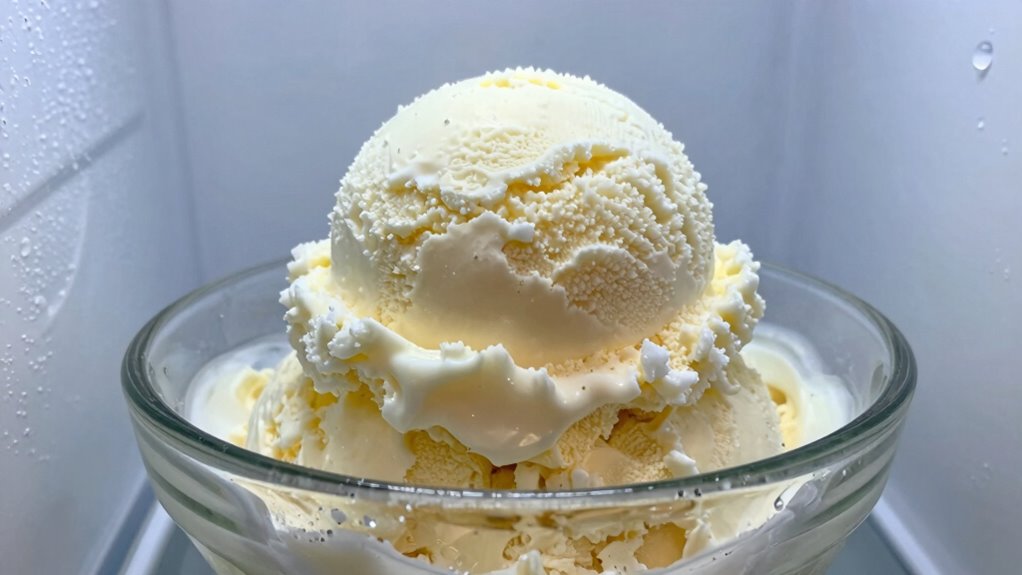
When ice cream turns chewy in the freezer, it’s usually because it has undergone changes in its texture due to improper storage or temperature fluctuations. One key factor is sugar crystallization, which occurs when the sugar molecules form larger crystals, making the texture gritty and chewy. Additionally, fat separation can happen when the fat separates from the rest of the mixture, creating a greasy or rubbery feel. These changes often happen if the ice cream is stored at inconsistent temperatures or left exposed to air for too long. To prevent this, keep your ice cream tightly sealed and at a consistent freezing temperature. Proper storage helps maintain its smooth, creamy texture and avoids that undesirable chewy consistency. Moreover, understanding how crystal growth impacts overall quality can help you better appreciate the importance of consistent freezer temperatures in preserving texture. Effective temperature control is essential to prevent the formation of large ice crystals and preserve the ice cream’s ideal mouthfeel. Maintaining a stable temperature also reduces the risk of ice crystal formation, which directly influences texture and quality over time. Recognizing the role of freezer conditions can further assist in avoiding texture issues and ensuring your ice cream remains enjoyable.
How Freezing and Temperature Fluctuations Change Ice Cream Texture

Temperature fluctuations cause ice cream’s texture to change because they repeatedly freeze and thaw the mixture, disrupting its smooth consistency. When your freezer isn’t well-managed, these shifts can cause ice crystals to form unevenly, leading to a grainy or chewy texture. This uneven crystallization can also cause ice crystal growth, which further impacts the mouthfeel and overall quality. Over time, these changes can lead to a noticeable decline in the freshness and flavor intensity of your ice cream. Proper freezer temperature management keeps ice cream consistently cold, preventing unwanted texture changes. To maintain ideal quality, avoid frequent opening and closing of your freezer, which can cause temperature swings. Keep your freezer at a steady -18°C (0°F). Here are some key factors:
Temperature fluctuations lead to grainy, chewy ice cream by disrupting its smooth, creamy texture.
- Inconsistent freezer temperatures
- Frequent door openings
- Long storage periods
- Improper packaging
- Temperature fluctuations during defrost cycles
Temperature fluctuations can also accelerate the formation of ice crystals, further impacting texture and flavor. Maintaining consistent temperatures is essential for preserving ice cream’s quality over time. Additionally, using proper storage techniques helps maintain a stable environment that preserves ice cream’s quality over time.
How Ice Crystal Growth Makes Ice Cream Chewy
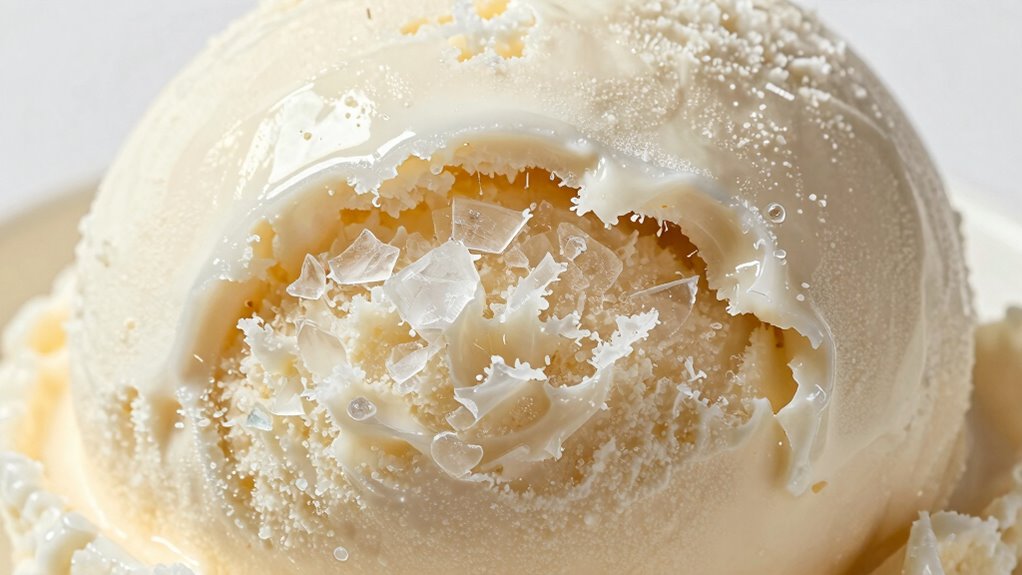
As ice crystals in your freezer grow larger over time, they directly impact the texture of your ice cream, making it chewier and less smooth. Larger ice crystal size creates a gritty mouthfeel and disrupts the creamy consistency you expect. This growth occurs because, during storage, small ice crystals can merge through a process called crystal coalescence, especially if temperature fluctuations happen. Additionally, sugar crystallization can contribute to this change by affecting the solution’s viscosity, encouraging crystals to grow. When the sugar isn’t evenly distributed, it can lead to uneven ice crystal formation and growth. Temperature fluctuations promote ice crystal growth more rapidly, making consistent storage crucial. Proper storage techniques, such as maintaining a consistent temperature, can help prevent ice crystal growth and preserve the ideal texture. Using specialized freezer containers or keeping ice cream in the coldest part of the freezer can also minimize crystal coalescence and maintain quality. Additionally, understanding the net worth of your freezer setup can help you invest in quality storage solutions that better protect your ice cream. Maintaining appropriate storage conditions is essential for preventing unwanted ice crystal growth and ensuring a smooth, creamy texture. As a result, your once-smooth ice cream becomes chewy and icy, losing its ideal texture. Managing ice crystal size and sugar crystallization is key to preserving that creamy, enjoyable experience.
What Overfreezing Does to Your Ice Cream’s Texture
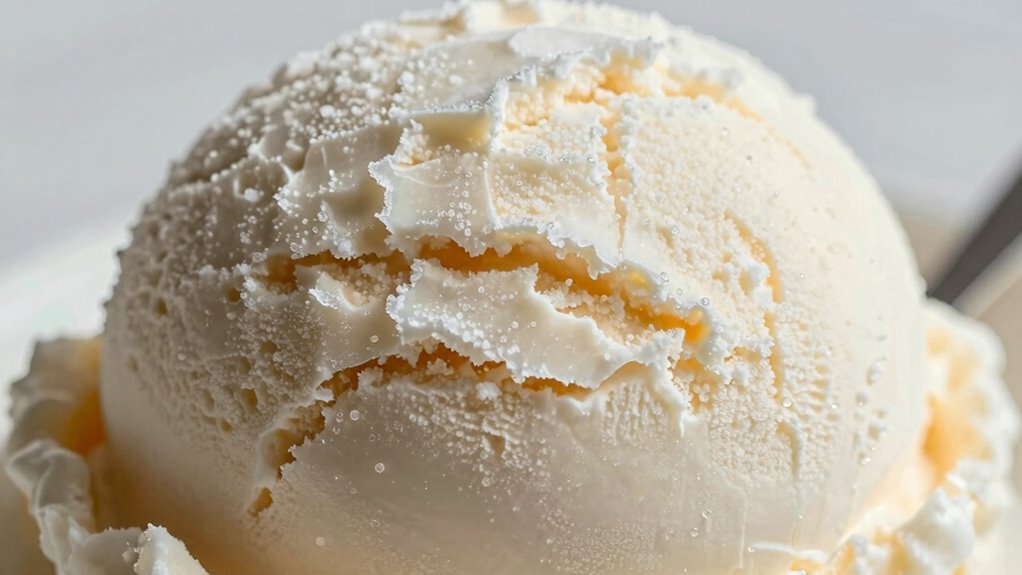
Overfreezing your ice cream causes the texture to become excessively hard and icy, which can ruin the enjoyable, creamy experience you expect. When it’s overfrozen, the delicate balance of ice cream emulsification breaks down, leading to larger ice crystals and a grainy feel. This also hampers flavor preservation, making the taste dull or stale. Additionally, the formation of larger ice crystals can be influenced by sound vibrations, which may subtly affect how ice crystals grow during freezing. You might notice: – A gritty, coarse texture instead of smoothness – Reduced creaminess and mouthfeel – Increased ice crystal size, leading to icy patches – Loss of flavor intensity due to uneven distribution – Difficulties scooping because of excessive hardness Understanding overfreezing helps you avoid these issues, ensuring your ice cream stays creamy, flavorful, and enjoyable every time. Recognizing the freezing process can also help you optimize storage conditions for better texture.
How Storage Time Affects Ice Cream Quality and Texture

The longer ice cream sits in your freezer, the more its quality and texture can decline, even if it remains properly stored at freezing temperatures. Storage duration directly impacts ice cream’s freshness; over time, freezer aging causes ice crystals to grow larger, making the texture icier and less smooth. Extended storage can also lead to flavor loss and a duller taste. As ice cream ages, it may develop a chewy or grainy consistency, especially if moisture interacts with the fat and sugar. To preserve ideal quality, it’s best to consume ice cream within a few months of purchase. Proper packaging and minimizing temperature fluctuations can slow freezer aging, but ultimately, the longer you store ice cream, the more its texture and flavor suffer. Proper storage techniques can help maintain ice cream’s quality longer, but they cannot completely prevent texture changes over extended periods.
Tips to Prevent Chewy Ice Cream When Freezing at Home

To prevent chewy ice cream when freezing at home, proper storage and maintaining consistent temperatures are vital. Rapid freezing helps reduce sugar crystallization, which can lead to a gritty texture. Make certain your freezer stays at or below 0°F (–18°C) to keep ice crystals small and prevent texture changes. Use airtight containers to minimize flavor absorption from other foods and avoid freezer burn. Consider layering plastic wrap directly on the surface of the ice cream before sealing. Avoid opening the freezer frequently, as temperature fluctuations can cause ice crystals to grow. Additionally, storing ice cream in small portions prevents prolonged exposure to temperature changes, maintaining its creamy consistency. Proper storage techniques and choosing the right containers help reduce moisture exposure and preserve quality. Incorporating freezing practices like rapid freezing and consistent temperatures ensures you enjoy smooth, scoopable ice cream without unwanted chewiness. Maintaining proper temperature control is crucial for preserving the ideal texture and preventing the formation of large ice crystals that lead to chewiness. Ensuring temperature stability during storage is also essential to prevent ice crystal growth and texture deterioration over time.
How to Thaw and Serve Ice Cream for Best Creaminess

For the best creamy texture, it’s essential to thaw ice cream properly before serving. Remove it from the freezer and let it sit at room temperature for about 5-10 minutes. This softens the ice cream enough to scoop easily without melting it completely. Use a warm spoon or scoop to serve, which helps create smooth servings. Consider adding your favorite ice cream toppings, like fresh fruit, chocolate syrup, or nuts, right after scooping to enhance flavor and presentation. For serving suggestions, pair it with a waffle cone or a sundae cup for a classic look. Avoid microwaving or overly thawing, as this can cause ice crystals and compromise creaminess. Proper thawing guarantees every spoonful stays smooth and delicious.
Troubleshooting Chewy Ice Cream: Causes and Fixes
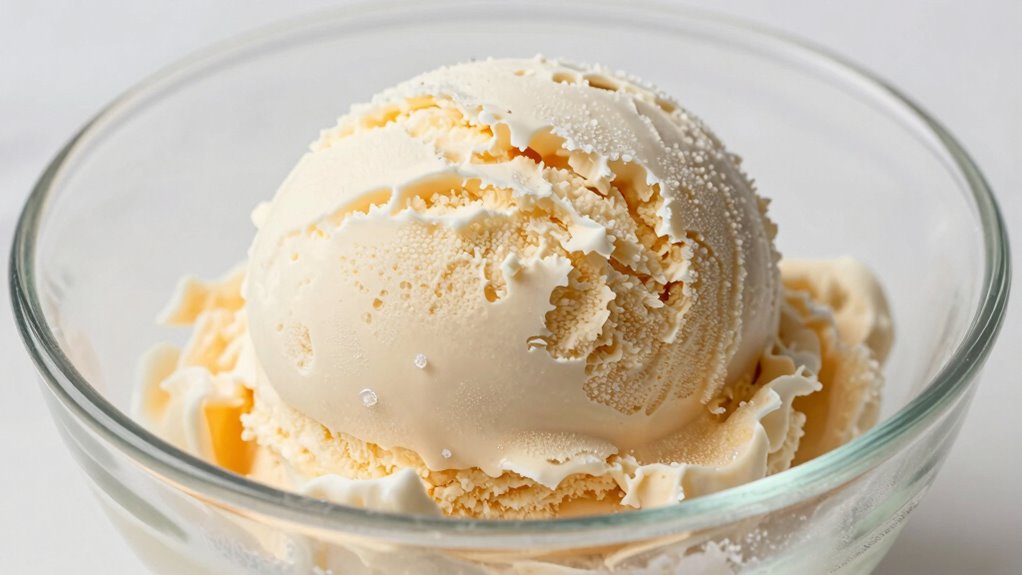
If your ice cream turns out chewy instead of smooth, several factors could be at play. One common cause is flavor degradation, which can alter texture and mouthfeel. Additionally, using incompatible containers may lead to moisture transfer, causing ice crystals and a chewy texture. Temperature fluctuations also contribute, as repeated freezing and thawing create large ice crystals. To fix this, verify your storage container is freezer-safe and airtight to prevent moisture exchange. Avoid overfreezing your ice cream, which can cause excessive ice crystal formation. Keep the freezer at a consistent temperature, ideally 0°F (-18°C). Properly sealing the container and limiting exposure to air helps preserve flavor and texture. Addressing these issues can restore your ice cream’s smooth, creamy consistency.
Frequently Asked Questions
Can Additives or Preservatives Influence Ice Cream’s Texture After Freezing?
Additives and preservatives can influence ice cream’s texture after freezing by affecting its structure and moisture content. Additive effects, like stabilizers or emulsifiers, help maintain smoothness and prevent ice crystal growth, while preservative influence can sometimes cause ice cream to become chewier or harder over time. If these ingredients aren’t balanced properly, they might alter how your ice cream feels, making it less creamy and more rubbery than you’d like.
Does the Type of Container Affect Ice Cream’s Tendency to Become Chewy?
Your choice of container material and storage temperature directly impact your ice cream’s texture. Using a plastic or airtight container helps prevent moisture loss and reduces ice crystal formation, keeping it smooth. Proper storage temperature guarantees it stays consistently cold without becoming too hard or chewy. When you select the right container and maintain a steady freezer temperature, you’ll enjoy creamy ice cream every time, free from unwanted chewiness.
How Does the Fat Content Impact Ice Cream’s Texture Over Time?
Higher fat content helps maintain ice cream’s smooth texture over time by limiting fat crystallization and enhancing emulsion stability. When fat levels are low, ice crystals form more easily, making the ice cream chewier and icier. You’ll notice that premium ice creams with more fat stay creamier longer, as the fats act as a barrier against ice crystal growth, keeping your treat velvety and enjoyable even after extended storage.
Is Homemade Ice Cream More Prone to Becoming Chewy Than Store-Bought?
Homemade ice cream is more prone to becoming chewy than store-bought because it often lacks the stabilizers and emulsifiers that help maintain texture consistency. When you make it at home, it tends to develop ice crystals faster, leading to a chewier texture. Store-bought ice cream is designed for longer storage and smoother consistency, so it generally stays softer and less chewy over time.
Can Mixing or Stirring Ice Cream During Freezing Prevent Chewiness?
Think of stirring your ice cream like conducting an orchestra, keeping the harmony smooth. Mixing during freezing slows down ice crystal formation, preventing those pesky texture changes that turn your treat chewy. Every gentle stir breaks up forming crystals, ensuring a creamy, soft consistency. Yes, stirring can prevent chewiness, helping your ice cream stay luscious and scoopable, rather than becoming a frozen, chewy mess. Keep the rhythm, and enjoy perfect texture every time.
Conclusion
Understanding why your ice cream becomes chewy helps you prevent it. Keep in mind, ice crystals grow larger over time, affecting texture—about 20% of freezer-damaged ice cream is due to improper storage. By controlling temperature and limiting freeze-thaw cycles, you can enjoy smooth, creamy ice cream every time. So, store it properly and serve it at the right temperature to savor that perfect scoop. Your taste buds will thank you!