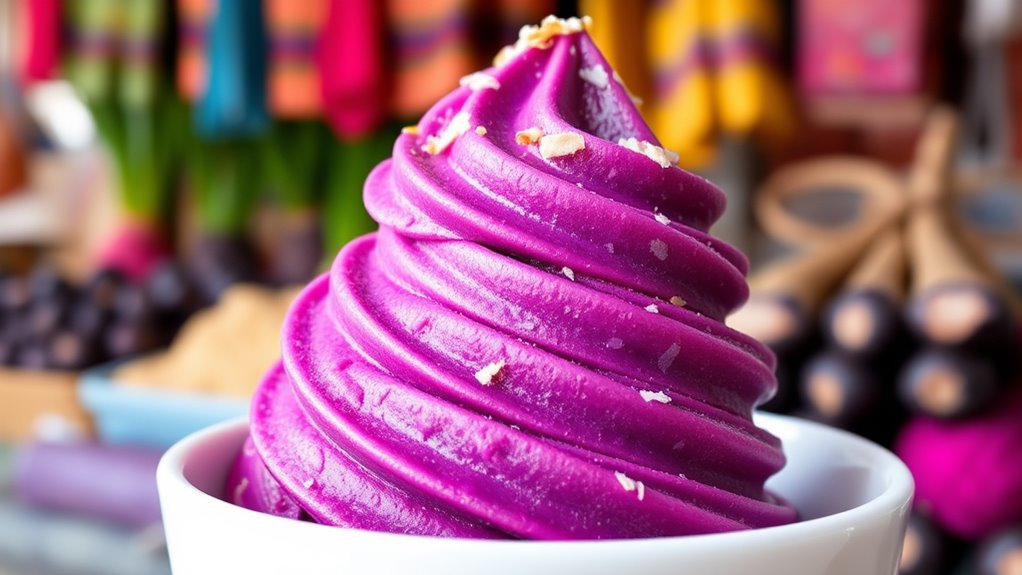

Ube ice cream is a vibrant purple treat that highlights Filipino pride and tradition. Its nutty, earthy flavor and smooth texture make it a popular choice worldwide. The deep purple color symbolizes royalty and resilience in Filipino culture, making each scoop more than just a dessert—it’s a cultural statement. From festivals to everyday enjoyment, ube connects you to generations of Filipino history. If you keep exploring, you’ll discover even more about its rich cultural significance.
Key Takeaways
- Ube ice cream is a Filipino dessert made from purple yam, symbolizing cultural pride and heritage.
- Its vibrant purple color and sweet, earthy flavor reflect Filipino tradition and identity.
- Traditionally enjoyed during festivals and special occasions, it embodies resilience and cultural significance.
- The dessert’s popularity has grown worldwide, showcasing Filipino creativity and culinary innovation.
- Ube ice cream offers a rich, creamy texture with natural sweetness, making it a memorable symbol of Filipino pride.
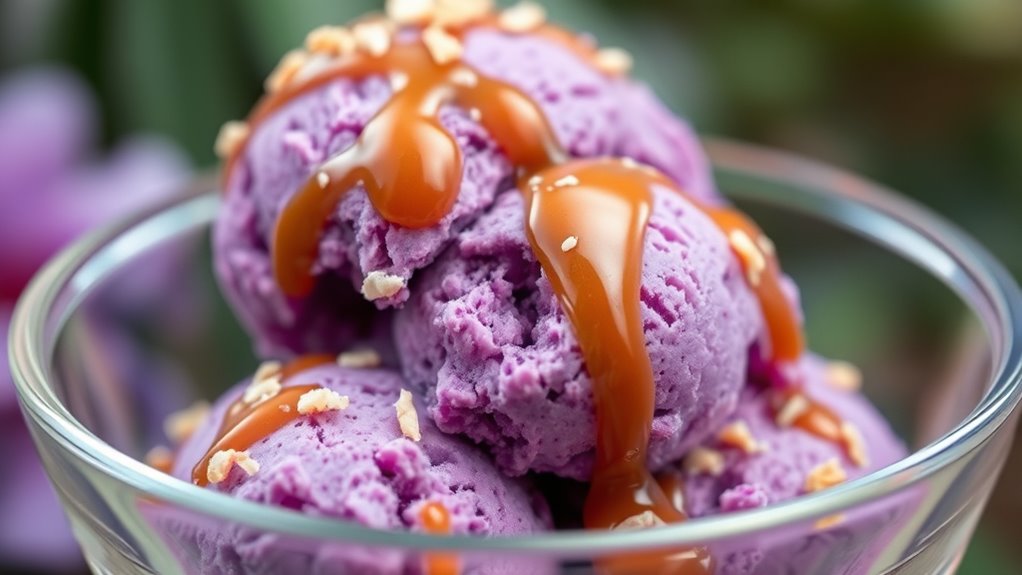
Have you ever tasted the vibrant, purple delight known as ube ice cream? If not, you’re missing out on a dessert that’s as visually striking as it is delicious. Ube, a purple yam native to the Philippines, holds a special place in Filipino culture, and its ice cream isn’t just a treat — it’s a symbol of tradition and pride. When you take a spoonful, you’re experiencing more than just a sweet flavor; you’re connecting with centuries of cultural significance. Ube has been used in Filipino cuisine for generations, appearing in everything from pastries to rice cakes. Its deep purple hue isn’t just for show; it reflects the rich history and identity of the Filipino people. This cultural importance makes ube ice cream a meaningful choice for those wanting to enjoy Filipino heritage in a simple, delicious form.
The flavor profile of ube ice cream is uniquely mesmerizing. It combines a sweet, nutty taste with a subtly earthy undertone, reminiscent of sweet potatoes but with a more complex, aromatic quality. The natural sweetness of the ube makes the ice cream rich and creamy without needing too much added sugar. You’ll notice hints of vanilla or coconut sometimes mixed in, enhancing the overall flavor experience. The purple yam’s smooth, velvety texture melts easily on your tongue, inviting you to savor every bite. This flavor profile is both comforting and exotic, making it a favorite among locals and visitors alike. Its distinctive taste pairs well with tropical fruits, sweet beans, or even just a simple drizzle of caramel, allowing you to customize your dessert experience. Additionally, collagen and hyaluronic acid are often incorporated into modern recipes to boost the health benefits of ube ice cream, making it not only delicious but also nourishing.
When you indulge in ube ice cream, you’re not only treating yourself to a creamy, flavorful dessert, but you’re also celebrating a cultural treasure. The vibrant purple color is eye-catching and symbolizes royalty and pride in Filipino culture. It’s often used during festivals and special occasions, emphasizing its importance in community celebrations. The popularity of ube ice cream has grown worldwide, but eating it still connects you to the Philippines’ rich culinary history. From its roots as a traditional ingredient to its status as a modern international favorite, ube ice cream embodies the spirit of Filipino resilience and creativity. Every scoop is a taste of history, heritage, and a vibrant culture that’s proud to share its purple pride with the world.
Frequently Asked Questions
What Is the History of Ube Ice Cream in Filipino Culture?
You might find that ube ice cream holds deep cultural significance in Filipino history, dating back to its traditional use in desserts and celebrations. Its historical origins trace to indigenous roots, where ube was treasured for its vibrant color and sweet flavor. Today, you see it as a beloved treat that symbolizes Filipino pride, blending cultural heritage with modern tastes, making it a popular and meaningful dessert across the Philippines.
How Is Ube Ice Cream Traditionally Prepared in the Philippines?
You typically prepare ube ice cream in the Philippines using traditional methods that highlight local ingredients. First, you harvest fresh ube tubers, which involves careful ube harvesting to guarantee quality. Then, you boil and mash the ube, blending it with condensed milk, evaporated milk, and sometimes coconut milk. After mixing, you churn the batter in an ice cream maker or freeze it while stirring regularly, resulting in a creamy, vibrant treat.
Are There Health Benefits Associated With Eating Ube Ice Cream?
Eating ube ice cream can boost your health more than you’d expect. It offers nutritional benefits like fiber, vitamins, and minerals, plus antioxidant properties that fight free radicals. These antioxidants help reduce inflammation and protect your cells. While it’s a sweet treat, enjoying ube ice cream in moderation can contribute to your overall well-being, giving you a delicious way to harness nature’s purple powerhouse.
What Are Common Flavor Pairings With Ube Ice Cream?
You’ll find that ube ice cream pairs wonderfully with flavors like coconut, mango, and caramel, creating a sweet combination that highlights its earthy sweetness. These flavor enhancements add richness and depth, making each bite more delightful. You might also enjoy it with crushed graham crackers or a drizzle of condensed milk for extra texture and sweetness. Experimenting with these common flavor pairings enhances your dessert experience and complements ube’s unique taste.
How Does Ube Ice Cream Compare to Other Purple Desserts Worldwide?
You’ll find ube ice cream stands out among purple desserts worldwide because of its rich cultural significance and vibrant color symbolism. Unlike other purple treats, it embodies Filipino heritage and tradition, making it more than just a sweet flavor. Its deep purple hue represents spirituality and royalty, giving you a taste that’s not only delicious but also culturally meaningful. You’ll appreciate how it connects you to a broader cultural story.
Conclusion
As you savor each spoonful of ube ice cream, you’re tasting a swirl of Filipino pride frozen in time. Its vibrant purple hue and rich, creamy flavor are like a burst of sunset colors melting on your tongue—an edible celebration of culture and tradition. So next time you indulge, remember you’re not just enjoying dessert; you’re tasting a piece of the Philippines’ heart, a sweet symphony of history and passion wrapped in every bite.