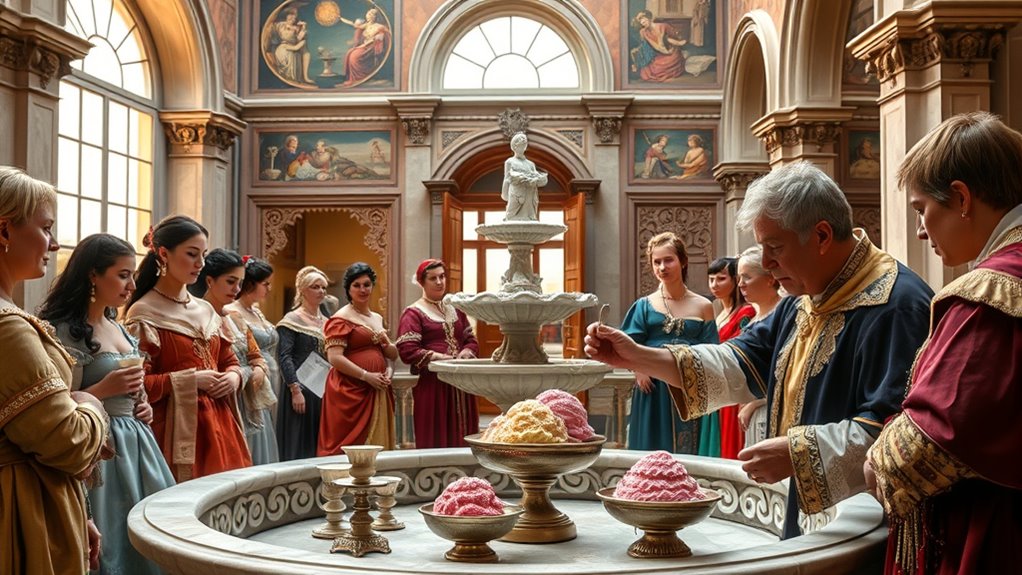

During the Renaissance, the Medici court transformed simple frozen desserts into symbols of wealth and elegance, influencing the development of gelato and ice cream. They used exotic spices, fresh ingredients, and sophisticated techniques to impress guests, storing ice in underground cellars to enjoy cold treats year-round. This innovation laid the foundation for modern ice cream, inspiring European courts and elevating culinary artistry. Explore further to discover how these traditions shaped today’s favorite frozen delights.
Key Takeaways
- The Medici Court in Florence pioneered refined, exotic-flavored ice-based desserts during the Renaissance to impress and entertain nobility.
- They used ice storage techniques and underground cellars to preserve snow and ice for year-round dessert preparation.
- These innovations contributed to the early development of ice cream and inspired the cultural prestige of chilled desserts.
- The Court emphasized presentation, complex textures, and flavor interplay, elevating desserts as symbols of wealth and refinement.
- Their culinary experimentation laid foundational ideas for modern gelato and influenced European dessert traditions.
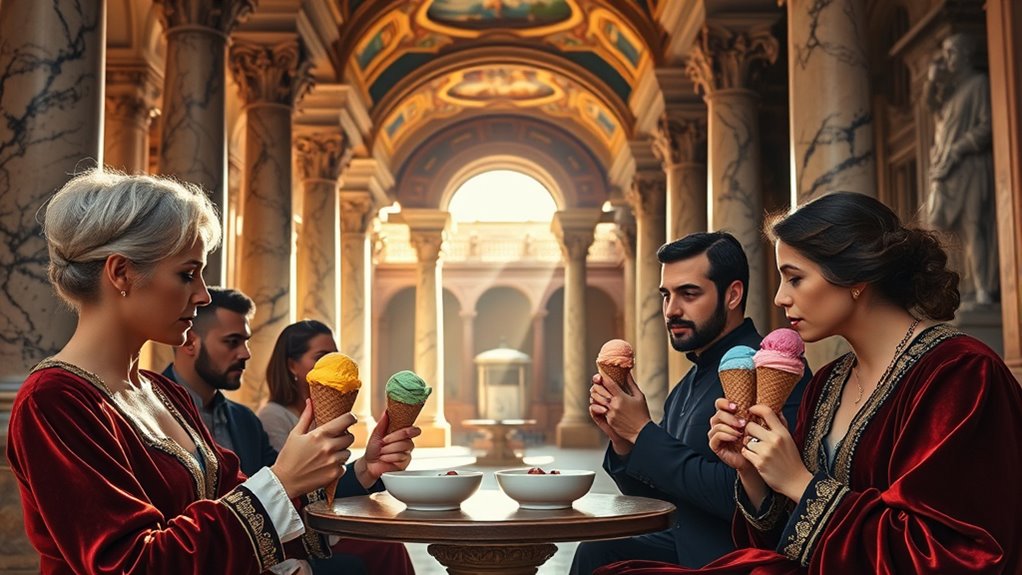
During the Renaissance, ice cream as we understand it today was just beginning to take shape, intriguing the tastes of European elites. At the heart of this culinary evolution was the Medici court in Florence, where innovation in desserts combined luxury with artistry. The Medici culinary was renowned for pushing boundaries, blending exotic spices, refined techniques, and fresh ingredients to create new flavors. They weren’t just interested in sustenance; they sought to impress and entertain, making their court a hub for culinary experimentation. Among their creations, renaissance desserts gained popularity, often featuring icy textures and sweetened flavors that hinted at what would become gelato.
You might not realize it, but the Medici’s influence shaped the early development of ice-based treats. While they didn’t invent ice cream outright, they certainly contributed to its prestige and refinement. They imported sugar, spices, and ingredients from distant lands, elevating simple frozen mixtures into luxurious delicacies. These early creations were likely served in small portions, often flavored with rosewater, citrus, or honey, and chilled using snow or ice stored in underground cellars. The court’s chefs and culinary innovators experimented with these ingredients, aiming to craft desserts that dazzled the senses and demonstrated wealth and sophistication. Additionally, the use of ice storage techniques was crucial in preserving ice for extended periods, which allowed these cold desserts to be enjoyed beyond winter months.
As you explore renaissance desserts, you’ll notice how they often involved a complex interplay of textures and flavors, emphasizing the importance of presentation as much as taste. The Medici’s patronage fostered a culture where culinary artistry was celebrated, and these desserts became symbols of power and refinement. Their influence spread across Italy and Europe, inspiring other courts to adopt similar techniques. The concept of serving chilled, sweetened mixtures at banquets became a hallmark of noble dining, setting the stage for the evolution of gelato and modern ice cream.
Frequently Asked Questions
What Ingredients Were Used in Renaissance Gelato Recipes?
You’ll find that Renaissance gelato recipes used simple ingredients like milk, sugar, and flavored syrups to create rich, creamy textures. Sometimes, they included dairy alternatives like almond milk or rice milk, especially for those with dietary restrictions. These ingredients combined to produce smooth, flavorful treats enjoyed by the Medici court, showcasing an early appreciation for innovative flavors and textures in frozen desserts.
How Did Medici Patrons Influence Ice Cream Innovations?
Imagine a spark ignited by Medici patronage, fueling a blaze of culinary innovation that reshaped desserts forever. You see, the Medici patrons didn’t just watch; they actively fueled ice cream innovations, encouraging chefs to experiment with new flavors and techniques. Their support turned humble ingredients into works of art, transforming gelato into a symbol of wealth, power, and artistic expression during the Renaissance.
Were There Any Specific Rituals Associated With Ice Cream Consumption?
You would notice that within the Medici court traditions, ritualized ice cream serving played a special role. Servings were often elaborate, symbolizing status and hospitality, with specific customs for presenting and consuming the delicacy. These rituals made ice cream more than just a treat; they became a display of wealth and sophistication, emphasizing the importance of social etiquette and tradition during Renaissance gatherings.
How Did Ice Storage Techniques Evolve During the Renaissance?
Like a slow-moving river carving through stone, ice storage techniques during the Renaissance evolved with innovations in preservation. You see, people developed cool cellars and built icehouses to trap winter ice, keeping it fresh for warmer months. These preservation techniques allowed you to enjoy chilled treats longer, transforming ice storage from simple storage to a science that kept the cold close, much like nature’s freezer.
Did Renaissance Ice Cream Have Any Medicinal or Symbolic Significance?
During the Renaissance, you’d find that ice cream often carried medicinal properties and symbolic meanings. People believed it could cool fevers and aid digestion, giving it a health-related significance. Additionally, it symbolized wealth, luxury, and power, especially among aristocrats like the Medici. When you enjoyed ice cream, you not only indulged in a treat but also displayed social status and embraced the cultural ideals of refinement and prestige.
Conclusion
As you explore the Medici court’s love for gelato, you realize it’s like a delicate jewel shining in the Renaissance’s grand crown. This sweet treat wasn’t just dessert; it was a symbol of innovation and luxury, blending art and science. Just as a masterful painting captures a moment in time, gelato captures the spirit of an era—rich, vibrant, and unforgettable. Remember, in the world of history, even ice cream can be a masterpiece.