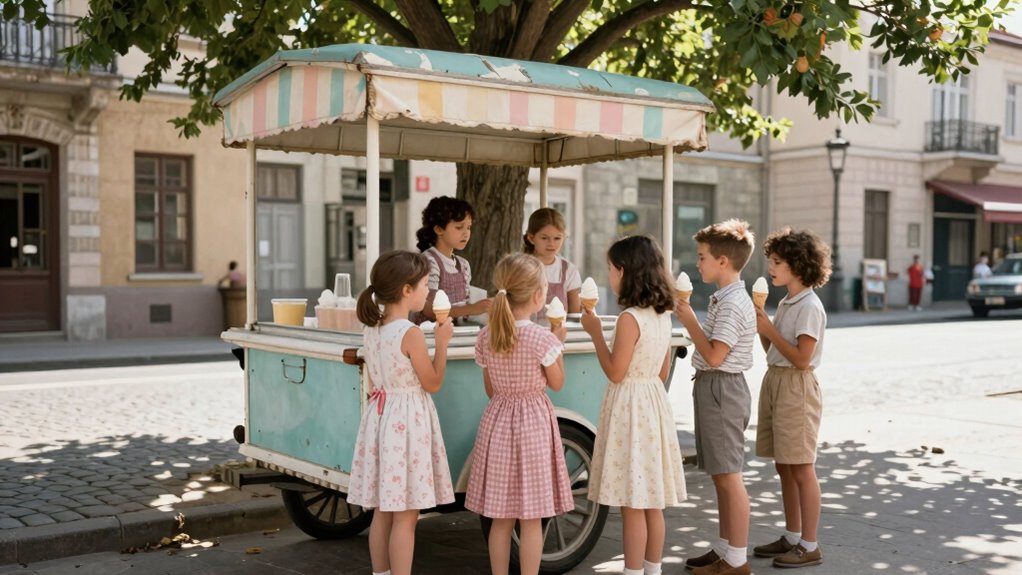

The strong link between summer and ice cream is actually a modern idea driven by marketing, technological advances, and cultural shifts. In ancient times, ice cream was enjoyed year-round by the wealthy and on special occasions, not just in warm weather. It wasn’t until refrigeration and ice harvesting made treats more accessible all year that marketers began promoting ice cream as a perfect summer refreshment. To see how this connection evolved, keep exploring the history behind this cool tradition.
Key Takeaways
- Historically, ice cream was enjoyed year-round by the wealthy, not limited to summer, and seasonal misconceptions persisted.
- Modern refrigeration and ice harvesting made ice cream accessible year-round, challenging the summer-only myth.
- Advertising and marketing linked ice cream to summer activities, outdoor fun, and sunshine to boost sales during warm months.
- Seasonal promotions and celebrity endorsements reinforced the idea of ice cream as a summer treat and summer leisure icon.
- Over time, flavor innovation and marketing shifted towards year-round enjoyment, gradually decoupling ice cream from only summer associations.
Where Did Ice Cream Come From and How Was It Used Early On?

Have you ever wondered where ice cream first originated and how people used it in the past? Ancient desserts resembling ice cream date back thousands of years, with Chinese and Roman civilizations experimenting with chilled fruit and milk mixtures. These early treats were often reserved for the wealthy or special occasions. Over time, flavor innovations emerged, with spices, honey, and fruit enhancing the basic recipes. In Persia, people enjoyed snow mixed with sweet syrups, while Arab traders introduced flavoring techniques that influenced European recipes. These ancient desserts laid the foundation for modern ice cream, blending natural ingredients with creative flavorings. Though primitive compared to today’s variety, they showcased early humans’ love for cold, sweet treats and their desire to innovate with flavors.
How Cold Storage Made Ice Cream More Accessible to Everyone

The invention of modern refrigeration revolutionized how ice cream became available to everyone. Cold storage and refrigeration technology allowed ice cream to be produced, stored, and transported on a much larger scale. Before these innovations, ice cream was a luxury enjoyed only by the wealthy or in specialized locations. With reliable cold storage, manufacturers could keep ice cream frozen longer and distribute it across wider regions. This innovation also supported the development of energy-efficient cloud servers, which similarly enable scalable and accessible digital services today. This meant more people could access fresh, high-quality ice cream without visiting exclusive establishments. Refrigeration technology also reduced dependence on ice, making the process more efficient and affordable. As a result, ice cream became a common treat, no longer limited by geographic or economic barriers, paving the way for its widespread popularity today. Additionally, advancements in temperature control made it possible to maintain consistent freezing conditions, further expanding access and ensuring quality. These technological improvements have also driven broader technological innovation, emphasizing the importance of scalable and reliable systems. Moreover, the development of refrigeration techniques played a crucial role in transforming the food industry by enabling the preservation of perishable goods.
How Marketing in the 20TH Century Turned Ice Cream Into a Summer Icon

How did marketing in the 20th century transform ice cream into a symbol of summer? Through innovative advertising strategies and branding evolution, companies linked ice cream to warm weather and leisure. They used vivid visuals, catchy slogans, and targeted campaigns to associate ice cream with fun, relaxation, and sunshine. These efforts made ice cream a seasonal must-have, boosting sales every summer. Consider the following branding strategies:
| Campaigns | Techniques | Impact |
|---|---|---|
| “Ice Cream Days” | Colorful ads, outdoor posters | Created summer nostalgia |
| Celebrity Endorsements | Famous faces enjoying ice cream | Increased appeal to youth |
| Seasonal Promotions | Limited-time flavors, discounts | Boosted summer sales |
This evolution made ice cream a cultural icon of summer, ingrained in our collective summer experience. The association of ice cream with warm weather was further reinforced through these marketing efforts, cementing its status as a summer staple. Additionally, the use of targeted advertising helped brands reach specific demographics and solidify the summer connection.
What Cultural Changes Made Summer the Perfect Time for Ice Cream?

As summer grew to symbolize relaxation and leisure in modern culture, societal attitudes shifted to embrace warm weather as the ideal time for enjoying treats like ice cream. Climate influence played a key role, as rising temperatures made cold desserts more appealing and revitalizing. This change encouraged seasonal marketing strategies that targeted summer consumers, reinforcing ice cream as a summer essential. Businesses began promoting ice cream as a summer essential, aligning their campaigns with vacation, outdoor activities, and leisure time. These cultural shifts created an association between summer and ice cream in the public mind, making the cold treat a symbol of enjoyable, carefree days. Additionally, seasonal marketing strategies capitalized on these cultural trends, further entrenching the connection between summer and ice cream in popular culture. The public perception of summer as a time for indulgence further solidified this link, influencing consumer behavior and advertising campaigns for decades. Societal attitudes towards leisure and indulgence during warm months also played a significant role in cementing this association, with consumer behavior adapting to emphasize seasonal treats like ice cream.
Why Ice Cream Became a Summer Tradition in Modern Times

The strong cultural association between summer and ice cream didn’t happen by chance; it evolved through a combination of social habits, marketing efforts, and environmental factors. In modern times, historical flavor trends like vanilla and chocolate became popular choices because they were easy to produce and appeal broadly. As summer holiday traditions grew, ice cream shops and trucks actively targeted these periods, making ice cream a symbol of festive relaxation. Advertising campaigns emphasized cooling relief during hot weather, reinforcing its summer link. Additionally, advances in refrigeration technology made ice cream more accessible and affordable, encouraging families and communities to enjoy it during warm months. The development of outdoor kitchen setups and mobile vendors further contributed to the seasonal popularity of ice cream. Over time, these factors solidified ice cream as a quintessential summer treat, shaping its place in our seasonal celebrations. The seasonal marketing strategies employed by ice cream brands further cemented this association in the public consciousness.
Did People Always Think Ice Cream Was a Summer Treat? Debunking Myths

Many people assume that ice cream has always been a summer-only treat, but historical evidence shows otherwise. This misconception stems from seasonal stereotypes that link ice cream solely to hot weather. In reality, people enjoyed ice cream year-round, especially among the wealthy who had access to frozen desserts during colder months. During the 17th and 18th centuries, ice cream was served at winter gatherings and special occasions. Historical popularity of ice cream in colder months further illustrates that it was appreciated beyond just summer months. Imagine:
Ice cream was enjoyed year-round, even in winter among the wealthy during the 17th and 18th centuries.
- A grand feast with ice cream served alongside roasted meats, even in winter.
- Ice houses stocked with frozen delights, used regardless of season.
- Aristocrats savoring icy desserts during snowy celebrations.
- The development of early refrigeration techniques that allowed for year-round enjoyment of frozen treats.
- The use of ice harvesting methods to gather winter ice for storage and use throughout the year.
These images challenge the idea that ice cream was solely a summer luxury, debunking the myth rooted in seasonal misconceptions.
What’s Next for Ice Cream and Its Seasonal Connections?

Ice cream’s history shows it’s been enjoyed beyond the summer months for centuries, and today, innovations are shaping its seasonal appeal in new ways. Brands are leveraging seasonal marketing to target different times of the year, creating limited-edition flavors for holidays or colder seasons. Flavor innovation plays a key role, with companies experimenting with ingredients like spices, seasonal fruits, and even savory elements to surprise consumers year-round. You can expect more creative approaches to extend ice cream’s appeal beyond traditional summer sales. As consumers seek variety and novelty, the industry will likely focus on crafting unique flavors and marketing campaigns that emphasize ice cream’s versatility across seasons. This ongoing evolution guarantees ice cream remains a beloved treat no matter the time of year.
Frequently Asked Questions
When Did Ice Cream First Become Popular Worldwide?
You’ll find that ice cream first gained worldwide popularity in the 18th century, especially in Europe and North America. Historically, flavor trends evolved from ancient frozen desserts like Persian and Chinese snow and milk-based treats. As trade expanded, new ingredients and techniques emerged, making ice cream more accessible and diverse. This global spread was driven by innovations and cultural exchanges, turning ice cream into a beloved treat across the world.
Were There Any Cultures That Associated Ice Cream With Winter?
Think of the silent winter traditions, like Japan’s mochi festivals, where ice cream once symbolized seasonal celebration. Some cultures, valuing warmth over cold, associated ice cream with winter, viewing it as a treat for special occasions rather than summer’s delight. These cultural associations reveal that, in certain societies, ice cream’s role wasn’t just about heat relief but intertwined with rituals and winter’s quiet charm.
How Did Climate Influence Ice Cream’s Seasonal Popularity?
Climate influence shapes ice cream’s seasonal trends by making it more popular during warmer months when people crave cool, invigorating treats. You’ll notice that in hot climates, ice cream sells year-round, but in cooler areas, its popularity peaks in summer. The weather drives consumer demand, so manufacturers focus on summer marketing, reinforcing the link between climate and seasonal trends, ensuring ice cream stays a summer staple for many.
Did Early Advertisements Target Winter or Summer Consumers?
Early advertisements primarily targeted summer consumers through marketing strategies that emphasized ice cream as a invigorating, seasonal treat. They focused on advertising seasons when people sought cool, enjoyable desserts, aligning promotion efforts with warmer months. This approach helped establish the association between ice cream and summer, making it a go-to choice during hot weather, rather than during winter, when marketing strategies were less focused on selling cold desserts.
Are There Non-Summer Traditions Involving Ice Cream?
You might be surprised, but some cultures enjoy ice cream as a winter treat, breaking the summer-only stereotype. Imagine a cozy Scandinavian village where frozen desserts like ice cream are shared during festive winter celebrations, symbolizing warmth and joy. Despite common beliefs, ice cream isn’t just a summer indulgence. It’s a versatile winter treat, proving that frozen desserts can brighten cold days and create traditions beyond summer’s sunny days.
Conclusion
Did you know that today, over 1.5 billion gallons of ice cream are enjoyed each summer? This staggering number shows how deeply ice cream is now tied to warm weather and sunshine. Thanks to innovations in storage and savvy marketing, summer became the perfect season for this sweet treat. So next time you indulge, remember—you’re part of a century-old tradition that turned ice cream into a summer icon.