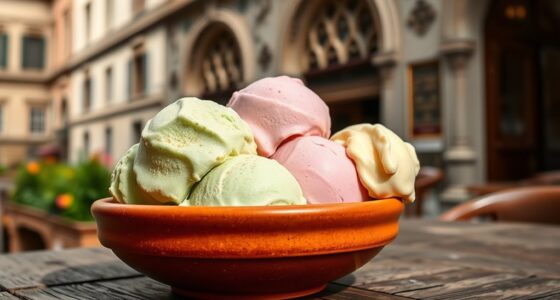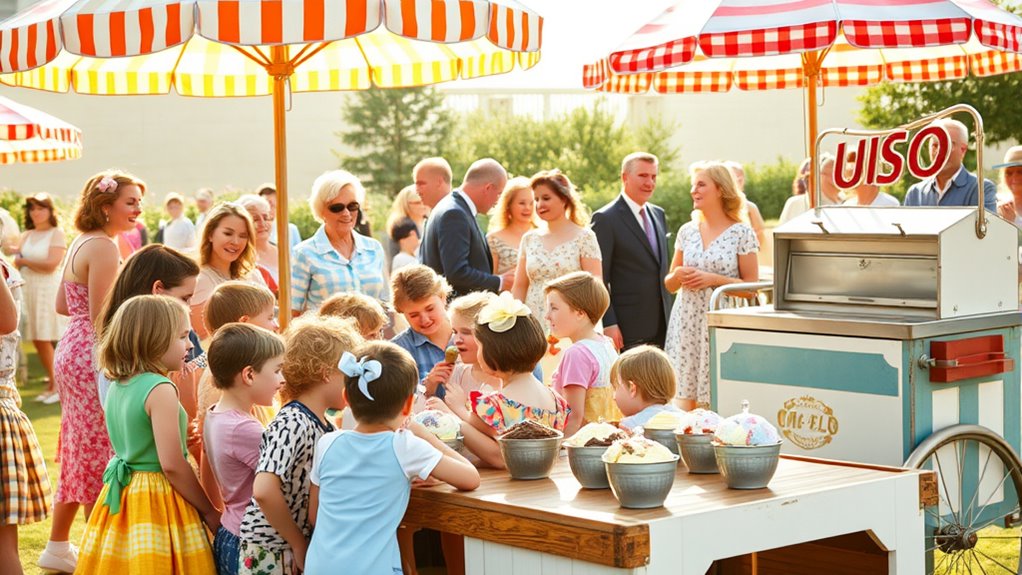

Ice cream socials started in the 19th century as community events aimed at bringing people together through shared treats and cultural traditions. These gatherings began as simple ways for neighbors to connect and celebrate, often featuring regional flavors and family recipes. Over time, they evolved into organized festivities with music and games, strengthening community bonds while preserving local customs. Curious to discover how these traditions continue today? Keep exploring to learn more about their fascinating history.
Key Takeaways
- Ice cream socials originated in the 19th century as community events to foster connection and celebrate local traditions.
- They served as inclusive gatherings promoting community unity through shared cool treats during warm weather.
- These events often reflected regional flavors and cultural practices, strengthening social bonds across generations.
- Over time, ice cream socials evolved to include music, games, and additional festivities, becoming organized community celebrations.
- Today, they remain meaningful traditions that preserve cultural heritage and promote social cohesion in modern communities.
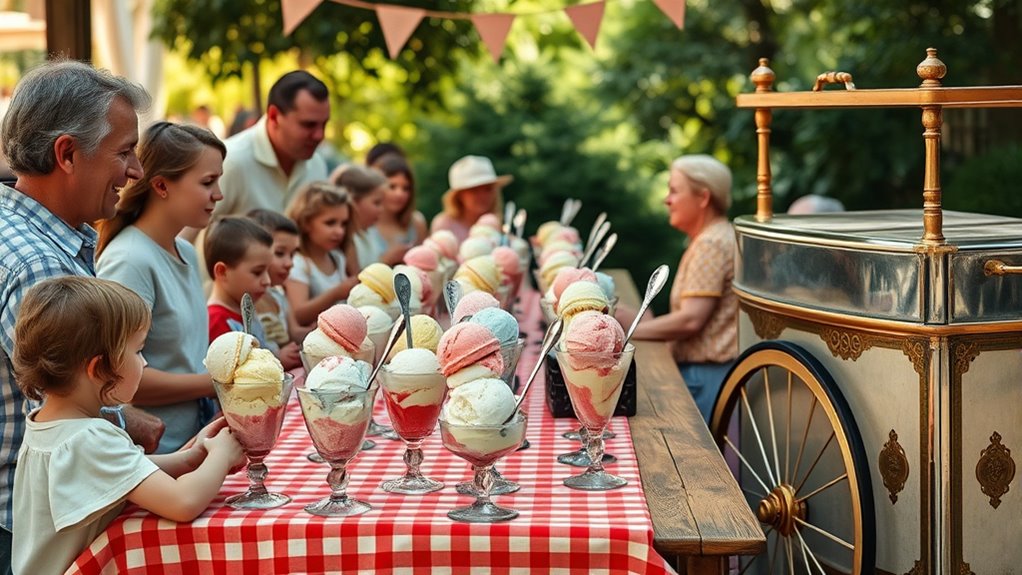
Ice cream socials have become a beloved tradition in many communities, but their origins date back to the 19th century. These gatherings started as simple community events that brought people together to share a cool treat during warm weather. Originally, they served as a way for neighbors to connect, celebrate cultural traditions, and promote a sense of unity within the community. Over time, these socials evolved from modest gatherings to more organized events, often featuring music, games, and other festivities that made them more than just about ice cream. They became a cornerstone of local traditions, creating a sense of continuity and shared history among residents.
Ice cream socials originated in the 19th century as community events fostering connection and tradition.
As community events, ice cream socials helped reinforce cultural traditions by providing a space where different generations could come together and enjoy a common activity. In many towns and neighborhoods, these socials reflected local customs, incorporating regional flavors and recipes that highlighted cultural heritage. For example, some communities might have served traditional ice cream flavors passed down through families, while others added specific toppings or accompaniments tied to their cultural practices. This blending of culinary traditions helped solidify the social fabric of the community, making the event more meaningful and memorable.
You might notice that the appeal of ice cream socials lies in their simplicity and inclusiveness. They’re accessible to people of all ages, fostering intergenerational bonds that strengthen community ties. Whether it’s children enjoying their first scoop or elders reminiscing about past socials, these events serve as a shared experience that transcends individual differences. They often take place in local parks, church halls, or schoolyards, emphasizing their role as accessible community gathering spots. The casual atmosphere encourages conversation and camaraderie, making everyone feel welcome and part of something larger than themselves.
Throughout history, ice cream socials have also adapted to reflect changing social dynamics, but their core purpose remains the same: bringing people together around a shared love of community and tradition. They continue to honor their roots as community events that celebrate cultural heritage, while also evolving into modern social occasions. Today, you’ll find that these socials still serve as a way to preserve local customs, promote community spirit, and create lasting memories. Understanding the history of social gatherings helps explain how these events have maintained their significance over time. Whether organized by schools, churches, or neighborhood groups, ice cream socials continue to embody the timeless idea of gathering around a simple pleasure—ice cream—to strengthen bonds and celebrate cultural traditions that unite us all.
Frequently Asked Questions
When Did Ice Cream Socials First Become Popular in America?
You might be surprised to learn that ice cream socials first gained popularity in America during the late 19th and early 20th centuries. During this time, ice cream vendors often organized community fundraisers, which helped boost local engagement and raise money. These events became social highlights, combining delicious treats with community spirit. Their popularity grew as people enjoyed the fun atmosphere and the chance to connect over ice cream.
What Cultural Influences Shaped Early Ice Cream Social Traditions?
Did you know that over 60% of early American ice cream recipes show influence from European culinary traditions? This highlights how cultural exchange and culinary fusion shaped early ice cream social traditions. You can see this blend in the variety of flavors and serving styles, reflecting diverse cultural influences. These traditions evolved as communities embraced new ideas, creating a festive atmosphere that celebrated both local and global tastes.
How Did Ice Cream Socials Spread to Different Regions?
You see, ice cream socials spread to different regions through participation in regional festivals and culinary exchanges. As communities celebrated local traditions, they adopted and adapted ice cream socials, making them a popular communal activity. Traveling vendors and cultural events helped introduce these socials to new areas, encouraging locals to embrace this sweet tradition. Over time, the social and festive nature of ice cream socials made them a beloved pastime across diverse regions.
Were Ice Cream Socials Originally Intended for Specific Social Classes?
Imagine a grand ice cream social as a melting pot, uniting diverse social classes. Originally, these events aimed for economic accessibility, welcoming all, regardless of social class origins. While some elites hosted lavish parties, many communities used socials to bridge gaps, making it more inclusive over time. You realize that ice cream socials weren’t meant solely for specific social classes but became a symbol of shared joy and community.
How Have Ice Cream Social Activities Evolved Over Time?
You’ve seen how ice cream social activities have evolved from simple community gatherings to widespread social events. Over time, ice cream innovations like new flavors and toppings made these gatherings more exciting. As social gathering trends shifted towards inclusivity and fun, ice cream socials expanded beyond specific groups, becoming popular at schools, festivals, and neighborhoods. Today, they’re a versatile way to connect, celebrate, and enjoy sweet treats together.
Conclusion
Now that you know how ice cream socials started, it’s clear they’ve become more than just a treat—they’re a beloved tradition. Did you know that nearly 70% of Americans say they enjoy attending community ice cream events? Next time you join one, remember you’re part of a long history that dates back over a century. So, go ahead, scoop up some fun and keep this sweet tradition alive!