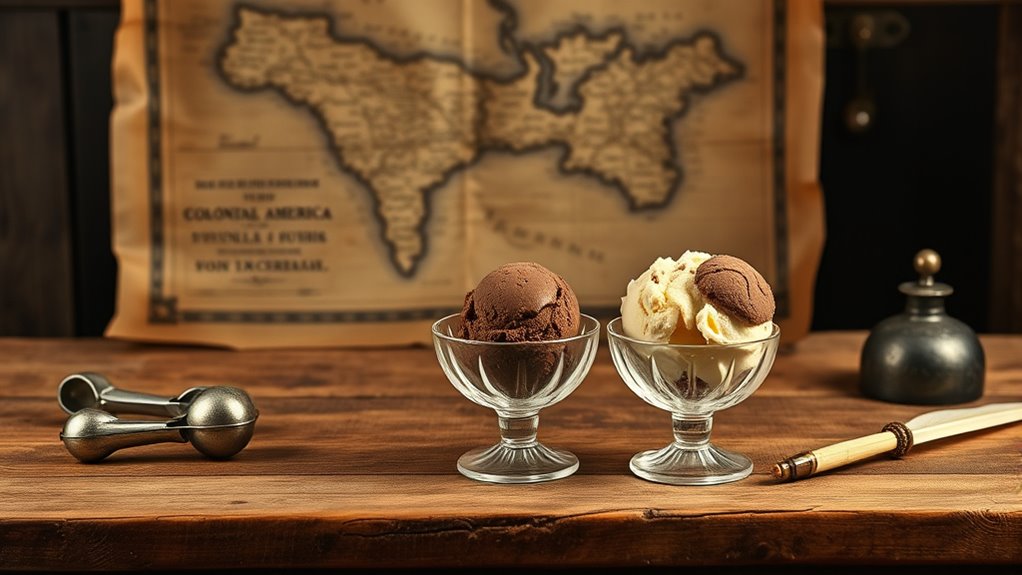

In colonial America, ice cream was a luxury enjoyed mainly during special occasions, thanks to limited supplies and the high cost of imported sugar. Its preparation involved harvesting ice from lakes and rivers, then storing it in icehouses for later use. Wealthier families and influential figures like the Founding Fathers indulged more often. If you want to discover how these early treats influenced American traditions and their connection to notable figures, there’s more to uncover.
Key Takeaways
- Ice cream was a luxury enjoyed mainly during celebrations by colonial elites and the Founding Fathers.
- Imported sugar shaped colonial ice cream recipes, reflecting wealth and social status.
- The labor-intensive process and scarcity of ingredients made ice cream a special, rare treat.
- Colonial attitudes viewed ice cream as an indulgence linked to prosperity and refinement.
- The tradition of ice cream in colonial America influenced early American culinary and social customs.
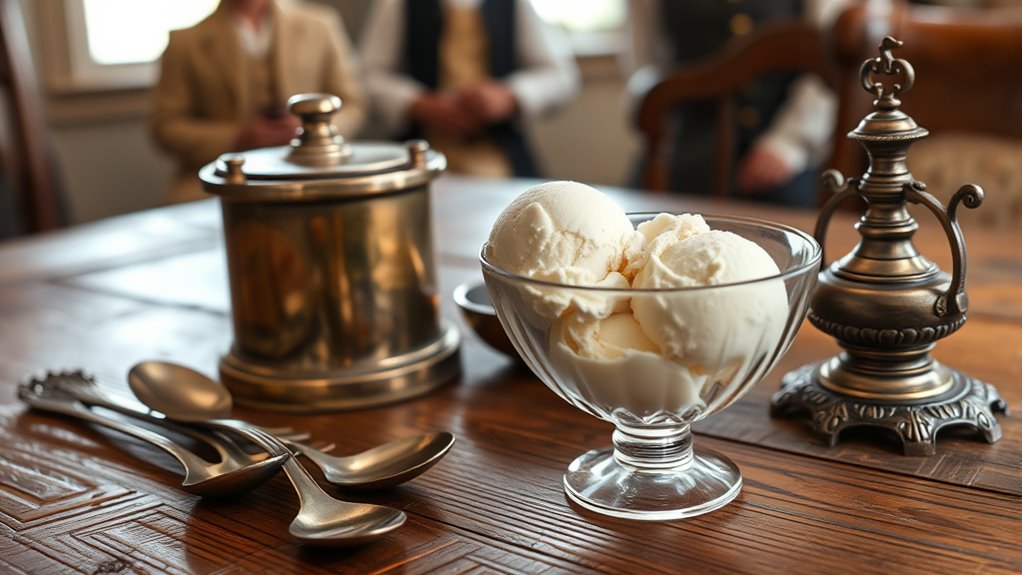
Have you ever wondered how people in Colonial America enjoyed a treat like ice cream? Back then, it wasn’t as simple as heading to an ice cream shop. Instead, colonial households relied on resourcefulness and imported ingredients to create their versions of this chilly delight. Sugar imports played a pivotal role in this process. Since sugar wasn’t produced locally, colonists had to import it from the West Indies or Europe, making it a luxury item. This meant that only wealthier families could afford to include sugar in their recipes, which directly influenced how often and how elaborately they could make ice cream. Colonial recipes often called for a mix of milk, cream, and sugar—an indulgence reserved for special occasions or the wealthiest homes. Despite limited supplies, colonists experimented with what they had, developing recipes that combined available ingredients with imported sugar to create a sweet, frozen treat. These recipes were passed down and adapted over time, forming the early foundations of American ice cream traditions.
You might be surprised to learn that making ice cream in colonial times was quite a labor-intensive process. Without modern refrigeration, people relied on ice harvested from lakes and rivers during winter, stored in icehouses lined with sawdust or straw to keep it cold. This ice was then transported to homes or communal icehouses, where it was used to chill mixtures of milk, cream, sugar, and flavorings. Colonial cooks often used hand-cranked churns, turning the mixture repeatedly to achieve the smooth, creamy texture we associate with ice cream today. The scarcity of sugar meant that recipes were often less sweet than modern versions, highlighting the importance of imported sugar as a precious commodity. It also meant that ice cream was considered a special treat, enjoyed during celebrations or gatherings, rather than a daily dessert.
As you think about the colonial period, it’s fascinating to realize how these early recipes laid the groundwork for the future of American frozen desserts. The desire for something cold and sweet pushed colonists to innovate and adapt, despite limited resources. Sugar imports, colonial recipes, and ingenuity combined to create a treat that, while rare, brought joy and a sense of luxury to those who could afford it. Over time, these traditions evolved, influencing the development of more accessible ice cream varieties. So, the next time you indulge in a scoop of ice cream, remember that its roots run deep into colonial history, shaped by the high cost of sugar and the creativity of early Americans.
Frequently Asked Questions
Were Colonial Americans Able to Make Ice Cream at Home?
Yes, colonial Americans could make ice cream at home, but it was challenging. You’d need to understand ice cream technology and have access to ice and salt for freezing. Colonial dairy practices provided fresh milk and cream, essential ingredients. While not everyone could make it regularly, resourceful colonists used basic tools like hand-cranked churns or ice pits, allowing some households to enjoy homemade ice cream despite limited technology.
Did Any Founding Fathers Have a Favorite Ice Cream Flavor?
Imagine a world where flavors tell stories—yes, some founding fathers had favorites. Thomas Jefferson, for example, loved vanilla and enjoyed experimenting with colonial ice cream flavors like lemon and pineapple. These choices reveal their simple pleasures amid complex politics. You can see how their favorite ice cream flavors reflect their personalities, connecting us to history through tastes that once defined colonial America’s sweet moments.
How Did Colonial Americans Keep Ice From Melting?
You’d find that colonial Americans used creative methods for ice preservation and colonial refrigeration. They stored ice in insulated icehouses built underground or surrounded by straw and sawdust to keep it cool longer. Some even transported ice from lakes during winter, storing it for use in warmer months. These techniques helped prevent melting, allowing them to enjoy chilled foods and drinks in an era without modern refrigeration.
Was Ice Cream Considered a Luxury or Common Treat?
You’ll find that ice cream was considered a luxury indulgence rather than a common treat. It symbolized social status, enjoyed mainly by the wealthy and elite. During colonial times, only those with access to ice and special equipment could indulge, making it a symbol of wealth and refinement. So, for most people, ice cream remained a rare and prestigious delight, reserved for special occasions and the upper class.
Did Indigenous Methods Influence Colonial Ice Cream Recipes?
Yes, indigenous techniques influenced colonial ice cream recipes. You can see this through the use of native ingredients like fruits and local flavorings. Colonial cooks adopted indigenous culinary influences, such as methods for freezing and flavoring, which helped develop early ice cream recipes. These native techniques enriched the colonial palate, blending indigenous innovation with European methods, and contributed to the evolution of ice cream as a popular treat.
Conclusion
You might be surprised to learn that by 1775, Americans consumed about 11,000 gallons of ice cream annually. This sweet treat wasn’t just for the wealthy anymore; it became a symbol of growing prosperity and cultural change. As you see, ice cream played a surprising role in colonial America and the founding era, helping to shape social customs. So next time you enjoy a scoop, remember it’s part of a long, fascinating history that dates back to those early days.