
The story of gelato’s origin in Renaissance Florence is mostly myth; there’s no single inventor or moment you should point to. Instead, you’ll find a mix of culinary innovations, cultural exchanges, and technological advances that shaped frozen desserts over time. Florence’s position as a trade hub helped introduce new ingredients and techniques. If you keep exploring, you’ll uncover how these influences fueled the development of gelato as we know it today.
Key Takeaways
- The idea that Florence invented modern gelato is more myth than historical fact.
- Renaissance recipes focused on natural ingredients, similar in spirit to gelato but with different techniques.
- Cultural exchanges introduced flavoring agents and methods, influencing frozen dessert development.
- Techniques like snow cooling and ice storage during the Renaissance laid groundwork for gelato.
- Florence’s role as a trading hub facilitated innovations, but gelato’s true origins are a blend of diverse influences.
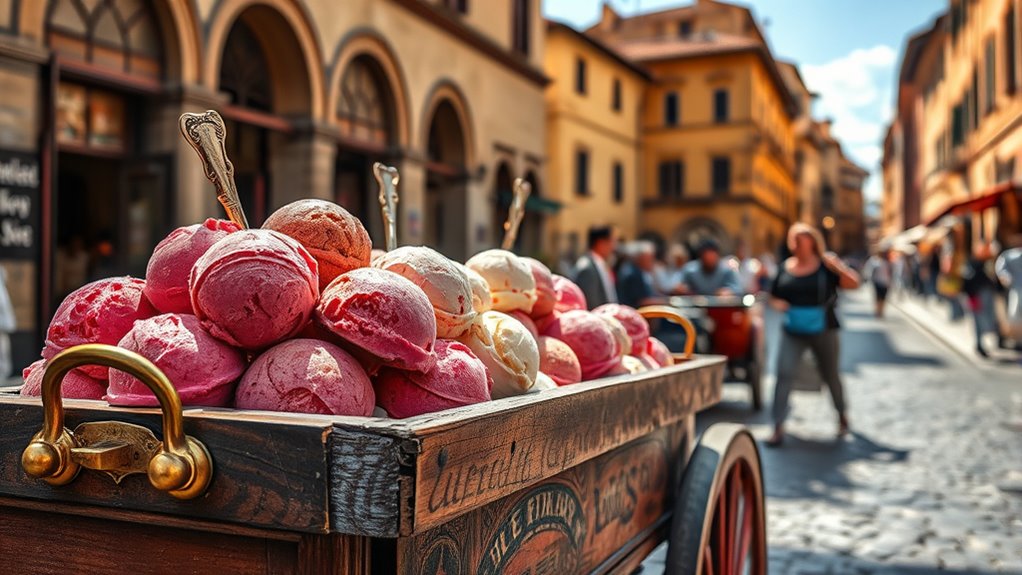
During the Renaissance, Florence emerged as a hub of innovation and cultural exchange, and this vibrant atmosphere extended even to its culinary traditions. You might wonder how the city’s rich history influenced the development of gelato, and exploring this reveals a fascinating blend of historical recipes and cultural influences. While modern gelato is often associated with Italy’s culinary pride, its roots during the Renaissance are shrouded in legend and tradition. Historical recipes from that era point to a variety of frozen treats that predate the modern gelato, often made with ingredients like fruit, honey, and snow collected from nearby mountains. These early recipes were simple but innovative, combining available ingredients with techniques borrowed from Arab and Asian traditions, which had introduced the concept of flavored frozen desserts to Europeans.
Florence’s position as a trading hub meant that cultural influences flowed in from across the Mediterranean and beyond. Arab traders brought sugar and new flavoring agents, which transformed the Renaissance palate and allowed for sweeter, more refined frozen desserts. This exchange of ingredients and ideas helped shape the evolution of icy treats, gradually leading to the creation of more sophisticated recipes that resembled what we now call gelato. You should recognize that these influences weren’t merely about ingredients but also about techniques—such as the use of snow or ice to achieve the desired coldness, a method that persisted well into later centuries. Such innovations were often passed down through generations of artisans, who refined their craft with each iteration. Additionally, the development of ice storage techniques during this period played a crucial role in expanding the possibilities for frozen desserts.
The idea that Renaissance Florence invented gelato as we know it today is a tempting legend, but historical evidence suggests that the truth is more layered. Many of the recipes from that era, documented in manuscripts and culinary texts, resemble modern gelato in spirit but differ in execution. These recipes emphasize a balance between sweetness and flavor, with a focus on natural ingredients, reflecting Florence’s cultural influences and its desire to elevate simple ingredients into culinary art. You’ll find that the legacy of these early recipes and the cultural interactions of the time laid the groundwork for the development of gelato in later centuries, a tribute to Florence’s role as a melting pot of innovation and tradition.
Frequently Asked Questions
Did Renaissance Florentines Actually Invent Gelato?
You might think Renaissance Florentines invented gelato, but that’s more a historical myth than fact. While they made notable culinary innovations, the true origins of gelato are complex and involve multiple cultures. Florentines certainly contributed to Italy’s rich dessert history, but claiming they invented gelato oversimplifies its evolution. Instead, appreciate how their innovations helped shape the broader tradition, blending legend with culinary progress over centuries.
Were Any Famous Renaissance Artists Known for Their Gelato Recipes?
You might be surprised to learn that no famous Renaissance artists are known for their gelato recipes, but culinary innovations often inspired artistic creativity. Did you know Florence’s vibrant food scene influenced many artists’ artistic inspiration? While artists like Botticelli or Michelangelo didn’t craft gelato, their era’s rich culture encouraged experimenting in both art and cuisine, blending culinary delights with creative expression. So, Florence’s culinary scene truly fueled Renaissance artistic innovation.
How Did Gelato Influence Other European Desserts During the Renaissance?
During the Renaissance, gelato’s innovation in flavor profiles influenced other European desserts by blending medieval pastry influences with new ingredients and techniques. You’d notice how desserts evolved to incorporate richer textures and more refined flavors, inspired by gelato’s creative combinations. This shift encouraged pastry chefs across Europe to experiment, leading to the development of sophisticated confections that reflected Renaissance tastes and a desire for elegant, flavorful treats.
What Ingredients Were Used in Renaissance Gelato That Differ From Today?
You’ll find that historical ingredients in Renaissance gelato mainly included honey or fruit-based sweeteners instead of refined sugar, which was scarce at the time. They also used natural flavorings like herbs, spices, and nuts. Modern variations now incorporate milk, cream, and processed sugars for smoother textures and richer flavors. These changes reflect advancements in ingredients and techniques, while historical recipes relied on more natural, less processed components.
Are There Any Surviving Renaissance-Era Gelato Recipes?
A picture is worth a thousand words, and yes, some ancient recipes for Renaissance-era gelato still survive today. You can find medieval dessert recipes that detail early methods and ingredients similar to those used centuries ago. While exact recipes are rare, scholars have uncovered ancient texts and manuscripts that reveal how artisans crafted these frozen treats, giving you a glimpse into the delightful history behind the beloved Renaissance gelato.
Conclusion
As you wander through Renaissance Florence’s streets, imagine gelato as a sweet thread woven into its vibrant tapestry. While legends swirl around its origins, one thing’s clear: gelato’s charm has stood the test of time, like a timeless song. So, savor every creamy bite as if you’re tasting history itself—delicious, rich, and forever woven into the city’s heart. After all, some legends are too sweet to fade away.